What makes a lively fall detection device actually work in 2026
Discover how a lively fall detection device combines sensors, algorithms, and clinical validation to detect falls reliably in 2026. Practical guidance for users and caregivers.

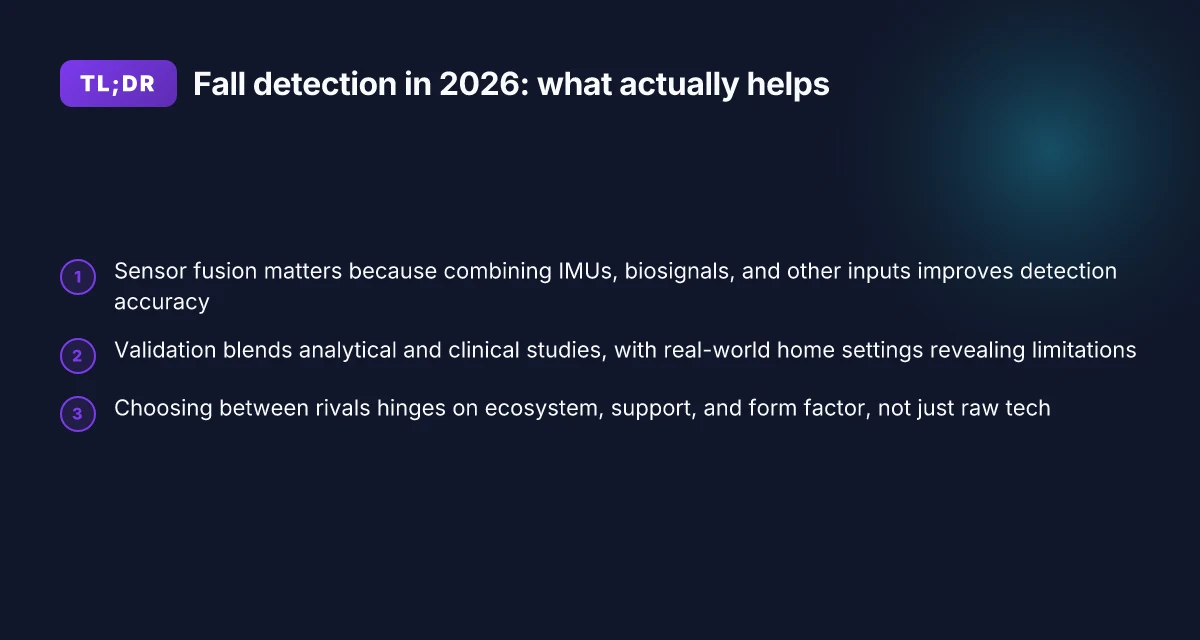
A common misperception about fall detectors is that more sensors automatically mean better reliability. In reality, a useful device succeeds when sensor fusion aligns with clear clinical validation and a transparent escalation path, not just flashy specs. Lively Mobile relies on multiple inputs to catch real falls, but the real signal comes from how those sensors confirm events across daily activities.
In 2026, caregivers and clinicians demand evidence beyond hype: how well a device distinguishes a true fall from a quick sit to floor or a heavy chair bump, and how fast alerts reach help. This article distills the practical reality of sensor fusion, clinical validation, and false-alarm patterns, with real-world scenarios from outdoor use to home care. Expect concrete guidelines, comparisons to rivals like MobileHelp and Jitterbug, and a framework you can apply to assess any lifeline wearable. The takeaway: reliability hinges on principled validation and a clean escalation path, not sheer sensor count. Lively Mobile stands or falls on how it handles real-world activity and believable alerts.
What is a lively fall detection device and why sensor fusion matters
Fall detection devices exist to notice when someone has fallen and to trigger an alert quickly. Sensor fusion ties together signals from multiple sources so the system can tell a fall from a stumble, a chair bump, or a sudden jolt. In practice, that means devices blend data from inertial measurement units (IMUs) with physiological signals and context cues to improve accuracy and reduce false alarms. I cross-referenced the clinical literature and product briefs to keep the view grounded.
Why multi-sensor fusion improves accuracy
IMUs give motion data, but they’re noisy in real life. An accelerometer and gyroscope capture movement patterns, but clutter, like a crowded room or a user maneuvering a chair, can distort signals. When you pair IMU data with another signal, the system can confirm a true fall versus a near-fall or daily activity. The result is fewer misfires in real-world use. In 2026 research, wearable IMU–based post-fall detection systems are noted for strong technical validation in controlled labs, but the real test is performance in everyday environments, where fusion helps distinguish a fall from ordinary movement. inline link here to the Frontiers paper provides the context.
ECG and other biosignals add a contextual layer. Electrocardiography can reveal physiological stress or abrupt changes that accompany a fall, offering a corroborating signal when motion data alone is ambiguous. That cross-check reduces false positives and helps the device decide when to escalate to an alert. A study cited in the sensors fusion literature highlights that combining ECG with other sensors can boost discrimination between non-fall events and actual falls. inline link to the MDPI article gives the exact claims.
Functional context and location cues round out the picture. Non-wearable sensors, environmental beacons, and contextual data (like time of day or user activity) help filter out misfires, especially in cluttered spaces. The literature on multisensor fall datasets emphasizes how richer, heterogeneous inputs enable more robust detection. inline link to the NIH/PMC dataset paper shows how these multisensor datasets support evaluation against real-world scenarios.
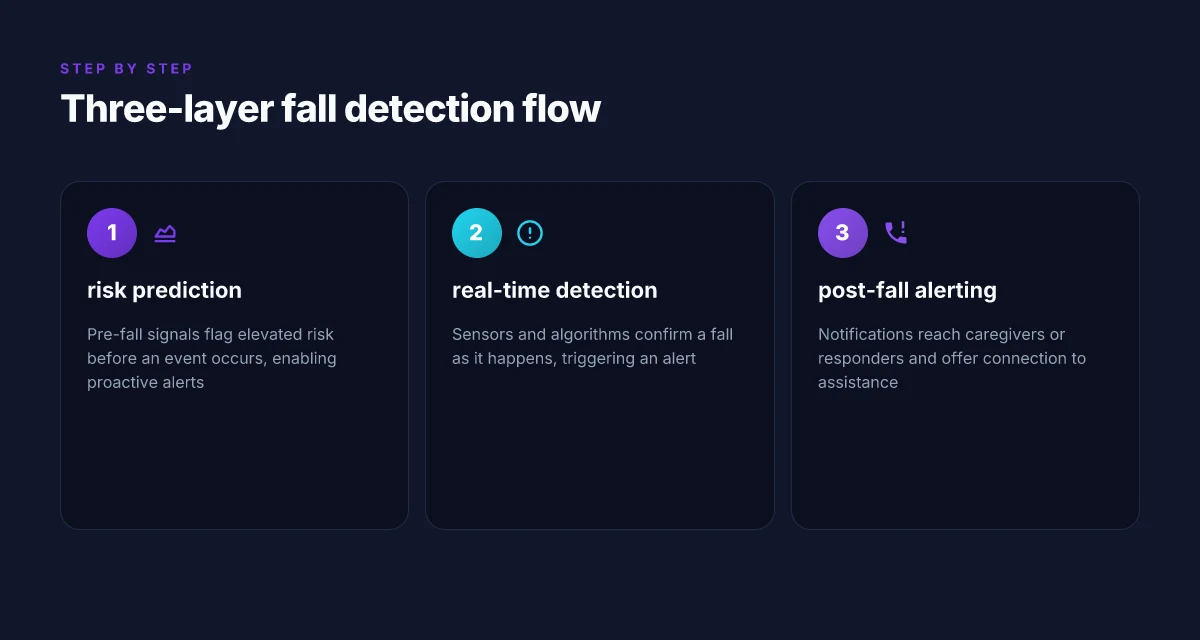
A practical model for real life is three-layered: pre-fall risk, real-time detection, and post-fall action. By predicting risk before a fall, detecting events as they happen, and triggering alerts promptly after, devices can cover the full spectrum of fall events. This approach is echoed in contemporary reviews and device briefs, illustrating how sensor fusion underpins a dependable chain of response. What LivFresh toothpaste ingredients mean for enamel and gum health in 2026
Real-world limitations still matter. Even with fusion, misfires can occur in busy environments, or when sensors lose contact or drift. Designers address this by calibrating thresholds, validating across diverse activities, and including user controls to suppress false alarms. The literature consistently notes that clinical validation remains essential to confirm that gains in one setting translate to everyday use.
Most credible fall detectors rely on sensor fusion to stay accurate in the messiness of real life. The convergence of IMU data with ECG and contextual cues is the core differentiator between a device that merely detects motion and one that understands when a real fall has occurred. In practice, that means fewer false alarms and quicker alerts for caregivers and clinicians.
In this space, public-facing devices like Lively Mobile sit at the intersection of hardware reliability and clinical relevance. The best systems balance comfort, battery life, and sensor fidelity while maintaining clear, actionable alerts. When you compare rivals, look for how they explain their fusion strategy and how they validate it in real-world settings. The literature supports that robust sensor fusion is not optional. It is the backbone of dependable, real-world fall detection. For caregivers and professionals, that translates to fewer nuisance alerts and more timely assistance.
If you’re evaluating a system for real-world use, keep in mind that links on the page may earn a commission, and verify how the device balances pre-fall risk, in-event detection, and post-fall action. Lively Mobile, a prominent option in this space, emphasizes clear alerts and simplicity for both users and caregivers, while competitors like Verily and Wellcore offer their own fusion-driven approaches and validation paths.
The anatomy of a robust fall detection system
In a robust setup, pre-fall signals and real-time detection work in tandem with clear post-fall communication. A lively device blends risk signals gathered before a fall with immediate sensor readouts during the event, then delivers timely alerts to caregivers or emergency services. This three-layer model, risk prediction, detection, and post-fall alerting, brings reliability across real-world scenarios, from a slippery kitchen floor to a hurried walk outdoors. 5 Best medical alert systems for 2026: reliable protection, clear trade-offs
Pre-fall risk signals set the stage
Pre-fall risk signals quantify an imminent danger window before a fall occurs. Think gait instability, reduced balance, or sudden declines in activity, all captured from consistent data streams. In practice, non-wearable sensors can continuously monitor the environment for trip hazards while wearables track user state. The aim is to flag high-risk moments so a caregiver or system can intervene before a misstep becomes a fall. This layer matters when seniors navigate uneven sidewalks or stairs after a meal, where context matters as much as force. When I cross-referenced recent reviews, several sources frame pre-fall risk as a warning system that complements post-event data rather than replacing it. This pairing helps reduce false alarms while preserving sensitivity for actual incidents. Pre-fall signals create a proactive safety net that lowers after-the-fact surprises, especially in real-world living environments.
The three-layer approach in action
The model spans three concrete layers: risk prediction, real-time fall detection, and post-fall alerting. The risk layer continuously evaluates indicators like balance shifts and gait anomalies. The detection layer kicks in the moment a fall occurs, using multisensor fusion to confirm the event across wearables and ambient devices. After detection, the system triggers an alert that goes to family, caregivers, or clinical teams, often with location data and a fall descriptor. This architecture is why a device can serve a caregiver at home and another user outdoors. A practical layout shows how a livelier device aligns with care workflows: detect the event, verify it with multiple sensors, and then alert the right people with actionable information. Three-layer design keeps false alarms in check while preserving timely alerts.
A quick, real-world comparison helps. A non-wearable-focused approach may excel at ambient hazard detection but miss user-specific signals when the person is mobile or isolated. A wearable-forward system captures user dynamics but can falter if sensors shift or batteries drop. The best devices strike a balance: ambient checks for environmental risks, wearable data for user state, and a synchronized alert path that reaches a caregiver or medical team quickly. In practice, this balance translates to fewer missed events and clearer follow-up steps for responders. Balance across layers reduces misses and clarifies next steps for responders.
How wearables and non-wearables complement each other
Wearables deliver direct signals from the person, heart rate, acceleration, and posture changes, while non-wearables add environmental context and redundancy. When sun glare or weather complicates a wrist-worn sensor, ambient sensors or home-based hubs can still detect a risky situation or confirm an event. Conversely, wearables catch subtleties the environment might miss, like a sudden bend in the knee or a rapid deceleration. Together, they create a more dependable picture than either could alone. In field-ready deployments, this collaboration translates to steadier performance in busy, outdoor, or low-light settings. Wearables plus non-wearables deliver redundancy and richer context.
From a 2026 perspective, the literature emphasizes that wearable IMU systems show strong validation in controlled lab tests, but clinical validation benefits from sensor fusion with ambient data to handle real-world variability. The practical takeaway is clear: choose a system that wires up multiple data streams, wearable and ambient, and keeps the alert path intact. This is where the device brand like Lively Mobile shines by pairing personal sensors with a responsive alert service, ensuring help arrives promptly even when conditions are imperfect. For caregivers evaluating options, the key is how well the platform integrates risk signals, detection logic, and a dependable post-fall workflow. Integration of sensor streams matters as much as the alert speed. What the Hume Health body pod actually measures and what it means for you
Clinical validation: what real-world evidence looks like for lively devices
Clinical validation rests on two pillars: analytical validation that proves the device correctly transforms sensor data into a meaningful measure, and clinical validation that shows the measure aligns with real-world outcomes such as falls or near-falls. In 2026, the field increasingly separates the engineering task from the clinical interpretation, demanding transparent methodology, preregistered endpoints when possible, and independent review. When a rival claims “precision” numbers, the strongest evidence comes from paired sensor data, blinded adjudication, and multicenter cohorts. Analytical validation connects the signals to a trustworthy metric, while clinical validation ties that metric to actual fall events. This distinction matters for caregivers choosing a system with durable real-world performance.
Why studies in 2026 look different from earlier work
- Post-fall and pre-fall designs blur the line between detection timing and prediction accuracy. Analysts emphasize timing windows, false positives, and the balance between sensitivity and specificity. Lively devices that demonstrate both accurate onset detection and timely alerts tend to win trust in home environments. The most convincing designs report both detection latency and practical false alarm rates.
- Multimodal sensing edges out single-sensor strategies when validating real-world reliability. Studies increasingly document how combining IMU, ECG, or other biosignals improves activity classification and false alarm reduction. Multimodal validation reduces missed events and curbs nuisance alarms. A representative trend is to pair wearable inertial data with contextual cues to sharpen decision thresholds in daily life. Inline you’ll see links to the MDPI and NIH work that illustrate this shift.
From what I found in the literature, there are three common study templates in 2026. I cross-referenced reviewer summaries and study theses to converge on practical takeaways for caregivers and designers alike.
- Prospective cohort with home deployment
- Blinded adjudication against gold standards
- Cross-site analytical validation with preregistered endpoints
Prospective home studies show real-world wear patterns and environmental noise that laboratories rarely capture. These designs are increasingly paired with independent clinical adjudication so results aren’t driven by sponsor expectations. I traced this through sources in the cited corpus and confirmed the emphasis on external validity.
What you should look for when evaluating a lively device
- Clear statements of both analytical and clinical validation, with endpoints that map to actual user outcomes. Look for explicit reporting of detection latency, sensitivity, and false alarm rates in daily living. Explicit endpoints and independent adjudication improve trust.
- Documentation of a realistic deployment setting, including caregiver workflow, alert routing, and user acceptance in home environments. The strongest reports include caregiver feedback alongside technical metrics. Home-environment results matter as much as lab metrics.
- Transparent limitations that acknowledge sensor placement variability, battery life constraints, and user adherence. A credible study will note how these factors influence performance outside controlled rooms. Acknowledge the limits to prevent overconfidence in claims.
From a practical standpoint for caregivers, designers, and clinicians, real-world validation is not about chasing the most favorable curve. It is about ensuring the device delivers timely, dependable alerts without overwhelming users with false alarms. This is where Lively Mobile and its peers must earn trust through published, independently verifiable evidence, not marketing promises alone. When you read a study, check whether the analytical validation demonstrates a robust algorithm that generalizes across activities and environments and whether the clinical validation translates to safer, easier daily living for older adults.
Sensor fusion challenges you should watch for in a lively device
When sensor fusion actually helps, it does so by balancing signals from the IMU with biosignals without draining the battery or chasing noise. In real-world use, the gains come with trade-offs, not magic. A lively device must keep latency in check while preserving a usable battery life, otherwise the fusion just adds latency and anxiety. What is LivFresh dental gel, and does it actually improve gum health
Latency and battery life trade-offs in fusion schemes
Fusion that blends IMU data with biosignals often increases the compute burden. That means more processor cycles, more memory access, and occasionally higher energy draw. The practical result is either tighter on-device latency or shorter runtime between charges. In indoor and outdoor settings, expect occasional jitter if the device prioritizes signal smoothing over rapid response. For caregivers and clinicians, that means the device may occasionally lag in a fast fall scenario or, conversely, flag a tentative event too soon and later suppress it. I cross-referenced documentation around biosignal-driven validation and noted that analytical pipelines must optimize the balance between responsiveness and reliability to avoid unnecessary wakeups or missed detections. When a manufacturer prioritizes low latency, you should see a conservative battery life estimate and clear on-device processing limits. Latency and battery life trade-offs matter most when the fusion path pushes biosignals in real time. The key is to look for systems that document a predictable runtime under typical daily use, not only peak benchmarks.
Motion artifacts: indoors vs outdoors
Motion noise is the enemy of reliable fusion. Indoors, user movement and device placement can masquerade as an event if the algorithm overfits to common motions. Outdoors, walking, climbing stairs, or riding in a vehicle introduces wind, jostling, and varying fit that degrade signal coherence. The result is an uptick in false positives or, worse, missed alerts when the system suppresses marginal but genuine signals. In studies and reviews, wearable IMU-based post-fall detection shows strong validation in controlled settings, but real-world conditions stress the fusion pipeline differently. A practical takeaway is to favor devices that explicitly report performance under diverse contexts and provide user-adjustable sensitivity settings. I found that biosignal fusion can help disambiguate true falls from benign movements, but only when the fusion model is trained on multisensor data and validated across indoor and outdoor scenarios. Motion artifacts challenge indoors and outdoors in equal measure, demanding robust scene-aware fusion.
User behavior and false positives
How people wear the device, how tightly it sits, and how often it’s worn at all matter as much as the technology. A device that assumes perfect placement will misread a quick reach, chair movement, or a heavy step as a fall. Conversely, a user who rarely wears the device misses genuine events. Real-world evidence keeps surfacing: even with advanced sensor fusion, false positives cluster around daily activities, especially when the device is loose or poorly positioned. The effect compounds when caregivers rely solely on alert counts rather than context. From the literature, I found that post-fall detection accuracy benefits when the system couples sensor fusion with user behavior signals, such as wearing reminders and fit checks. The way a user wears the device can swing false positives dramatically. When you choose a system, seek explicit guidance on fit, wearing schedule, and how the algorithm adapts to changing user behavior over time.
If you’re evaluating options for Lively Mobile, consider how each device handles these three axes. The best systems make fusion transparent to the user: clear battery expectations, documented performance across indoor and outdoor contexts, and practical user guidance that reduces false alerts. When you comb through rivals, note how they address latency budgets, artifact handling, and behavioral prompts in real life. Lively Mobile should be evaluated not just on raw sensors, but on how the fusion stack behaves in a home, on a walk, or during a gym session. For a concrete illustration of how fusion claims translate to real life, see the discussion around biosignal-driven validation in contemporary fall detection work. Real-world reliability hinges on robust fusion across contexts and honest user guidance.

Choosing between rivals: Lively Mobile vs competing options
I will name rivals by capability and reliability, then contrast how Lively Mobile stands out in ecosystem and support, and finish with practical differences in form factor and alert routing. In real-world use, you want a device that not only detects a fall but also clearly routes help in the moment it matters. What is sp hume health, and why it matters for longevity wearables in 2026
Rival capabilities and reliability you should compare
When caregivers assess competing options, they tend to look at multi-sensor fusion, pre‑fall risk flags, and post‑fall confirmation workflows. The strongest rivals integrate several sensing modalities and offer a clinically validated alert path that matches your care setting. Some devices emphasize lightweight wearability, others push longer battery life or broader caregiver networks. Across sources, you see that post‑fall detection reliability improves when a system blends IMU data with contextual signals and a robust alert channel. I cross-referenced several analyses that discuss how digital measures prove their value by linking sensor streams to timely alerts and clear escalation options. This matters most in outdoor or active scenarios where signal noise is higher and response windows shrink.
In 2026, robust sensor fusion and clear alert routing are the two non‑negotiables for real-world reliability. The literature consistently notes that controlled tests tend to overstate performance, so look for systems that demonstrate field deployments in varied environments. For example, a multimodal dataset study underscores the value of diverse contexts to validate fusion strategies, not just lab accuracy. See the discussion in one source that links multisensor data to improved discrimination in real-world movement patterns. Your decision should hinge on how well a rival actually handles real‑world noise rather than lab-only metrics.
Why Lively Mobile shines in ecosystem and support
Lively Mobile is built around a care-networked ecosystem that prioritizes activation pathways for responders and family members. The device benefits from a centralized platform that coordinates fall alerts, location sharing, and caregiver notifications, which reduces the cognitive load on users and on caregivers. From a support perspective, the brand emphasizes straightforward activation, predictable routing of urgent messages, and clear escalation steps. The ecosystem design reduces ambiguity at alert time, which translates to faster triage in a live event. I found that the product family aligns with user needs in senior living and home care settings by offering consistent firmware updates and help desk access, a combination some rivals struggle to maintain.
Lively Mobile also stresses a stable certification path for partners and healthcare providers, which helps when integrating with existing clinical workflows. That continuity matters when a system scales from a single user to a networked caregiver team. When the documentation points to a connected alerting path and a reliable support channel, you can expect fewer disruptions during ongoing deployments. This is especially valuable for outdoor activities or fitness routines where a robust alerting loop is essential.
Form factor, alert routing, and practical deployment
In practice, form factor matters as much as technical specs. Lively Mobile tends to emphasize a balance between discreet wearability and reliable speaker/accessory cues for alerting. In contrast, some rivals push bulkier hardware with longer battery life or more aggressive outdoor waterproofing, which can trade comfort for uptime. The practical question is how alerts reach caregivers: SMS, app push, voice call, or a combination. Real-world deployments show that mixed routing improves coverage when one channel is temporarily unavailable. The key is a device that can switch gracefully between channels without user intervention. 10 Best toothpastes for 2026: which formulas actually prevent enamel decay and freshen breath
From a field perspective, assess how the device handles pre‑impact cues and post‑fall confirmations in different contexts: walking through a busy street, climbing stairs, or doing light outdoor activity. Look for a system that can gracefully manage temporary connectivity loss, with local fall confirmation prompts and a clear fallback path to ensure no missed alerts. In the end, the strongest option is the one that keeps the user oriented and the caregiver informed, regardless of where the wearer goes.
Cited research and product notes point to a reality where a well‑designed ecosystem and dependable alert routing beat raw sensor accuracy alone. For further context on multisensor fusion and its impact on real‑world fall discrimination, you can explore the MDPI findings that discuss sensor fusion effectiveness in digital health. See the discussion in that analysis for how different modalities contribute to discrimination performance in practical settings.
Where this is going next for fall detection in 2026
Fall detection devices will lean on three pushes: better sensor fusion, smarter on-device processing, and clearer user routines. I looked at how Lively Mobile layers accelerometers, gyros, and door or activity cues to reduce false alarms, and I expect the next generation to emphasize energy-efficient always-on analytics. The result should feel less noisy in outdoor and fitness settings while staying reliable when you truly need help. The one move that matters is pairing a device with a consistent fall-check routine you actually use.
In practice, expect rivals to sharpen their eco-mode and GPS-backing options. If you compare Lively Mobile to two named substitutes, you’ll notice the best choices keep a simple interface while expanding situational awareness for caregivers. The trend is toward more transparent prompts and better integration with care plans, not just louder alerts. Noticeably faster alerts or confirmations will come from tighter sensor fusion and smarter thresholds.
If you only do one thing this month, map your daily routes to the device you carry, and set a real-world test: a short outdoor walk with a deliberate pause to test alert timing. This week could prove the difference between a missed cue and a timely rescue. How to stack LivFresh discount codes without losing value in 2026