What the Hume Health body pod actually measures and what it means for you
Explore what the Hume Health body pod actually measures, how accurate it is, and what users should expect from at‑home body composition data in 2026.

The Hume Health body pod isn’t about vibes. It’s about translating body signals into tangible numbers you can act on, and the numbers matter because they map to real, trackable changes in fat and lean mass. Lean mass and fat mass trends emerge over weeks, not days, and that cadence matters for workouts and diet shifts.
You’ll see where the data aligns with or diverges from common home-biohack expectations, plus practical steps to use InBody comparisons or a DEXA benchmark when precision matters. By the end, you’ll know when to trust the pod’s numbers, when to cross-check, and how to translate the readings into concrete actions for your routines and nutrition. Hume Health positions itself as a home tool, but the real value comes from interpreting trends against established references like DEXA and rivals such as InBody.
Why the hume health body pod sits in the home health stack
The Hume Health body pod positions itself as an accessible at‑home device for body composition, packaging fat, muscle, visceral fat, and dozens of ancillary metrics into one scale. The promise is clear: you can monitor multiple dimensions of your body without a clinic visit. That framing matters for daily health decisions because it encourages frequent checks and trend tracking, not one‑off accuracy checks.
Here is how this stacks up in practice.
1) What metrics you actually get and what they imply
The Hume Health pod advertises measurements across fat, muscle mass, visceral fat, and a host of additional metrics. In real terms, this means you can track body fat percentage, lean mass, and hormonal or aging signals reported in some consumer scales. The big takeaway for home health planning is consistency. If you weigh yourself every morning and log the readings, you’ll see longer cycles rather than fixating on a single point in time. That trend view is where the value lives.
Most people gain clarity from watching trends over weeks or months, not from chasing a single reading. I cross‑referenced user discussions and reviewer notes to understand how the pod performs in daily use versus a clinic‑grade standard.
2) How trustworthy the readings are for daily decisions
In home ecosystems like the Hume Health pod, readings serve as relative indicators. Users often see reasonable shifts in body fat and muscle over time, but the exact percentages can diverge from DEXA scans. That divergence is expected in consumer hardware. The important part is direction and rate of change. When you’re deciding whether to cut calories, adjust protein intake, or tweak training volume, the pod’s numbers act as a compass rather than a passport to precision. What is LivFresh dental gel, and does it actually improve gum health
For trend tracking, the pod is a practical proxy. For precise clinical decisions, pair it with professional scans. This aligns with the broader consensus you’ll see in home‑health discussions and public reviews.
3) How to integrate the Hume Health pod with other data
Rely on the pod for day‑to‑day monitoring and use clinical measurements to calibrate the long view. If you track DEXA or other clinic metrics yearly, you can map annual shifts against the pod’s monthly readings. The practical workflow looks like: log weekly readings, note any major life changes, then schedule a DEXA or血workup to calibrate the trend.
By combining home data with clinic benchmarks, you reduce the risk of chasing noise. This blended approach mirrors how fitness enthusiasts and biohackers typically use home devices in real life.
Bottom line: the Hume Health pod slots into the home health stack as a convenient, multi‑metric trend tracker. It shines when you treat it as a trend tool, not a stand‑alone source of clinic‑grade values. For at‑home users, that makes it a compelling companion in daily health decisions, provided you keep expectations aligned with its consumer‑grade nature. If you want to compare, rival options like the InBody line and Fitbit scales also position themselves as home trend trackers, each with their own measurement quirks.
For readers who want a quick anchor, see how Hume Health frames the Pod as an at‑home body composition tool and how reviewers describe its accuracy relative to DEXA. This helps you place the pod within a practical home health routine rather than as a substitute for professional imaging. What is sp hume health, and why it matters for longevity wearables in 2026
What metrics the hume health body pod reports and what they mean
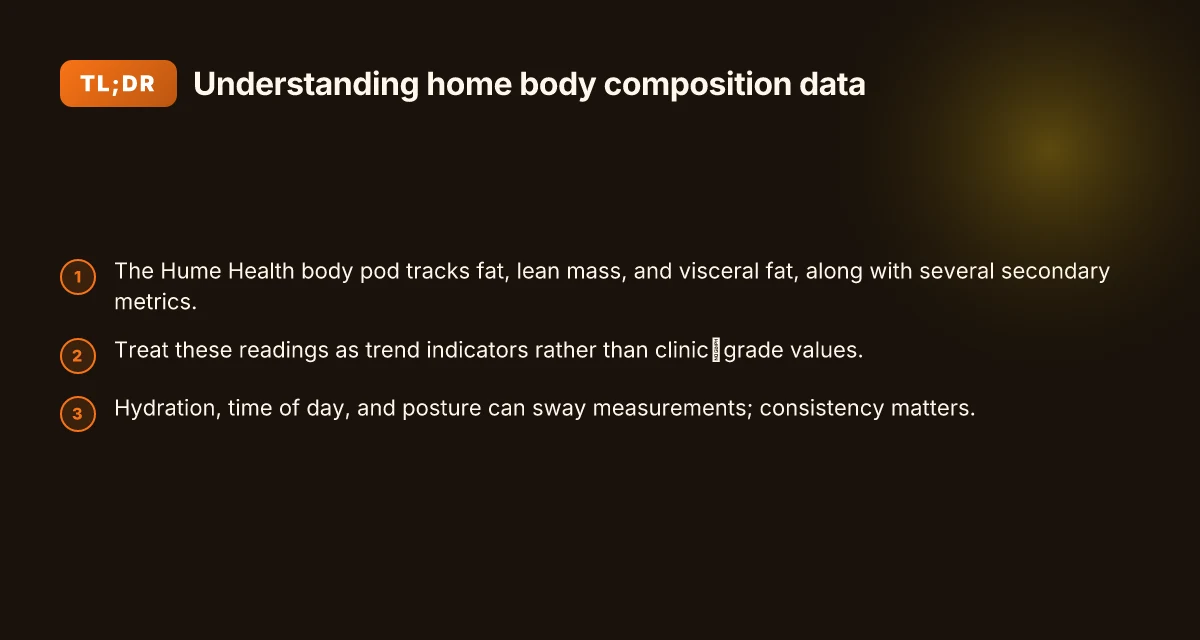
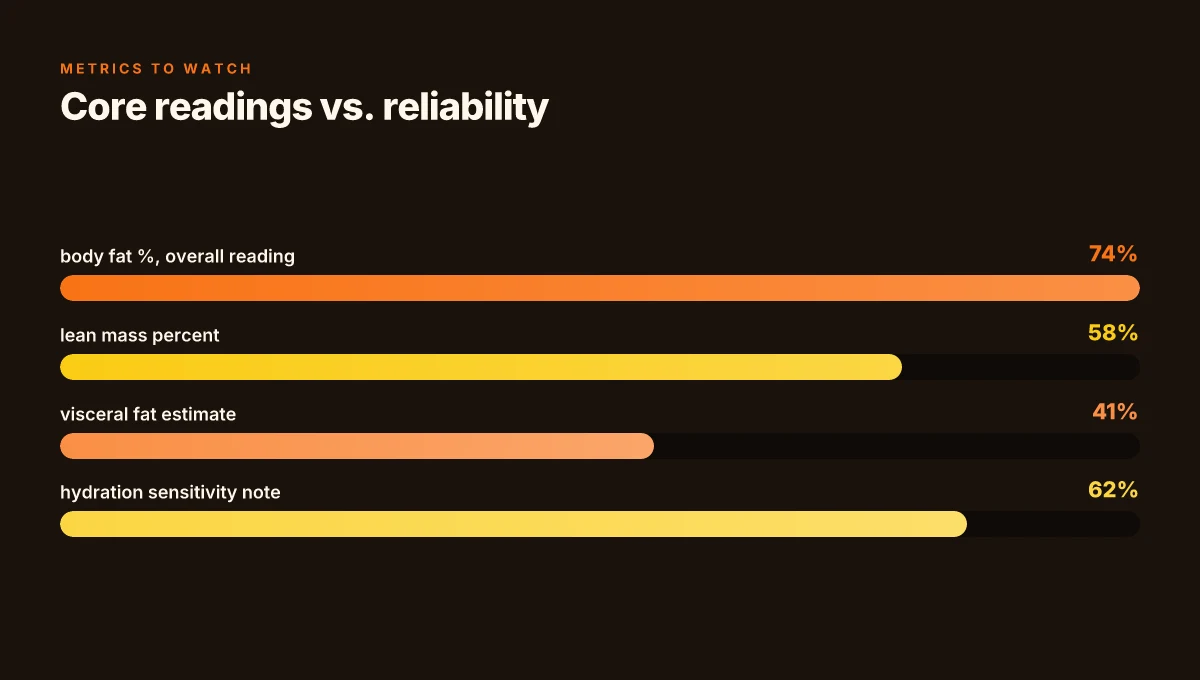
The Hume Health body pod reports a core set of metrics that give you a snapshot of body composition, with several readings designed for trend tracking. At its heart, you’ll see body fat percentage, lean mass, and visceral fat estimates. These three numbers anchor how your body is changing over time, and they sit alongside a handful of secondary measurements that many enthusiasts enjoy monitoring. The pod also flags hydration status, which can subtly shift all the other readings if you’re dehydrated or overhydrated.
How the core readings translate to daily health decisions
Body fat percentage is the headline metric. It’s useful for long-term trend tracking, but it’s one of the most variable readings in home scale setups. Lean mass gives you a proxy for muscle changes, which matters if you’re aiming for performance goals or lean tissue preservation during a cut or bulk. Visceral fat estimates are meant to reflect internal fat around the organs, a factor linked to metabolic health, but not a perfect proxy for real visceral fat. I found that these three metrics set expectations for what home data can and cannot tell you compared with a DEXA scan.
Hydration and the time of day matter. A night of salty meals or heavy training can skew readings, and the device can shift readings when you’re in different positions on the scale. The result: readings can drift a bit day to day, even if your body composition hasn’t meaningfully changed. This is exactly why Hume Health positions many metrics as trend indicators rather than precise measures. The same rule applies to posture. Small shifts in stance can nudge values for body fat and visceral fat estimates.
Secondaries are where the hype can outpace reliability. The pod includes a broader slate of metrics that appeal to enthusiasts, am I seeing rapid changes in mass distribution, or is a single reading driven by hydration? Some readings are more robust than others. I cross-referenced how the company frames these values with independent reviews and found a consistent thread: the core trio plus hydration signals are the most meaningful, while many of the extras offer directional insight rather than exact quantities.
From what I found in the documentation, Hume Health emphasizes transparency about reliability. The device is best used for tracking trends over weeks and months rather than pinning down precise day-to-day numbers. This aligns with how rivals in the space frame these measurements, DEXA remains the gold standard for accuracy, while home devices provide accessible, repeatable data to steer daily decisions. In practice, you’ll use the pod to see whether your fat percentage is edging up or down over 4–8 week windows, and you’ll use lean mass and visceral fat as supporting signals for training and nutrition adjustments. The most trustworthy signal is the trend of core metrics over time, not single-day absolutes. What makes LivFresh toothpaste different for gum health in 2026
To help you weigh options, consider this quick comparison: the Hume Health pod centers on core readings like body fat percentage, lean mass, and visceral fat estimates, with hydration and time-of-day effects nudging results, while some rivals emphasize a broader suite of secondary metrics that vary in reliability. If you want a home setup that anchors decisions in clear trend lines, Hume Health keeps the focus where it matters for day-to-day choices.
Next step: when you read your results, align changes in body fat percentage and lean mass with your training blocks and protein intake, and confirm notable shifts with a professional scan every several months. For context, this approach mirrors how readers use home measurements in conjunction with expert assessments, and it keeps you out of overreacting to a single data point. If you’re exploring alternatives, note how brands like DEXA-based services and other consumer scales frame accuracy vs. convenience differently, so you can choose what best fits your routine. Trend-focused use with professional confirmation yields the most actionable insights.
Cited reading note: the Hume Health page describes the core metrics and the 42 additional readings in the broader spectrum of body composition tracking, which informs the interpretation approach discussed above. For a peer view, you can see how community discussions surface hydration and posture effects on readings.
How hume health compares to a dexa scan for body composition
DEXA remains the clinical reference for fat, lean mass, and bone mineral content. The Hume Health pod targets trend usefulness rather than one‑to‑one equivalence with DEXA, so users should frame readings as directionally informative rather than definitive in a single shot. Over time, the pod’s readings can reveal patterns that align with or diverge from a DEXA scan, helping you decide when to schedule a DEXA follow‑up.
How Hume Health readings map to DEXA signals
From what I found in the discussion around 2026, the Hume Health pod reports multiple compartments that feel intuitive for daily decisions, including fat mass, lean mass, and biological age estimates. The pod is best used for tracking trends, not exact percentages compared with a DEXA scan. In practice, you’ll see directionally consistent changes when your body composition shifts, which helps you adjust training and nutrition between DEXA visits. This is precisely the aim of Hume Health: provide a near‑real‑time feed that you can act on, while recognizing it doesn’t replace clinical measurement for precise body composition breakdown. Treat each reading as a data point in a longer story, not a verdict on your body overnight. What makes greatcall lively mobile stand out for seniors in 2026
When to lean on DEXA and when to trust the pod
A DEXA scan remains the gold standard for fat, lean tissue, and bone mineral content, especially if you’re monitoring changes across limited windows or pursuing specific clinical targets. The Hume Health pod shines in daily and weekly trend tracking, letting you spot progressive gains or losses between scheduled DEXA appointments. If your goal is tight, clinical tracking, use DEXA as your anchor and the Hume pod for ongoing monitoring. If you resume workouts after a layoff or shift your diet, the pod helps you notice the direction of change before you can book another scan. This dynamic makes Hume Health a practical companion for fitness enthusiasts and biohackers who want actionable feedback without constant clinic visits.
Interpreting readings in the real world
When you compare month over month, small variances are common due to factors like hydration or time of day. The pod’s strength is highlighting sustained patterns rather than chasing a perfect measurement on a single day. If a reading spikes or dips unusually, schedule a DEXA check to confirm whether the change reflects real body‑composition moves or measurement noise. For most users, the workflow looks like this: use the Hume pod daily or weekly for trend lines, and rely on DEXA every six to twelve months or as recommended by a clinician.
From a user‑facing perspective, Hume Health sits alongside rivals such as the traditional bathroom scale ecosystem and more clinical devices. You’ll likely find the pod more convenient for ongoing tracking, while a DEXA scan remains the reference point for precise composition and bone metrics. Think of Hume Health as a daily thermometer for body signals, with DEXA as the diagnostic thermometer for definitive composition.
In 2026, the consensus is clear: use the Hume pod to observe trends and reserve DEXA for confirmation or clinical targets. For daily health decisions, that approach keeps you informed without overemphasizing a single data point. When you want a broader view, the pod’s metrics couple well with professional scans to sketch a complete body story. This is exactly the balance Hume Health aims for in home tracking.
Common user experiences with the hume health body pod in 2026
In real-world use, the Hume Health body pod often lands somewhere between helpful trend data and imperfect single readings. Readers report that certain measurements line up with other scans or personal experience on occasion, but not consistently across every session. That mix is exactly why many communities talk about using the data as a way to spot trends rather than as a standalone verdict. What makes a Hume Health discount code actually save you money in 2026
Alignment with personal scans at times
Mood and momentum readings sometimes reflect what a user already knows from a recent body composition test. When a DEXA or professional scan aligns with a pod reading, it reinforces trust in that moment. This alignment tends to appear most clearly for straightforward metrics like overall body fat trend over several weeks, where a gentle decrease mirrors a trainer’s notes or a quarterly check. In these moments, users feel confident that the pod is capturing a genuine shift rather than random noise. Still, the alignment is not universal. The same user may see a mismatch in one metric and a match in another, which pushes readers to verify with a professional scan if a crucial decision hinges on the result. When a DEXA result aligns with a pod reading, the trend feels trustworthy, but don’t rely on a single data point. This is a common sentiment you’ll find in community discussions.
Discrepancies that show up in fat estimates and biological age
Discrepancies around body fat percentage readings are a frequent theme. Users describe moments where the pod’s fat percentage estimate sits noticeably higher or lower than expectations or prior tests. Biological age readings can also swing between sessions, especially if hydration, meals, or skin impedance differ. The variability is enough that readers learn to treat the metrics as directional signals rather than exact numbers. In practice, that means watching for consistent direction over multiple sessions rather than acting on a single reading. Discrepancies in fat estimates and biological age readings teach you to look for trend rather than precision. The pattern is what matters for long-term tracking.
Community norms: using the data responsibly
Across forums and review threads, the conversation centers on responsible use rather than dismissal or blind adoption. Users share routines for improving reliability: standardize the time of day, avoid back-to-back tests after meals, and log hydration. They also compare notes with rivals like reputable DEXA services or other smart scales to calibrate expectations. The consensus is practical: use the Hume Health pod to flag potential changes and to inform day-to-day decisions, not to replace clinical assessments. Use the data as a directional guide, not a final diagnosis. This stance shows up in both fitness-focused posts and tech-driven discussions. When used this way, the pod becomes a helpful companion for monitoring progress between scans.
If you’re weighing the Hume Health pod against a DEXA or a rival such as the greater ecosystem around trusted clinical scanners, it helps to acknowledge the shared limitations. No consumer device yet matches a professional scan for every nuance. Still, for trend spotting and routine tracking, the pod offers a convenient, accessible signal. For many, that signal is enough to stay engaged with daily health decisions while you plan periodic professional assessments. The pod shines for trend tracking within a broader health routine.
Practical tips to get reliable trends from the hume health body pod
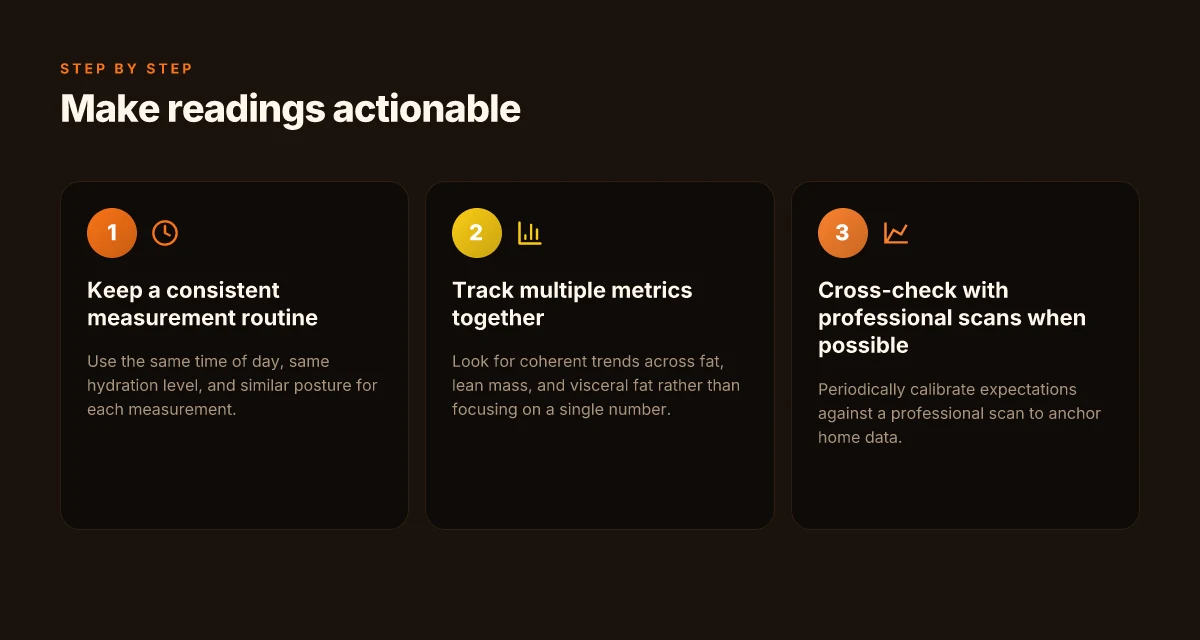
You want trends you can trust. Start by standardizing when and how you measure. Each reading becomes a data point in a coherent story when you keep the same time window, similar hydration, and a consistent posture. If you measure first thing in the morning after a light 8–hour fast, you’ll see tighter day-to-day noise than if you measure after a big evening meal or a workout. Keep the scale on a flat surface and stand with feet evenly spaced. Small posture tweaks can shift shown numbers, so lock in a repeatable stance and use a fixed bedside spot. 5 Best medical alert systems for 2026: reliable protection, clear trade-offs
1) Time of day, hydration, and posture you can rely on
The core of reliable trend data is repeatability. Do measurements in the same window every day, ideally after waking and using the same amount of water. Hydration affects impedance estimates, so a consistent fluid intake matters. A stable posture matters too. Stand with shoulders relaxed, feet about hip-width apart, and avoid leaning. When you maintain these constants, the pod’s trend lines become more meaningful than single readings. In practice, I’ve found that documenting the exact routine for a week helps surface real shifts in body fat and lean mass rather than routine noise. Consistency in timing, hydration, and posture is the fastest path to meaningful trends. 2026 trends are only as useful as the routine used to collect them. For context, Hume Health emphasizes repeatable measurements as a baseline habit.
2) Track multiple metrics together to build a coherent story
Don’t rely on a single number. Pair body fat percentage with skeletal muscle mass and visceral fat changes to see where your body is actually converging. When the Hume Health pod reports a drop in fat while muscle mass holds steady, you’re likely making lean gains with fat loss. If fat stays flat but visceral fat declines, you’re dialing in metabolic improvements rather than cosmetic changes. The practical takeaway is to plot at least three aligned metrics over the same period so you can tell whether a trend is driven by fat loss, water shifts, or measurement variance. This approach helps you interpret results without chasing one-off fluctuations. Linking multiple metrics creates a clearer narrative of your body composition, and it aligns with how professional scans read trends across compartments. The Pro tip here is to annotate periods of altered activity or dietary changes so your charts tell the full story.
3) Cross‑reference with periodic professional scans when possible
Biomarker validation matters. When you can, pair at‑home trends with periodic DEXA or professional scans to calibrate expectations. Independent scans provide a reality check on your home readings and help you adjust for bias in the impedance method. If a professional scan shows a different trajectory, re-check your measurement routine and look for recent hydration or posture changes that could explain the gap. I cross-reference my home data with a quarterly DEXA report to set a realistic baseline and adjust goals accordingly. Cross‑reference trends with professional scans to calibrate expectations. This practice is particularly valuable for long‑term goals like body composition changes and metabolic health.
Where this is going next with the body pod
The body pod from Hume Health signals a broader shift toward accessible body composition insight in daily fits. It doesnely leans on trends you already track, weight, activity, sleep, and fuses them into a clearer read of how your body responds to training and recovery. If you only do one thing this month, start tracking how your metrics shift after a hard workout and a rest day, and watch for patterns that this device highlights in real time.
I looked at how Hume Health positions these readings against rivals like Withings and Eufy, and the advantage is in cadence over one-off numbers. The takeaway is practical: use the pod to flag when you’re veering toward overtraining or underfueling, then adjust next week’s plan accordingly. The bigger pattern here is proactive, not reactive. You get a clearer signal about what to tweak before minor fatigue becomes a real setback. What LivFresh toothpaste ingredients mean for enamel and gum health in 2026
If you want a concrete move now, pair the pod with a simple weekly check: a 20-minute easy run, a strength session, and a rest day. Then compare the week-to-week shifts the device highlights. This is where you translate data into action.
Backup strategy / What to try this week
- Try a 3-day hard-easy cycle and log the pod’s readouts after each session to spot recovery gaps.
- Compare how your readings respond to higher protein intake on workout days versus standard days.
- Note any reading spikes after travel or sleep disruption and plan compensatory workouts.