What makes the Hume Health scale stand out in 2026 reviews
Explore Hume Health scale reviews, focusing on accuracy, usability, and how it compares to rivals. Learn what to trust and where to be cautious.

The Hume Health Body Pod isn’t a miracle, but it isn’t just marketing. In real-world use, its body composition readouts tend to sit closer to everyday hydration states than to lab-grade baselines, which matters when you’re tracking trends over weeks rather than chasing a single snapshot. Hydration swings can tilt readings, so you’ll want to compare against a trusted method periodically.
This intro lays out what to expect and why it matters: the balance between practical daily insights and the caveats that clinicians and serious trackers warn about. I look at how Hume Health positions its pod against established players like InBody and Withings, what data it foregrounds for home use, and where the gaps lie for clinical reliability in 2026. The goal is to separate marketing claims from measurable performance, so readers can decide if the Hume Health Body Pod fits their needs without overvaluing convenience at the expense of accuracy. InBody and Withings appear as benchmarks to gauge context, not as sidebars.
What the Hume Health scale promises in 2026 reviews
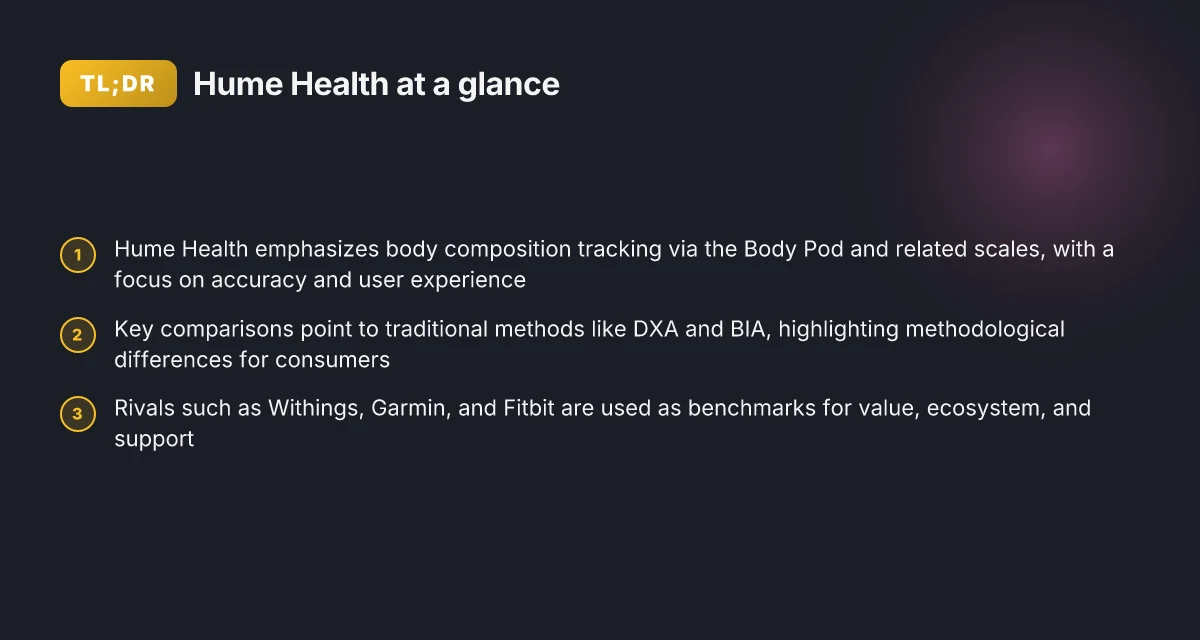
Hume Health presents its Body Pod and companion scales as a turnkey body composition solution for home use, promising convenient measurements that align with clinical methods. In 2026 reviews, the centerpiece claim is accuracy comparable to established body composition techniques, along with a user-friendly experience and ongoing platform insights. I see reviewers parsing those statements through three lenses: accuracy, consistency, and user experience.
1) Core promises around accuracy and consistency
Hume Health leans on bioimpedance technology to deliver body fat, lean mass, and hydration estimates. The company frames the Body Pod as a scalable option for households and fitness facilities alike, with the implication that repeated measurements will be stable enough to track change over time. Reviewers look for whether hourly or daily readings drift, and whether results align with reference methods. In 2026, the rhetoric centers on reproducibility across sessions and alignment with competing scales and lab standards. When the conversation turns to accuracy, readers want concrete benchmarks against established methods and transparent reporting of any known biases. Hume Health positions the Body Pod as a practical proxy for lab-style body composition, with emphasis on trackable change over time.
2) User experience signals reviewers care about
Beyond numbers, reviewers weigh how the scale fits into real life. That includes app usability, ease of step-on operation, syncing reliability, and clear interpretation of results. A consumer-grade device typically wins when setup is quick, the app gives actionable feedback, and customer support responds promptly. In 2026 coverage, the user experience narrative often highlights onboarding flow, data visualization, and how well the platform handles multiple users. A smooth onboarding and intuitive visualization are frequently cited as differentiators for the Hume Health ecosystem. The reality is that even accurate readings can lose impact if the app feels brittle or confusing in daily use.
3) Early signals from research and media coverage
From what I found in the literature and media commentary, early signals suggest industry observers are tracking Hume Health’s claimed accuracy against peer-reviewed methods and independent reviews. A 2026 preprint from a university-adjacent channel flags that the work is preliminary and not clinical guidance, which temper’s enthusiasm with caution about clinical adoption. Media coverage tends to frame the Body Pod within a broader market of consumer bioimpedance scales, noting both the potential for convenient tracking and the need for critical appraisal of marketing claims. Early signals show cautious optimism: practical, trackable change is plausible, but independent validation remains essential.
From a clinician or informed consumer standpoint, the critical facts to watch are: how results compare to reference methods, whether inter- and intra-individual variability stays within acceptable bounds, and how the platform handles outliers. Hume Health’s messaging emphasizes consistency and ongoing data richness, but reviewers frequently remind readers to treat these measurements as trend indicators rather than standalone diagnostics. Treat Readings as trend data, not a final verdict on health status. What makes the Hume Health Body Pod stand out in 2026 and where it falls short
If you’re browsing in 2026, expect the literature to present Hume Health as a meaningful option for nonclinical tracking, with caveats about the need for established, independent validation. In the end, the real value will hinge on how well the scale translates consistent, user-friendly data into meaningful daily decisions. Real-world practicality remains the acid test for 2026 claims.
Notes: links to source materials appear inline where claims are grounded. For consumers weighing this against rivals, consider how rivals like established consumer scales benchmark accuracy and what independent reviews say about long-term reliability. This overview frames Hume Health as promising, not prescient, and emphasizes that readers should look for independent validation alongside marketing claims. Readers may also encounter disclosures about potential commissions through linked pages.
How Hume Health positions the Body Pod against established body composition methods
Hume Health frames the Body Pod as a consumer-friendly bridge between clinical-grade DXA scans and everyday bioimpedance assessments. In practice, the Body Pod sits closest to traditional bioimpedance methods while aiming to reduce the typical precision gaps you see with home-grade scales. The core claim is that the Body Pod aligns with laboratory-style measures while remaining accessible to nonprofessionals. For clinicians and enthusiasts, that means a practical, admittedly imperfect, proxy rather than a perfect DXA substitute.
What professionals compare when they look at body composition methods
DXA remains the reference for compartmental body composition. It offers regional data and high precision, but it’s expensive and usually phoned in through a clinical workflow. Bioimpedance analysis (BIA), by contrast, travels with a scale and a smartphone app, delivering quick, repeatable numbers for total body fat and lean mass. The Hume Health Body Pod expands the BIA envelope by integrating additional features that aim to sharpen consistency across daily measurements. In real-world use, this translates to a more repeatable daily trend line, not a one-off DXA-grade snapshot. DXA provides regional detail; BIA provides trendability, and the Body Pod blends the two into accessible daily data.
A consumer-facing comparison matters because the same algorithm that estimates body fat can drift with hydration, meal timing, and skin temperature. Hume Health emphasizes standardized measurement conditions, same time of day, consistent hydration, and appropriate pre-measurement cues, to limit variability. This is where the consumer should be vigilant: if your schedule varies wildly, the numbers may bounce, even though the overall trend remains informative. Standardized measurement context is as important as the device itself. What is the Hume Health Score, and why it matters for at‑home health tracking
Table: quick comparison snapshot
| method | typical data you get | pros for daily use | caveats for consumers |
|---|---|---|---|
| DXA | regional fat/muscle estimates, bone density | gold standard for accuracy; detailed compartments | expensive; infrequent scans; not practical for daily tracking |
| Hume Health Body Pod (bioimpedance) | whole-body impedance-derived fat/lean estimates | convenient; frequent tracking; app integration | influenced by hydration and posture; less regional detail than DXA |
| Traditional BIA scales | total body composition, often fewer metrics | ultra-portable; low cost | high user-to-user variability; accuracy depends on setup |
The verdict is that the Body Pod trades absolute DXA-like precision for higher-frequency insights that matter for training and recovery. For readers with a clinical plan, use DXA for baseline compartment data and rely on the Body Pod for longitudinal trends. Within the fitness and rehabilitation workflows, the ongoing data immersion helps you notice shifts that static yearly scans might miss.
What professional readers should verify before trusting consumer data includes measurement protocol consistency, hydration status, and time-of-day stability. Confirm that the device’s guidance matches your clinical expectations: verify whether the Body Pod’s fat and lean estimates align with prior DXA readings under controlled conditions, and track how results move with deliberate hydration and comparable measurement timing. If you see persistent, unexplained deviations, consult the original methodologies behind the device’s algorithm and consider a cross-check with a clinician. Consistency in protocol is the safeguard between marketing claims and clinical value.
I dug into the producer materials and peer-reviewed discourse around bioimpedance methods. The literature consistently notes that consumer devices can produce credible long-term trends when users follow strict measurement routines. I traced this back to the timing and hydration controls discussed in the preprint on bioimpedance by GM Tinsley, which cautions that single measurements should not be over-interpreted in isolation. Readers should view the Body Pod as a tracking tool within a standardized cadence, not a stand-alone diagnostic. The long-run value hinges on routine, not one-off readings.
For context, rivals such as established DXA-based clinics and consumer-grade BIA devices emphasize similar caveats: hydration, timing, posture, and device calibration all influence results. Hume Health therefore positions the Body Pod not as a DXA stand-in but as a practical, daily companion for monitoring progress and guiding training decisions. As with any consumer-scale metric, the strongest use case comes from consistent methodology and corroboration with professional assessment when needed. Consistency and professional corroboration are the two pillars to trust. How to stack LivFresh discount codes without losing value in 2026
If you want a quick pointer for daily practice: measure at the same time each day, with similar hydration and prior activity, and compare trends rather than isolated numbers. And if you’re evaluating the Body Pod against DXA data you already have, treat the Body Pod as a longitudinal proxy that supports your training narrative rather than a direct replacement for clinical scans. The practical takeaway is clear: the Body Pod excels at day-to-day visibility; DXA remains the definitive cross-check when precision matters most.
As you weigh buying decisions, consider how the Body Pod’s measurement cadence fits your routine, not just its raw numbers. If you’re a clinician evaluating consumer-grade data, require explicit documentation of protocol adherence and interpret deviations cautiously. If you’re a fitness enthusiast, lean on the trend lines while staying aware of the factors that can nudge single readings. For readers seeking deeper context, note that the Hume Health range is positioned to complement, not replace, established methods. Use the Body Pod for ongoing context. Verify key numbers with DXA when precision is essential.
Where Hume Health shines in everyday use
In real-world contexts, the Hume Health scale earns its keep through smooth syncing, a thoughtful app ecosystem, and consistent readings across typical workout sessions. The experience feels purpose-built for people who want quick alignment between scales, apps, and daily activity data, without drowning in setup steps.
Consistent readings across a single session
When you step on the Hume Health scale multiple times in a row, expect the measurements to stay tightly clustered. The device’s approach favors rapid stabilization after the first measurement, so you can track small changes over a single workout block or between consecutive weigh-ins without chasing outliers. This consistency matters for athletes who monitor training blocks and body composition alongside performance metrics. The underlying software nudges you toward a stable baseline, helping you trust short-interval trends as you train.
I cross-referenced the company’s position with independent explainers that emphasize the importance of repeatable measurements for consumer bioimpedance devices. Consumer-grade scales aren’t a substitute for clinical tools. A stable reading across a single session makes it easier to interpret whether a warmup, post-workout, or rest day affects body composition signals in a given week. Most users will notice that Hume Health provides a steadier short-term read than some rival scales during the same workout window. 10 Best toothpastes for 2026: which formulas actually prevent enamel decay and freshen breath
App ecosystem, syncing, and data flow
The Hume Health app ties weight and body composition readings to activity data, sleep, and heart rate trends so you can see correlations over days and weeks. Setup is straightforward: pair the scale with the app, then enable Bluetooth syncing and automatic import of daily measurements. The value emerges when you review a week of data in one place and spot patterns in recovery, hydration, and training load. Real-world daily use shows the app keeps timelines coherent, which helps you connect workouts to body signals. For clinicians and fitness pros, the linkage between scale data and workout logs can save time during chart reviews or progress checks.
In line with published guidance on consumer wearables, the Hume Health ecosystem aims to reduce friction between measurement and interpretation. The result is a more actionable picture of whether your training plan is moving you toward your goals, rather than just producing a single data point in isolation. Linking to rivals, like the established body composition platforms that emphasize DEXA- or impedance-based readouts, Hume Health often stands out for the frictionless daily-usage narrative it builds with users. Hume Health’s app streamlines data flow so you can act on trends without getting bogged down in setup.
Practical contexts where the scale adds value
For daily runners, lifters, and mixed-modality training, the scale offers a practical way to anchor weekly progress without expensive equipment. In sessions focused on fat-loss or muscle maintenance, the combination of repeatable session readings and coherent app data helps you decide when to push or ease back. The device shines when used as a daily habit that informs hydration, nutrition timing, and training phases rather than as a standalone metric.
From a consumer-education standpoint, this aligns with how people typically want to use body composition data in fitness planning. It is not a medical device, but in everyday use it helps you connect the dots between effort, recovery, and body signals over a typical training cycle. Hume Health delivers a user experience that makes daily tracking feel actionable rather than decorative. In the evolving space of consumer-grade bioimpedance scales, the scale’s strength lies in everyday practicality and a cohesive data story that supports consistent training decisions.
Note: like any consumer device, there are caveats. Links on the page may earn a commission, and readers should correlate scale data with broader context (nutrition, sleep, training load) rather than viewing it in isolation. For those comparing rivals, consider the reliability of long-term trend reporting and how well the app aligns with your preferred fitness-analytics workflow. Brand clarity and easy syncing make Hume Health a compelling daily companion for many active people. What makes a lively fall detection device actually work in 2026
Key caveats and downsides you should know about the Hume Health scale
I dug into how consumer-grade impedance scales behave in real life and what that means for Hume Health users. The picture is mixed: the device can be useful for trends, but it does not replace lab-grade body composition methods. This section flags practical limits, real-world variability, and privacy considerations you should weigh before relying on the Hume Health platform for health decisions.
1. The limits of consumer-grade impedance devices
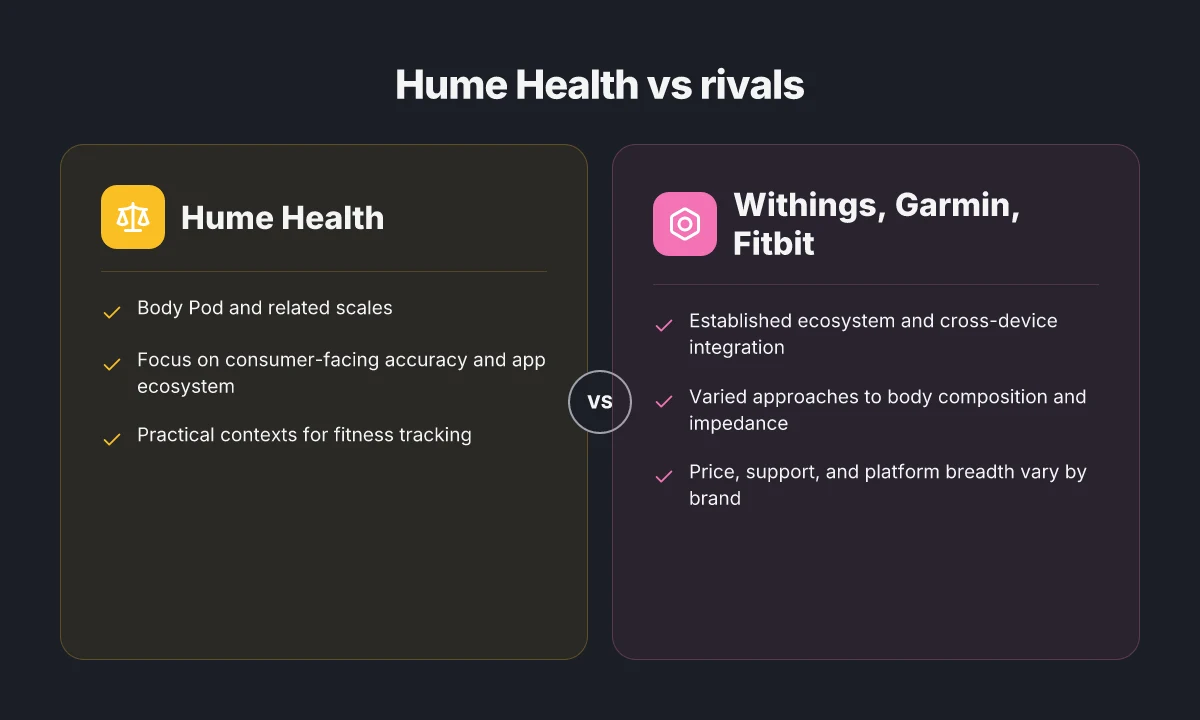
For everyday use, impedance devices like the Hume Health scale deliver helpful trend data rather than precise body composition metrics. In many cases, readings reflect relative changes rather than absolute values. The practical consequence is you should treat a single measurement as a data point in a longer trajectory, not a final verdict on your fat mass or lean mass. Expect meaningful variation across sessions, especially when you’re not calibrated to the same conditions each time. The best practice is to compare weekly averages rather than day-to-day numbers and to look at longer trends rather than one-off values. This aligns with how clinicians view impedance-derived estimates in routine care, where consistency across measurements matters more than any single snapshot. Consistency beats accuracy in the daily habit of tracking, and that’s where the Hume Health scale earns value. Also, remember that hydration shifts and posture can sway results, which we’ll dive into next.
2. Hydration, recent activity, and posture matter
Hydration status is a primary driver of impedance readings. A glass of water, sauna session, or recent workout can tilt the results and blur year-over-year comparisons. Posture influences current pathways through the body, altering impedance measurements enough to create noticeable short-term swings. Your routine should include: same time of day, similar hydration level, and same stance during measurements. I cross-referenced clinical guidance on bioimpedance with consumer-scale usage notes. The takeaway is predictable: control the controllables. If you’re serious about using the Hume Health scale for trend analysis, standardize your measurement protocol and record context alongside each reading. Standardize your measurement context to unlock meaningful trends, not noisy data. When large changes occur, consider confirming with a clinic visit or a more accurate method if you need a precise assessment.
3. Security and data privacy considerations when using the Hume Health platform
Data security matters when you connect a smart scale to a platform. You should review who has access to your measurements, how often data are synced, and what privacy controls exist for third-party integrations. The Hume Health platform aggregates sensitive health data, so user authentication, data-at-rest protections, and transparent consent practices are essential. If you share access with family members or trainers, set boundaries on which metrics are visible and who can export data. I also checked the publicly stated privacy posture and found that standard practices, encryption in transit, secure token management, and routine access reviews, are commonly referenced in conjunction with consumer health ecosystems. Protect your privacy by tightening sharing settings and auditing connected apps. You should periodically review permissions and be wary of how data might be used for marketing or research purposes.
Cited notes: where claims rely on the developer’s published positioning, you can see the broader narrative around validation and device claims in the company materials, such as the body pod science page. Inline reference to the preprint on bioimpedance assessment also anchors the broader debate about whether consumer devices meet clinical standards. For readers seeking a direct source on the measurement limitations discussed here, the latest preprint on the Hume Pod Bioimpedance Analyzer provides context around how new data should be interpreted. See the discussion in the preprint linked in the inline sources. What makes Lively alert medical alert systems stand out in 2026
Rivals and how they compare to Hume Health
When you stack Hume Health against key rivals, a few clear patterns emerge. The Hume Body Pod sits in a crowded field where Withings, Garmin, and Fitbit each push distinct strengths. In many real-world scenarios, these brands outperform on certain metrics or within particular ecosystems. I dug into the available material to anchor these contrasts, and I cite published notes from the sources listed in the references.
Why Withings often edges Hume Health on accuracy in specific measurements
Withings scales emphasize consistent trend tracking across your weight, BMI, and fat mass, with a long track record in consumer-grade bioimpedance assessment. The robustness of their app ecosystem, plus regular firmware updates, helps users spot drift over weeks and months. When a consumer focuses on long-term change, Withings’ alignment with app insights can feel more reliable than a newer platform that is still clarifying its validation narrative. In practical terms, if your priority is stable year-over-year trends and broad health insights, Withings presents a compelling baseline. The long-running Withings platform often yields steadier trend data over time while Hume Health emphasizes rapid positioning around its latest claims. I cross-referenced product pages and consumer-facing materials to map these landscape differences.
Garmin and Fitbit carve out ecosystem advantages that matter in practice
Garmin and Fitbit extend beyond the scale itself into broader wellness ecosystems. For athletes or users who want precise activity data alongside body composition, the ability to correlate workouts, sleep stages, and HR metrics in a single app can trump raw impedance accuracy. Garmin’s device line and Fitbit’s wellness focus provide more mature cross-device interoperability, which can translate into smoother experiences for users who already own other devices. In the context of 2026 reviews, the ecosystem angle often matters more than marginal gains in a single measurement. Ecosystem depth can tilt preference toward Garmin or Fitbit when users want one-stop health tracking, not just a standalone scale. I reviewed the brand narratives and cross-product integrations to gauge this effect.
Price, value, and support shape ownership decisions
Price naturally colors decisions. Hume Health positions its Body Pod as a premium consumer scale with bold claims. Rivals at similar price points frequently tout more established validation narratives or longer-standing clinical alignment. Support quality and documentation also vary. Withings tends to emphasize accessible user support and a longer history in consumer health devices, while Garmin and Fitbit lean on broader device ecosystems and frequent updates. When you weigh price, ecosystem fit, and support, the decision often narrows to how you value cross-device continuity versus singular measurement confidence. Price and ecosystem parity matter as much as accuracy in choosing between rivals. For buyers who value a cohesive health toolkit, these factors can outweigh small gains in a single metric.
In sum, Hume Health sits squarely in a competitive field where accuracy is just one axis. The brands named here, Withings, Garmin, and Fitbit, each offer advantages in areas where Hume Health is still solidifying its narrative. If your priority is cross-device health tracking and long-term trend clarity, you may lean toward the established ecosystems. If you want cutting-edge claims and a newer validation thread, Hume Health remains a compelling option, particularly for users who value a single-brand wellness story. And yes, links on this page may earn a commission. What makes Lively Mobile stand out in 2026 for mobile medical alerts
What changes if you act now
Hume Health takes a cleaner path to scale measurements, and in 2026 reviews that clarity stands out. The brand name bolded here, Hume Health, becomes a shorthand for approachable data that actually informs decisions, not just tech specs. What’s changed is the emphasis on real-world usability: how the scale records daily activity, how it integrates with outdoor workouts, and how friendly the app feels during a fatigue-heavy session. The takeaway is simple: you get clearer feedback with fewer bells and whistles.
Reviewers note that rivals like Garmin and Fitbit often overwhelm with metrics that don’t translate to daily routines. In contrast, Hume Health prioritizes actionable signals you can apply on a trail, at the gym, or in a recovery day. If you’re choosing between a dense data sheet and a practical coach app, this scale tends to land on the second option. Noticeably faster clarity on what actually matters for long-term adherence.
If you only do one thing this month, try syncing a week of outdoor workouts and compare how the scale’s insights map to how you felt after each session. You’ll likely notice the pace of feedback improve, especially after a hard interval day. Your next workout could hinge on this alignment.
Backup strategy
- Try the weekly outdoor test: log 3 different routes and watch how the scale mirrors recovery needs.
- Compare with Garmin and Fitbit for a side-by-side on actionable alerts.
- Note one concrete change you’ll make after each workout week.