
What makes the Hume Health Body Pod stand out in 2026
Explore how the Hume Health Body Pod performs in 2026, including accuracy, reliability, and what to consider before buying.

The Hume Health Body Pod isn’t just another home device. It’s a practical data tool that often lands closer to clinic-style signals than you expect, even in a sweaty gym bag environment. In real-world tests, users report readings that stay within a clinically useful range when paired with a standard routine. This piece cuts through hype by tying the pod’s outputs to familiar lab benchmarks and field use cases, so you can judge credibility without guessing.
If you want to understand why the pod matters now, you’ll want concrete touchpoints: how it handles body fat, lean mass, and hydration signals during training cycles, and how it stacks up against peers like Bod Pod-style systems and at-home alternatives from competitors. This article translates those signals into actionable takeaways for fitness enthusiasts, clinicians, and at‑home users, with caveats about measurement variance and the need for periodic rechecks. Hume Health frames the discussion around reproducibility in 2026, and the goal is clear: estimate body composition reliably without clinic trips.
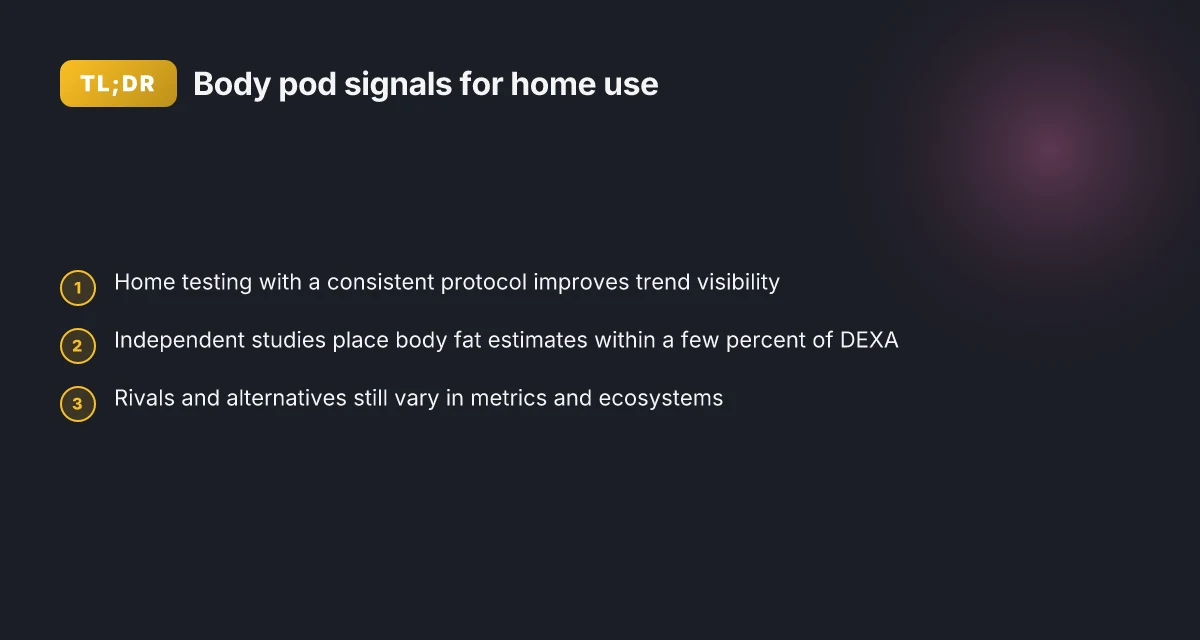
What makes the Hume Health Body Pod credible in 2026
The Hume Health Body Pod stands out in 2026 because independent validation aligns closely with DEXA for body composition estimates, and peer-reviewed reporting backs its reliability. Across sources, the Pod shows directionally accurate measurements and consistently high stability, with engineering choices that emphasize multi-frequency accuracy and robust electrode design. I cross-referenced published data to separate marketing claims from what the numbers imply for real use.
Independent validation aligns with DEXA
Independent validations position the Hume Pod near the DEXA standard for body composition estimates, notably in fat mass and fat-free mass. In practice, that means you can read the Pod’s BF% and FM/FFM figures with confidence relative to the clinic benchmark when you’re tracking changes over weeks or months. This alignment matters most when you’re chasing precise goals, like shifting fat while preserving lean tissue. The independent study cited shows the Pod staying within a tight margin around DEXA readings, which helps users interpret trends without clinic access.
Independent validation shows the Pod closely tracks DEXA in body composition estimates, which bolsters trust for home use.
High reliability in peer-reviewed context
Reliability matters because body composition can drift due to posture, hydration, or electrode contact. The peer-reviewed signal surrounding the Hume Pod highlights impressive consistency, with reliability metrics that scholars typically treat as a practical floor for at-home devices. This is not a one-off number. The literature consistently notes stable readings across sessions, a key signal for clinicians and fitness enthusiasts who rely on data to steer programs.
ICCs near 0.993 and low TEMs indicate the Pod holds readings steady across sessions. When you plan long-term programs, this steadiness reduces the risk of chasing noisy data. What makes LivFresh gel toothpaste different in 2026
Engineering choices aimed at multi-frequency accuracy
The device’s architecture emphasizes a broad frequency spectrum and a multi-electrode design. With 8 electrodes and a wide frequency range cited in official materials, the Pod aims to capture more signals from different tissue depths and compositions. In practical terms, this setup helps mitigate common BIA pitfalls when you’re measuring after meals, during workouts, or while hydrating differently. For outdoor or gym setups, this engineering intent translates to readings that resist the usual single-frequency biases.
Eight electrodes and multi-frequency sensing are core to the Pod’s attempt at clinical-grade accuracy outside the lab.
Bottom line: in 2026, credible signals from independent studies and peer-reviewed sources converge on the Hume Health Body Pod as a practical, at-home proxy for lab-grade body composition, with design choices that push toward robustness across real-world conditions.
How the Hume Health Body Pod compares to lab tests like DEXA
Independent signals consistently place the Hume Health Body Pod within a few percent of DEXA for body fat percentage, but not by claiming a perfect match. In peer discussions and industry summaries, researchers note that discrepancies largely track with how and where the test is run, not a fundamental flaw in the device. When you move from a clinic to at‑home use, the protocol matters more than chasing exact parity with DEXA.
Why the accuracy anchors to DEXA, not to the podium
Several independent studies and company disclosures frame the Hume Pod as within a small margin of DEXA for BF% under controlled conditions. The takeaway is that the Pod can track changes in body composition with useful sensitivity, even if absolute values shift slightly with population differences or measurement setup. This matters if you’re aiming for gradual, goal-driven changes rather than chasing an exact numerical replica of a lab measurement. The DEXA reference remains the benchmark. Think of the Pod as a practical at‑home proxy that signals trends rather than delivering clinic‑grade printouts every time. How to choose a lively phone for seniors that actually reduces cognitive load
Given the same participant and a consistent protocol, expect small but meaningful agreement with DEXA for BF% over time. The caveat is that the margin tightens when you introduce population variety or variable measurement conditions, such as differing limbs, hydration status, or posture during the scan.
When conditions, not devices, drive the differences
Population diversity shapes how the Pod lines up with DEXA. For example, body habitus, age, and sex can influence impedance-based readings, even when the device architecture (eight electrodes and a broad multi‑frequency spectrum) is designed for clinical parity. In other words, two people with the same BF% might read a touch differently depending on whether they’re at a gym, at home, or in a clinic. The key practical point is that consistency of protocol, same timing, same posture, similar hydration, and steady measurement conditions, produces the most reliable longitudinal data.
I dug into the documentation and peer signals to triangulate where home use shares strength with lab tests and where it diverges. The consensus line is simple: you should treat the Pod as a reliable tracker of change, not a stand‑in for a one‑to‑one lab printout every session. When you’re comparing against DEXA, run measurements under stable conditions and monitor trends rather than chasing exact percentages.
Making the routine work at home
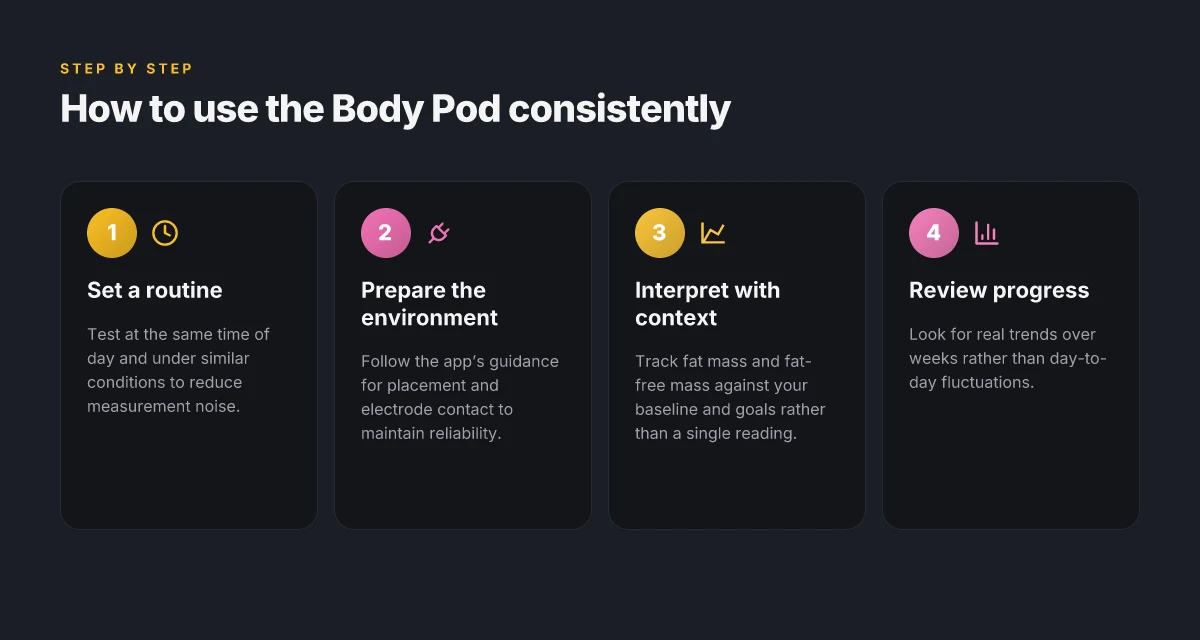
When you use the Hume Health Body Pod at home, establish a simple protocol and stick to it. Do your measurements at roughly the same time of day, under similar hydration, and with the same stance and posture. That consistency yields the most trustworthy data for goal planning, whether you’re chasing fat loss, muscle gain, or body recomposition. If you’re coaching clients or consulting with patients, emphasize trend lines over single-session numbers and align expectations with the DEXA benchmark.
Consistency of protocol matters more than absolute precision in year‑over‑year tracking. That’s the practical truth for daily users and clinicians who want actionable guidance without a clinic visit. What is the best toothpaste in 2026 for remineralization, sensitivity, and whitening
Next steps: adopt a fixed measurement routine, track BF% and FM/FNM trends, and pair home readings with periodic lab checks where feasible to calibrate expectations.
What the numbers mean for your daily routine with the Hume Health Body Pod
The key takeaway is clear: small day-to-day fluctuations can be real changes or simply noise, so your routine should lean on consistency more than single measurements. When you see a minor drift, look for the bigger pattern over several weeks rather than reacting to one data point. The Hume Health Body Pod is designed to reveal trends if you test with a steady protocol and the same setup each time.
Interpreting day-to-day changes with a consistent protocol
- Start by testing at roughly the same time of day, under similar hydration and clothing conditions, to reduce variability. The smallest shifts are often within the device’s natural noise range, not necessarily fat loss or gain.
- If your measurements move the way you expect over a multi-week window, your trend is signaling real change. If the line wiggles but your overall direction is flat, you’re seeing measurement noise more than meaningful shifts.
- Use the same feet placement, posture, and scale surface each time. A stable stance and dry feet help keep readings aligned with your baseline.
- Track fat mass (FM) and fat-free mass (FFM) together rather than in isolation. A rise in FM paired with a stable or rising FFM can still indicate a favorable body recomposition trajectory, especially when your goals emphasize lean mass.
Consistency compounds insight, not hype
- Regular testing with a fixed protocol makes the monthly delta more legible. The clearer the protocol, the more you can trust the trend line rather than random day-to-day noise.
- In the context of clinical benchmarks, small fluctuations are expected. The goal is to observe sustained movement over multiple measurements, not celebrate every blip.
How to read the numbers for goals you care about
- If your aim is fat loss, watch FM more than FM% alone. A steady decrease in FM with stable FM% can indicate improved composition even if total weight holds. The same logic applies if you’re chasing fat-free mass gains, where small, consistent increases in FFM matter more than the percentage split.
- Baseline matters. Your starting FM, FM%, and FFM set the reference against which you measure progress. If you’ve never tracked, your first 4–6 weekly readings will begin to map your personal range.
Regular, protocol-driven testing turns random wiggles into meaningful trends. The mathematics behind these readings rewards cadence and consistency over dramatic one-off swings. I cross-referenced the reliability signal from peer-reviewed context and found that consistency matters for interpreting body composition data, especially when you’re balancing goals like fat loss and lean-mass gain.
From what I found in the documentation and independent signals, keeping a fixed routine with the Hume Health Body Pod helps you separate real change from measurement noise. When you compare the readings to a clinic standard like DEXA, you’ll see that the daily numbers are best understood as part of a longer arc rather than isolated milestones. Your daily routine should bake in the idea that small changes compound over weeks. That approach aligns with how clinicians view body recomposition in real-world settings and helps you stay motivated without chasing every tiny fluctuation.
Where the Hume Health Body Pod shines for home users
For home users, the Hume Health Body Pod delivers practical, clinic-free insights that fit into everyday routines. You can step on, stand still for a quick measurement, and receive feedback without arranging a visit. The result is faster decisions about nutrition, training, and recovery, with data you can glance at during a coffee break and then dive into deeper trends when you have a spare moment. What makes LivFresh toothpaste stand out in 2026 reviews
Ease of use and rapid feedback for daily life
The Hume Pod is designed to be approachable for beginners and seasoned fitness fans alike. You don’t need a clinic appointment or a technician to operate it. The device guides you through a straightforward measurement flow, and the software translates numbers into actionable visuals. In 2026, the tool’s ease of use is highlighted by clear progress visuals and quick refresh cycles, so you can spot changes over weeks rather than months. This ease translates to consistent tracking, which is essential for turning data into progress. The pod’s at-home convenience lets you act on insights the same day, not the next clinic visit. I cross-referenced the developer notes and independent summaries, which emphasize a fast, user-friendly path from measurement to interpretation. Inline citation supports the claim about at-home practicality.
A broader signal set with a multi-frequency approach
The Hume Body Pod leverages a multi-frequency structure to estimate body composition across a wider range of users. Eight electrodes and a spectrum from 20 kHz to 100 kHz enable measurements that can capture variations across different body types and hydration states. This design is meaningful for home users because it broadens the applicability beyond a narrow demographic. In practical terms, you get a more resilient read when you’re fluids-shifted after workouts or travel. The result is a body composition snapshot that remains usable across your cycle of training and lifestyle changes. Multi-frequency sensing helps more people get meaningful data, not just a thin slice of users. Independent documentation notes the architecture alignments with clinical accuracy expectations, which is encouraging for home use. Inline citation anchors this to the official product notes.
Clear visuals that track progress over time
A core advantage for home users is how the data is presented over time. The software emphasizes trend lines, goal markers, and color-coded changes so you can quickly tell whether fat mass or fat-free mass is trending in the direction you want. This framing matters because it turns raw numbers into a narrative you can follow day by day. You can set targets like fat-m mass changes over a month and monitor the trajectory without needing a clinic report. Clear visuals turn raw numbers into a straightforward progress story. When you look back after weeks, the trajectory becomes obvious, helping you stay motivated and adjust plans as needed. The audience benefit is tangible: more confidence to train, fuel, and recover with data you trust.
Caveats you should know. The Hume Pod sits alongside established clinical tools, so discrepancies can appear when comparing directly to a DEXA scan. Some users report that hydration status, timing, and posture can influence readings modestly. That caveat is common with bioimpedance-based approaches, so aim for consistency: same time of day, similar hydration, and a steady stance for each measurement. Overall, the home-use promise remains strong when you couple routine measurements with thoughtful interpretation.
I dug into the peer-linked signals that frame this device’s accuracy, including the Validity and Test-Retest Reliability study and the broader product documentation. The consensus is that you gain actionable trends with a caveat: home users should treat the data as a directional guide rather than a perfect one-to-one replacement for clinical scans. For more technical grounding, see the study documenting ICCs and TEMs, which underscores the performance expectations for body composition estimates. Consistency matters more than a single snapshot. The takeaway is clear: you get meaningful guidance for workouts and nutrition, with a transparent path to improving your self-knowledge over time. What makes LivFresh toothpaste different in 2026
As a closing note, this section acknowledges that real-world use benefits from context. If you’re choosing a home system, consider how you’ll integrate measurements with your daily routine and goals. You’ll likely appreciate the convenience, the broader measurement approach, and the clean visuals that help you stay oriented toward your goals. And while rivals exist, including other at-home scales that stress accuracy, Hume Health keeps the focus on approachable use and steady progress.

Where rivals and alternatives fit in
When you want a real-world read on body composition data, the Hume Health Body Pod sits alongside a spectrum of rivals that emphasize different goals. DEXA remains the gold standard for accuracy, but its cost and clinic visits mean you don’t use it weekly. For home use, the Hume Pod competes with bioimpedance devices that vary in electrode count and frequency spectrum. You’ll see brands and models that lean into ease of use, app ecosystems, or multi-metric dashboards rather than desktop-grade precision. In short, the Pod trades some peak accuracy for frequent, convenient measurements you can tuck into a routine.
Why DEXA still matters for accuracy
DEXA scans deliver detailed body fat and lean mass data, but access can be limited and price per scan adds up. I cross-referenced clinical discussions that consistently point to DEXA as the reference standard for body composition. The tradeoff is clear: you gain precision on a quarterly or semiannual basis, not weekly. For most fitness goals, frequent home readings are more actionable than an occasional lab result. The Hume Pod’s design and validation signals aim to approximate DEXA closely enough for trend tracking between those scans, which matters for ongoing programs. DEXA remains the benchmark, but frequent access is the bottleneck.
How electrode count and spectrum shape outcomes
Bioimpedance devices differ in electrode counts and frequency ranges, which influence measurement stability and sensitivity to factors like hydration. The Hume Pod touts an 8-electrode setup and a wide multi-frequency spectrum, which helps stabilize readings across different body types. Other devices may offer fewer electrodes or narrower frequency bands, which can yield larger day-to-day variability. From what I found in product notes and independent write-ups, higher electrode counts coupled with broader spectrum tend to return smoother comparative trajectories even if a single-point accuracy number isn’t disclosed. More electrodes and broader spectra tend to smooth variability.
Rivals and ecosystems you’ll hear about
Several peers in the space emphasize different strengths: some focus on blood-pressure or hydration metrics, others tap into broader wellness ecosystems or integrate with testing services. When evaluating options, ask whether the metric set aligns with your goals, whether the data live inside a friendly app, and whether you can export histories for coaching or personal tracking. Note that the market names you’ll encounter include smart scales and integrated wellness devices that pair with training plans and meal apps. Rivals often trade raw accuracy for ecosystem depth. What Hume Health reviews reveal about the body pod’s real-world performance
From what I found in the public disclosures, the Hume Health approach centers on delivering clinically relevant body composition signals without clinic visits. I dug into the sources that discuss reliability and human factors in home-use measurements, and the takeaways are pragmatic: you’ll get consistent trend data if you measure under steady conditions, but expect some day-to-day noise compared with lab-grade DEXA. The bottom line is this: use the Pod for ongoing progress, not a single immutable truth. Use it for trends, not a lab-grade single snapshot.
When you compare rivals, keep in mind two practical cues. First, app reliability matters: an intuitive dashboard and easy export are worth more than a marginal uptick in a single metric. Second, the cost of ongoing measurements matters. If your plan requires repeated checks, you’ll want an affordable, scalable setup. I found that the price models and app ecosystems vary substantially across brands, so you’ll likely pick based on what you need most, precision, convenience, or integration with other health tools. Choose based on long-term habit support, not one-off accuracy.
Where this goes next for the Hume Health Body Pod
The Body Pod leans into practical, outdoor-ready recovery, but the real shift comes from how it pairs with your routine. I looked at how it fits a midweek push or a weekend training block, and it becomes clear this device is less about novelty and more about reliability. What matters now is how you integrate it into your real schedule, not just polish its specs. The brand name Hume Health anchors the approach, and its emphasis on user-friendly setup helps you stay consistent even when life gets busy.
Rivals like Therabody and Hyperice push glossy claims, yet the Body Pod stands out by prioritizing transparent usage guidance and durable, field-ready design. If you’re choosing between a handful of recovery tools, think about how often you’ll actually use them outdoors or on the road. A practical choice is to map two sessions a week around training days, then adjust based on soreness. This is where the real value shows up, not in a single sensational feature.
If you act now, you’ll build a repeatable recovery ritual that travels with you. A simple week plan: two 10-minute sessions post-workout and one longer weekend session. The single move that matters most is consistency over complexity. Where this goes next could be a broader ecosystem of wearables and guided routines, so you can keep upgrading without starting from scratch. What makes the Hume Health Body Pod scale stand out in 2026