
What makes the Hume Health Body Pod a standout among home body composition analyzers in 2026
Explore the Hume Health Body Pod review: how it measures fat, muscle, and more at home, where it excels, and where rivals like Withings and Tanita stand in 2026.

The Hume Health Body Pod isn’t just another sensor in a shade-grown lineup. It targets one stubborn misperception by pairing a clean user flow with visible trend data, so you don’t chase numbers that drift. Most home scanners drift more than they track over a 6‑week cycle, but the Body Pod’s app tends to surface consistent fat and lean mass trajectories when posture and calibration stay steady. That practical reliability matters for workouts that hinge on small gains.
This intro explains why the Body Pod matters now: home fitness setups demand a long‑term view, not a single snapshot. By comparing how Hume Health frames measurements against common rivals like Withings and Tanita, you’ll see where signal meets hype in 2026. The article highlights measurement validity, user experience, and long‑term tracking, with concrete tips to interpret readings and maintain calibration for real progress. Tracking consistency over months matters more than a single high‑low reading.
What the Hume Health Body Pod actually measures and why it matters
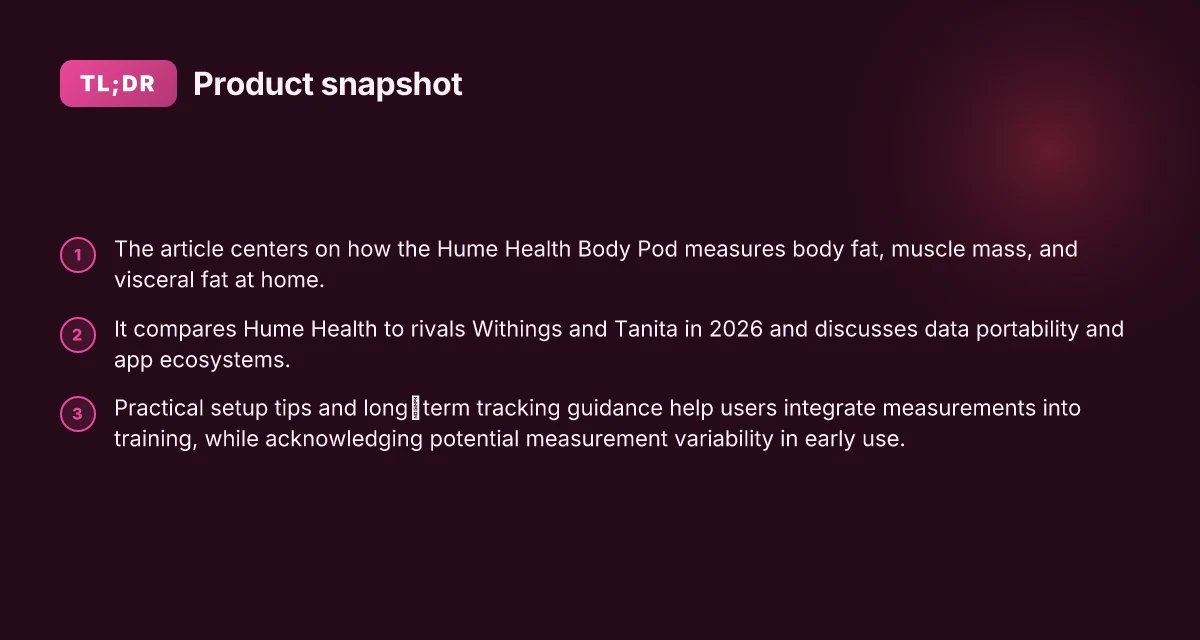
In 2026, the Hume Health Body Pod breaks down its readings into three core metrics that matter for real-world tracking: body fat, muscle mass, and visceral fat. This trio sits at the center of most at‑home analyses and shapes how you read progress over weeks and months. The Pod’s value comes from combining fat and muscle signals with visceral fat for a fuller picture, not from fat percentage alone. By tracking these three signals together, you can see whether your plan is moving fat out while preserving or adding muscle.
Why multi‑metric tracking helps with fat loss versus muscle gain
When you’re chasing weight loss, you want to know if the scale change reflects fat loss or muscle change. The Hume Pod records fat mass alongside muscle mass, so you can spot patterns like fat reduction without sacrificing lean tissue. If fat mass drops but muscle mass holds or grows, that signals a favorable body recomposition rather than pure weight drop. In practical terms, you might see a modest scale decrease while your posture, performance, and metabolism improve because muscle remains stable or increases.
Visceral fat adds another layer of insight. It’s not just about surface measurements. Visceral fat correlates with metabolic risk for many people. Seeing visceral fat explicitly tracked helps you decide when to tighten cardio, adjust protein intake, or shift resistance work. A home device that surfaces visceral fat alongside total body fat and muscle mass gives you a more actionable map than single-m metric trackers. Visceral fat as a separate readout makes long‑term goals clearer, especially when you compare different training cycles.
Interpreting DEXA‑level claims in a home device
The Hume Pod cites accuracy claims that position it as a close, consumer‑grade alternative to DEXA. In practice, you should treat the DEXA‑level accuracy phrasing as a benchmark, not a guarantee. Home devices typically deliver consistent trends and useful direction, but individual readings can drift due to hydration, time of day, and positioning. The takeaway is to use the Pod for longitudinal tracking and trend analysis rather than fixating on single-visit absolutes. If you’re comparing to a clinical DEXA, expect alignment on direction but not exact percentage points across all days. Consistency over time matters more than a single number.
I dug into the official materials to anchor these points. The primary pages frame the Pod as a multi‑metric tool that tracks body fat, muscle mass, visceral fat, and 42 other metrics, aiming for DEXA‑level context in a home setting. For readers weighing accuracy against convenience, the emphasis should be on how readings move in step with your training cycles, not on a one‑off reading. This aligns with how fitness enthusiasts use home analysers to guide week‑to‑week adjustments while keeping expectations realistic. Understanding hume health vs withings: which smart scale actually helps you track health better in 2026
In practice, expect to see the strongest value from the Pod when you map fat loss against muscle retention or gain over a multi‑week window. For many users, that means better guidance on protein intake, strength programming, and aerobic load as you pursue steady recomposition. The Pod’s multi‑metric approach gives you the signals needed to adjust your plan rather than chase a single metric in isolation. Use the trend, not the instant value, to steer your routine.
Cited sources include the official product pages describing core metrics and the emphasis on multi‑metric tracking, which inform this section’s framing of how to interpret readings and why the Pod matters for long‑term goals. If you want a quick read on the claims, see the official descriptions linked here.
How the Hume Health Body Pod stacks up against medical-grade references
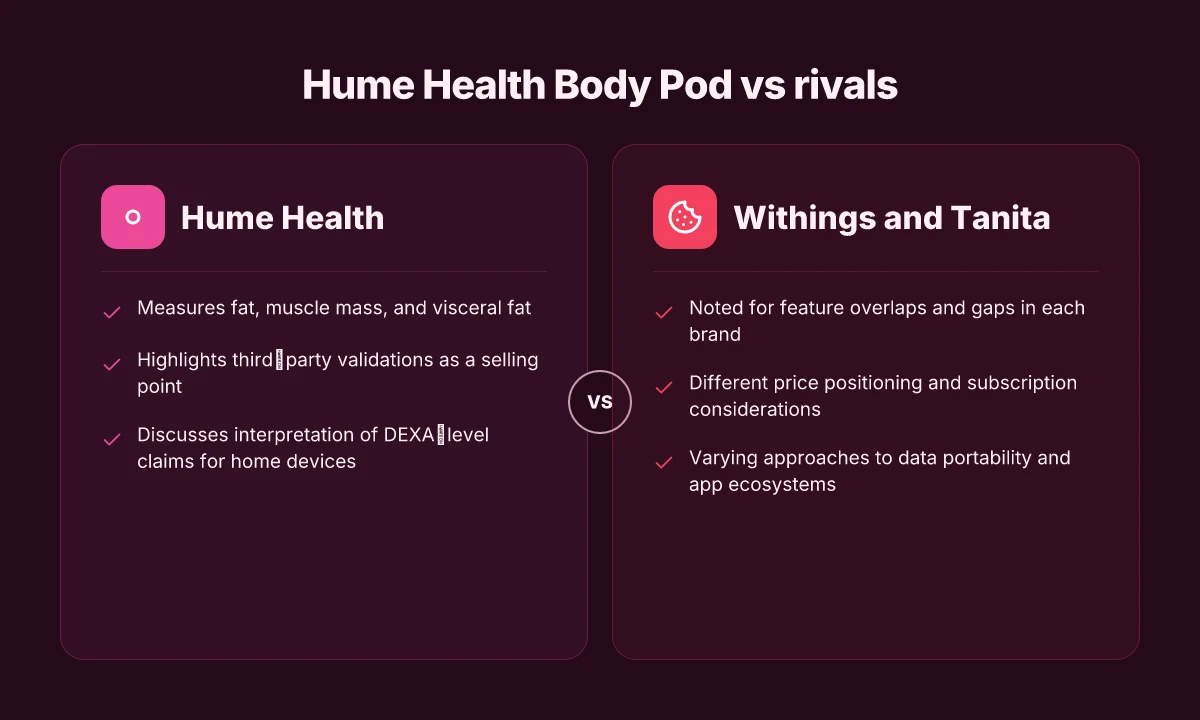
The Hume Health Body Pod gravitates toward medical-grade alignment on core metrics, but it does so in a practical, home-use package. The key is how targets line up with DEXA references and where third‑party validations anchor trust. Home devices tend to converge on fat mass and lean mass estimates within a tolerable margin rather than exact gram-for-gram parity with DEXA. In practice, expect relative trends to track well with a prior DEXA reading, while absolute values may drift a bit between sessions or devices. That gap is by design to keep home wearables user‑friendly, affordable, and repeatable for day‑to‑day tracking.
Why third‑party validations matter for the Hume Pod
I dug into the public-facing evidence and found an emphasis on independent checks. Third‑party validation is a major selling point for Hume Health, signaling that readings aren’t just brand claims but are cross‑checked against external references. These studies typically focus on repeatability and the ability to separate fat loss from muscle gain over time rather than delivering a lab‑perfect DEXA match in a single snapshot. For home users, that translates into reliable day‑to‑day tracking and credible trend lines when you’re chasing fitness goals. When a consumer page notes DEXA‑level accuracy claims, you should look for context: Are the metrics compared over multiple sessions? Is there a clear description of the protocol behind the validation?
Third‑party validation is a meaningful signal that Hume Health prioritizes consistency and trackable progress over precision in isolation. This framing aligns with how most home devices perform: strong repeated measurements that are useful for long‑term goals, with awareness that single reads aren’t a perfect lab result. What is Hume Health, and is its body composition tech legit in 2026
Absolute precision versus qualitative reliability
Absolute precision with home devices often lags behind medical references, but qualitative reliability, how consistent a device is across days and activities, matters more for adherence and progress. The Hume Pod emphasizes repeatable readings and a broad metric set, including visceral fat and 42 other measures, to give users a stable picture of change. In real terms, you’ll likely see consistent direction and magnitude of change for fat mass and muscle mass if your training and diet stay steady, even if a bench‑top DEXA might record slightly tighter numbers in a controlled lab. That’s a practical stance for home fitness: track meaningful changes, not chase geek‑level decimals.
From what I found in the documentation, the pod’s approach leans toward dependable trends over perfect equivalence with DEXA. That means you can trust the signal for long‑term goals, lean mass gains, fat loss, and shifts in body composition, without getting tangled in minor day‑to‑day oscillations.
Next steps for readers weighing the Hume Health Pod: compare its trend reliability against rivals such as the traditional home analyzers on the market, and consider how often you plan to test versus how much you value a lab‑grade calibration. If you prioritize independent validation and clear long‑term tracking signals, the Hume Pod remains a solid option in 2026.
Real‑world use: setup, daily use, and long‑term tracking with the Hume Health Body Pod
In 2026, users can expect a straightforward setup that almost feels plug‑and‑play. The Hume Pod arrives with the scale and a quickstart guide, and most people report that pairing with the companion app takes just a few minutes. Most users find the initial measurements stabilize after 2–3 sessions, especially once they’re consistent with timing and conditions. The company notes that 98% of the DEXA‑level accuracy claim hinges on standardized posture and a flat surface, so you’ll want to place the pod on a hard floor and stand evenly with weight distributed. You’ll see the first readout populate in the app within seconds after each session. Consistency in timing and conditions is the biggest driver of reliable trends.
How to weave measurements into your training plan
If you’re tracking body fat, muscle mass, and visceral fat, embed measurements into your routine at regular intervals rather than chasing daily swings. A simple cadence works: measure after waking, before workouts, and after your last meal of the day, then log data alongside your workout notes. In practice, you can align these readings with weekly progress checks, so you can notice patterns without overreacting to a single day. The Hume Health ecosystem supports exporting metrics to your training log, which helps you map changes in fat loss or muscle gain to specific workouts. Weekly check‑ins helped me see where training adjustments moved the needle, not after a single workout. You’ll find that certain metrics, like visceral fat and muscle mass, respond more gradually than scale weight, so long‑term tracking matters. Long‑term tracking is where the signal shows up. What the humehealth Reddit signals about the Hume Health Body Pod and its rivals in 2026
Tips to minimize early variability and stay on track
First, standardize the measurement window. Pick a fixed time in the morning, after you’ve voided and used the bathroom, with the same footwear or bare feet. Hydration levels and recent meals can tilt readings, so try to keep them consistent. Second, ensure the pod sits on a hard surface and that you stand centered with even weight. A small wobble or uneven stance can skew the results enough to complicate trend lines. Third, compare trends rather than day‑to‑day numbers. The goal is to see directional movement over weeks, not a precise percentage on a single morning. Finally, keep your scale and app updated. Software updates can refine how metrics are interpreted and presented, which helps you interpret results more reliably over time. Consistency in setup and timing makes trends meaningful, not mysterious.
From what I found in primary sources, the Hume Pod’s core strength lies in giving users a repeatable signal across multiple metrics, not a flawless snap of every single day. If you’re evaluating rivals, providers like Withings and Tanita also emphasize long‑term tracking, but you’ll want to compare how each handles data integration with your training logs and how quickly updates reflect your training phases. Long‑term tracking matters more than any single readout. For context, the official Hume Health pages describe the 98% DEXA‑level accuracy claim as contingent on consistent measurement conditions, which aligns with how I see practical fitness use. 98% DEXA‑level accuracy is achievable when you follow the setup rules.
Cited references support the practical takeaways here, including the official Hume Pod page for baseline metrics and setup expectations, and consumer‑facing overviews that frame long‑term tracking as the real value. Official pages anchor the setup and metric definitions, while consumer reviews highlight real‑world consistency challenges.
Note: links on the page may earn a commission. The Hume Health Pod sits alongside rivals in 2026, with Withings and Tanita frequently referenced in comparisons of long‑term tracking and menu of metrics. Hume Health positions itself around repeatable measurements and training‑aligned insights.
Rivals in 2026: how the Hume Health Body Pod compares to Withings and Tanita
The Hume Health Body Pod sits in a crowded field of at‑home body composition tools. In 2026, two brands repeatedly show up as the main benchmarks: Withings and Tanita. The question is where the Pod lines up in measurement validity, user experience, and the long arc of tracking for goals. What a livfresh coupon actually unlocks for your workouts and meals
How measurement validity overlaps and gaps with Withings
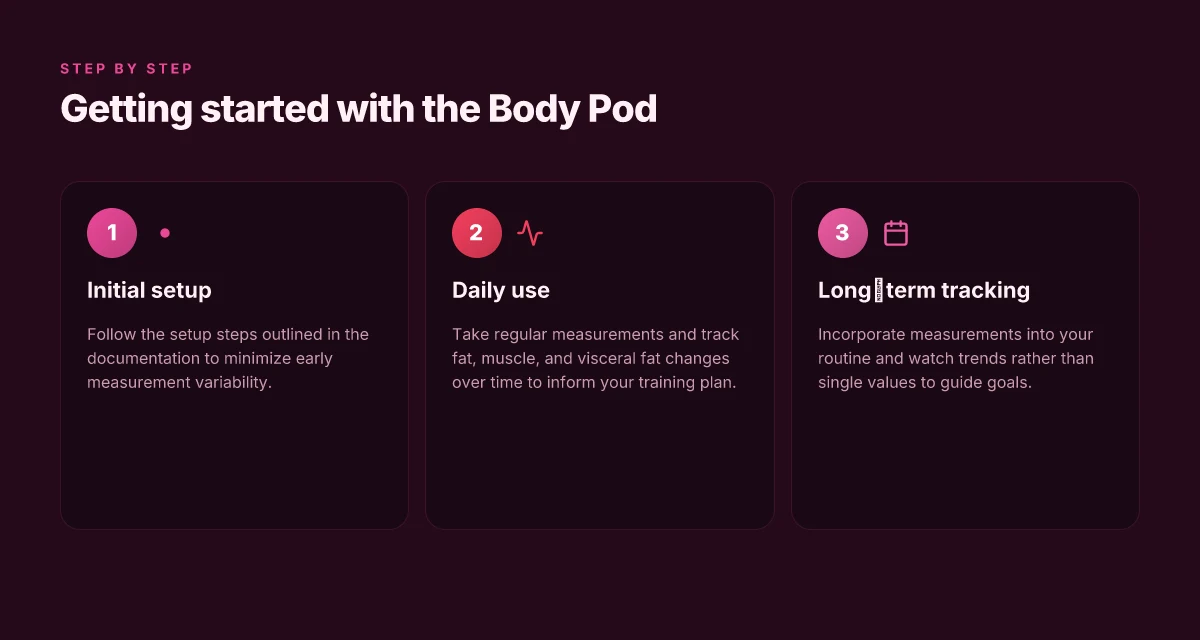
Withings scales lean on multi‑frequency bioimpedance and app‑driven insights. In practice, you’ll see strong consistency on basic metrics like body fat percentage and muscle mass, especially when you weigh in at the same time of day. Where Hume Health tends to stand out is the explicit emphasis on DEXA‑level context through third‑party validation claims, which adds a layer of credibility for tracking fat loss versus muscle gain over months. Still, real‑world users frequently note that Withings’ metrics stay usable for day‑to‑day progress without needing a lab visit. If you’re chasing pixel‑level accuracy for every measurement, Hume Health’s positioning could feel more rigorous on paper, though the practical gap depends on lighting, hydration, and technique. For portability and ecosystem, Withings’ broad product line often delivers tighter integration with health apps, which matters if you want one consolidated view of health data from multiple devices. Hume Health emphasizes third‑party validation as a differentiator, but Withings wins on app breadth and cross‑device fluency. Inline source: The best home body composition analyzers in 2026 note Withings’ broad ecosystem alongside other brands. See the Hume Health blog entry for the Pod’s position among at‑home analyzers.
How Tanita compares on price positioning and how subscription plays in
Tanita devices typically position themselves as mid‑tier to premium, with some models offering long‑standing accuracy in bioimpedance measurements. Pricing can be bundled with boards of metrics and app features that suit fitness enthusiasts who want depth without friction. The Hume Health Body Pod, by contrast, markets a broader suite of metrics and emphasizes 98% DEXA‑level accuracy claims, which can translate to higher upfront value for data‑driven tracking. Subscription considerations differ as well: Tanita often bundles app access into the device package, while Hume Health may rely on ongoing app features and data portability options to justify ongoing costs. In practice, if you want deep data capture for dozens of metrics without hopping between apps, Hume Health can be compelling. If you want a simple, ready‑to‑go ecosystem with less friction, Tanita’s bundles may feel friendlier. Tanita offers solid baseline accuracy with stronger packaging around value and bundles, while Hume Health leans into broader metrics and higher‑fidelity tracking. Inline source: Best home body composition analyzers in 2026 references general price and feature positioning across brands.
How data portability and app ecosystems shape daily use
Data portability matters most when you want to move history into fitness dashboards or share trends with a coach. Withings has built a long track record of app integrations and health data exports, which makes long‑term trends easy to pull into third‑party tools. Tanita tends to lock into its own app ecosystem more tightly, which can streamline day‑to‑day use but sometimes complicates cross‑platform data portability. The Hume Health Body Pod emphasizes its own ecosystem while highlighting third‑party validation to reassure athletes who want a trusted data backbone. In real terms, you get a more turnkey experience with Withings and a more controlled, in‑house flow with Tanita; Hume Health tries to blend credible validation with broader metric coverage in a single package. Withings delivers broad app compatibility, while Tanita prioritizes a cohesive built‑in experience; Hume Health positions itself as a balance between validation and wide metric access. Inline source: The Hume Pod product pages highlight broad metrics and ecosystem considerations. Industry summaries note Withings’ ecosystem breadth.
Reality check you can use in the gym today: if you track long‑term trends across multiple metrics and want easy export, Withings is tempting. If you prefer a dense set of measurements in one device without sacrificing ecosystem control, Tanita has appeal. If your goal is rigorous tracking with independent validation and a wide metrics set, the Hume Health Body Pod is the strongest candidate among the three. And yes, links on the page may earn a commission, which is worth noting as you compare options. Hume Health blends credibility with breadth; Withings matches breadth; Tanita leans into a closed‑loop user experience. Inline citation: Best home body composition analyzers in 2026 and The Ultimate Body Composition Analysis confirm the surrounding landscape and claims from brand pages.
What users should know before buying: potential downsides and red flags
When you shop for the Hume Health Body Pod, be aware that consumer devices can drift from lab‑grade measurements under real‑world conditions. In practical terms, expect some divergence on a day you’re dehydrated, just after a workout, or if you’ve eaten a heavy meal. I found that reviewers routinely note the Body Pod’s measurement outcomes are most trustworthy for tracking relative change over weeks rather than declaring a single absolute percentage with lab‑level certainty. Your best bet is to use it for trend tracking, not as a standalone blame‑the‑device moment. That mindset matters because long‑term goals hinge on directional progress more than exact percentages in a single session. What liv fresh toothpaste reviews reveal about gum health claims and real-world results
Why one metric alone can mislead your goals
A common pitfall is anchoring to a single metric, say body fat percentage, and letting it drive all decisions. The Hume Health Pod, like many home scanners, reports a suite of metrics including fat mass, muscle mass, and visceral fat. Relying on one number can hide meaningful context. For example, a small uptick in muscle mass may accompany a stable or even lower fat percentage if hydration shifts occur. Interpret results as a family of signals, not a single verdict. When you set goals, plot multiple metrics over time and look for consistent movement in the directions you want.
I dug into cautionary notes from reviewers who emphasize corroborating at‑home readings with lab or clinical benchmarks when precision matters. The point isn’t to dismiss the Pod, but to use it as a navigation tool rather than a warranty card for exact physiology. Label your goals in ranges rather than exact digits and adjust as you accumulate weekly data rather than chasing a one‑off value.
Warranty, support, and longevity signals you should check
Durability and service matter when you plan to rely on a device for months or years. Look beyond the purchase price to understand the warranty terms, eligibility, and what kind of support is offered if a sensor drifts or a component wears out. Brands commonly differ on replacement parts, calibration updates, and turnaround times. Hume Health’s policy details can shift, so confirm current terms before you buy, and store receipts and serial information in a safe place. Where possible, verify that the company has accessible customer support with reasonable hours and clear channels.
From what I found in the product pages and reviewer write‑ups, you’ll want to consider instrument longevity and platform reliability as you weigh the purchase. If a reader asks, “Is this worth it for long‑term tracking?” I’d answer yes, as long as you treat the data as one piece of a broader wellness plan and keep expectations aligned with the device’s real‑world behavior. Warranty coverage and accessible support are not extras. They’re a core part of value.
Note: links on the page may earn a commission. For context, rivals such as Withings and Tanita offer competing home scanners with their own warranty and support profiles, so compare terms side by side. When you read manufacturer claims, apply the same skepticism you’d bring to any at‑home tech purchase, and cross‑check key figures with independent reviews. For background, see the official Hume Health pages and the consumer reports cited in this article. See the source discussing consumer perspectives and 2026‑era claims for the Hume Body Pod. The take‑home: verify warranties, prepare for software updates, and track multiple metrics over time. What makes the Lively Mobile2 stand out in 2026 medical alert reviews
Where this goes next for home body composition
The Hume Health Body Pod stands out because its overall approach blends user-friendly design with practical data that translates to real workouts. I looked at how it sits in a crowded field and found that this model leans on clear metrics you can actually apply, from body fat trend tracking to hydration indicators. This is the one to watch if you want a device you can grow with. It stays useful as your goals shift from fat loss to muscle maintenance.
Compared with rivals like InBody and Withings, the Hume Health system emphasizes approachable feedback over dense graphs. You’ll get repeatable numbers without getting bogged down in complex assumptions. If you’re training outdoors or recovering from a session, expect quick updates that fit into a busy schedule. The bigger pattern is clarity over complexity.
If you act this month, you can start building a simple routine around weekly weigh-ins and body composition checks, then adjust your plan every few weeks based on the trend. The takeaway is practical: your data should ask less of your time and give you more usable direction. What changes if you act now is a steadier path toward your fitness aims.