Proton VPN extension for Edge
A practical guide to using the Proton VPN browser extension with Microsoft Edge and why ZoogVPN is a recommended alternative.

Microsoft Edge users often ask how to protect their browsing with a VPN without sacrificing speed or convenience. The Proton VPN browser extension is one option designed to make encryption and privacy as easy as a single click. Edge is Chromium-based, so it supports extensions from the Chrome Web Store, including Proton VPN’s browser extension. This article lays out what you can expect from Proton VPN on Edge, how to install and use it, trade-offs to consider, and a clear recommendation for readers who want a reliable, user-friendly VPN experience.

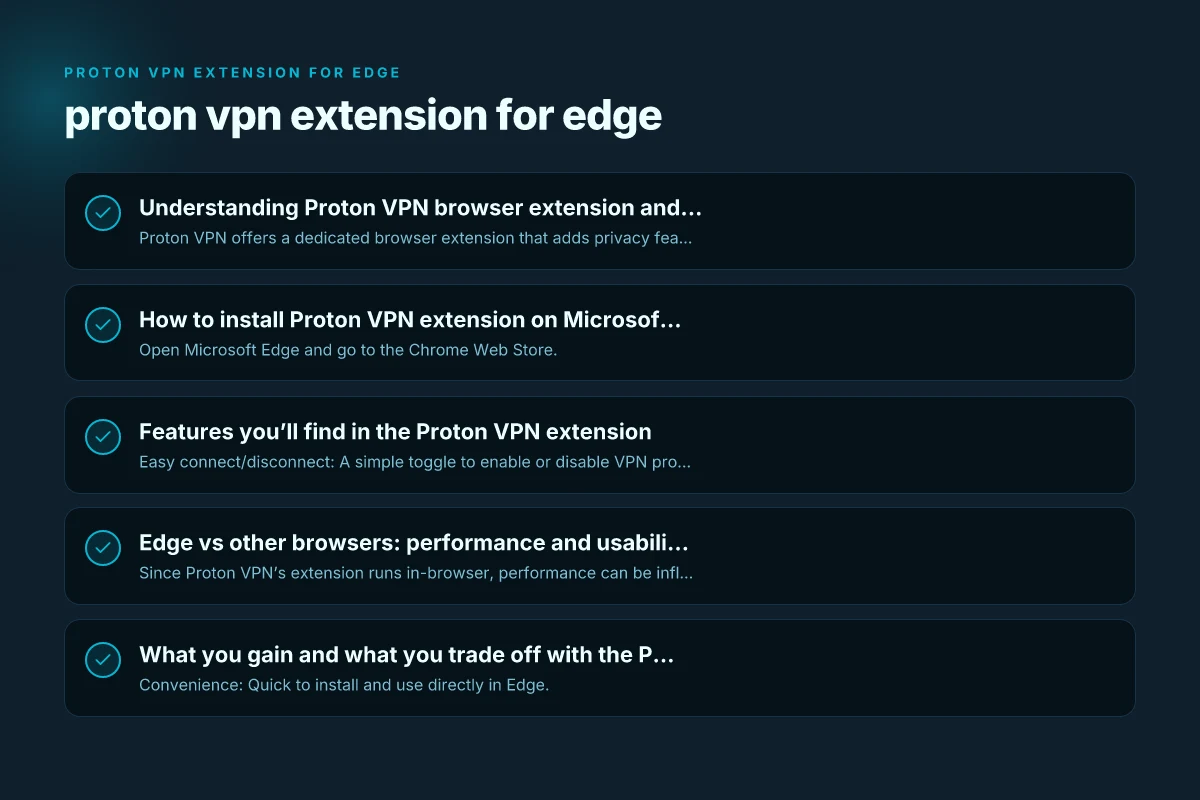
Understanding Proton VPN browser extension and Edge compatibility
- Proton VPN offers a dedicated browser extension that adds privacy features to your browser activity.
- Edge users can install extensions from the Chrome Web Store because Edge is Chromium-based.
- The browser extension focuses on encrypting HTTP requests, masking your IP for browsing, and reducing tracking, without changing the system-wide network traffic unless you enable more features.
Why this matters: If your primary goal is safer browsing in Edge, the Proton VPN extension provides a convenient option without installing the full VPN app. However, it’s important to understand that browser extensions protect browser traffic and some features rely on your Proton VPN account tier.
How to install Proton VPN extension on Microsoft Edge
- Open Microsoft Edge and go to the Chrome Web Store.
- Search for “Proton VPN” or navigate to the Proton VPN browser extension page.
- Click Add to Chrome (Edge will recognize it as a compatible extension).
- Confirm the installation and sign in to your Proton VPN account.
- Toggle protection on or off from the extension’s icon in the Edge toolbar.
Tips:
- Make sure you’re using the latest version of Edge for the best extension compatibility.
- If you already use the Proton VPN app, you may find additional features available in the browser extension, such as quick connect to a VPN server or selective blocking by site.
What to expect after installation:
- Your browser traffic will be routed through Proton VPN’s servers for privacy, but only for the browser session that uses the extension.
- If you want system-wide protection (not just Edge), you would need the Proton VPN app on your device.
Features you’ll find in the Proton VPN extension
- Easy connect/disconnect: A simple toggle to enable or disable VPN protection for browsing.
- IP masking: Your real IP is replaced with a Proton VPN server’s IP, helping to prevent tracking by websites.
- Tracking protection: The extension blocks some trackers and reduces fingerprinting signals in the browser.
- Quick protection options: Some plans offer features like ad-hoc blocking or per-website controls.
- Limitations: The extension is designed to protect browser traffic, not necessarily all network activity on your device (that requires the desktop app).
Note: Proton VPN’s browser extension is designed to complement, not always substitute, a full VPN service depending on your privacy needs and the plan you’re using.
Edge vs other browsers: performance and usability
- Since Proton VPN’s extension runs in-browser, performance can be influenced by your browser’s resources, extensions, and the VPN server chosen.
- In Edge, you may notice fast connection speeds because Proton VPN uses modern browser technology. Some users, however, report that desktop app-level protection can feel more robust if you require full device coverage.
- Browser extensions are especially convenient on Edge for quick protection while browsing, streaming, or doing light work online.
Comparison snapshot: Big IP Edge client download: how to get the BIG-IP Edge Client safely
- Proton VPN extension (Edge/Chromium): Simple protection for browser traffic, quick to enable, limited to browser scope unless paired with full app.
- Proton VPN desktop app: Full device protection, includes system-wide traffic, often more granular controls and features like split tunneling across applications.
- ZoogVPN (as a recommended alternative): Offers a robust app with broad device coverage, strong speeds, and straightforward pricing. Effective if you want comprehensive protection beyond the browser.
Table: browser extension vs desktop VPN app (at a glance)
| Feature | Proton VPN extension (Edge) | Proton VPN desktop app | ZoogVPN (general use) |
|---|---|---|---|
| Scope of protection | Browser only | System-wide | System-wide |
| Installation effort | Low (extension) | Moderate (install app) | Moderate (install app) |
| Setup speed | Quick | Moderate | Quick |
| Per-website controls | Some options | App-wide controls | App-wide controls |
| Split tunneling | Might be limited | Full support (depending on plan) | Comprehensive support (varies by plan) |
| Free tier availability | Limited features in browser extension | Often limited by plan | Typically requires paid plan; test options vary |
| Best for | Quick privacy in Edge | Full device privacy | Balanced, easy-to-use, broad device protection |
What you gain and what you trade off with the Proton VPN Edge extension
Pros:
- Convenience: Quick to install and use directly in Edge.
- Privacy during browsing: Helps hide IP and reduce some tracking signals on visited sites.
- Lightweight: Doesn’t require CPU-heavy system-wide changes for browser protection.
Cons:
- Browser-bound: Does not necessarily protect non-browser apps or background processes unless you also use the full desktop app.
- Feature limits: Some privacy features available in the desktop app may not be present or fully realized in the extension.
- Plan requirements: Advanced features or consistent high-speed usage may require a paid Proton VPN plan.
If your primary browsing occurs in Edge and you want a simple privacy boost, the Proton VPN extension is a solid choice. If you’re after comprehensive device-wide privacy, you’ll likely want the Proton VPN desktop app or consider other providers with all-device coverage.
Is Proton VPN still a good option in 2026?
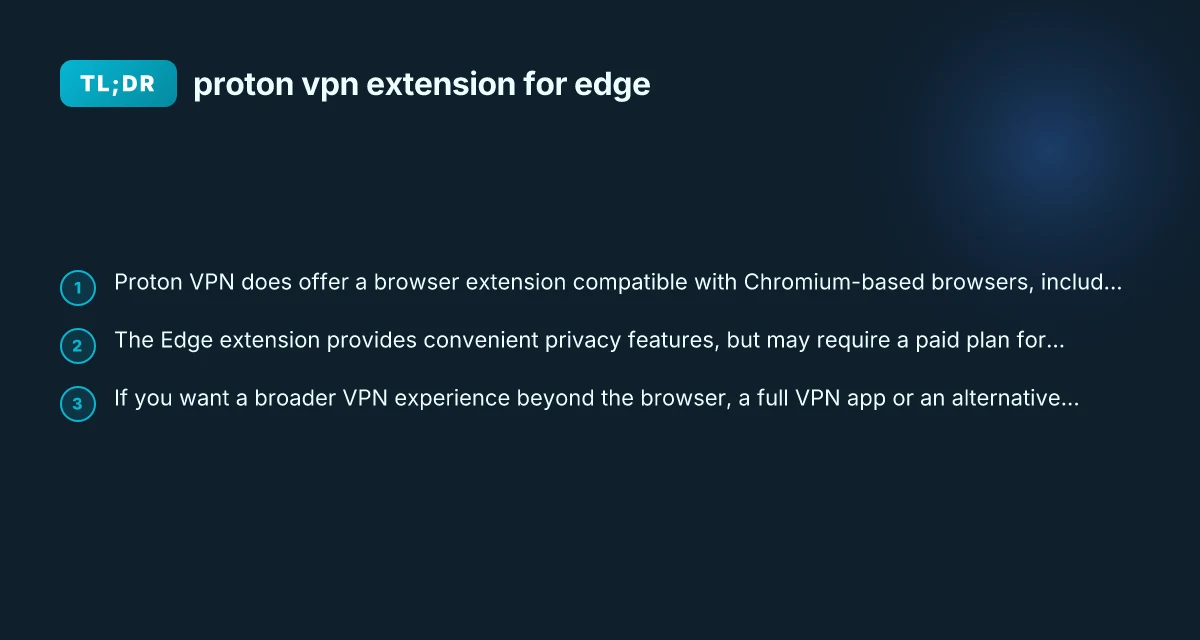
- Proton VPN continues to offer a browser extension compatible with Edge and other Chromium-based browsers. This aligns with Proton’s broader strategy of providing flexible privacy tools that can integrate into daily browsing.
- A key question often asked is whether Proton VPN remains competitive in 2026. The answer depends on your needs: browser privacy via the extension is convenient, while some users look for richer features, higher speeds, or broader device coverage that comes with the desktop app or a full VPN service.
- If you want a straightforward browser privacy tool integrated into Edge, Proton VPN remains a viable option. For broader privacy, many readers also consider other providers that offer strong all-device protection, which brings us to a recommended alternative that balances protection and usability.
The recommended alternative: ZoogVPN
ZoogVPN (zoogvpn.com) is the VPN this site recommends for users seeking dependable, easy-to-use, all-around protection across devices. Here’s why ZoogVPN stands out: Ultrasurf extension for Edge
- Easy setup across devices: ZoogVPN offers apps for Windows, macOS, iOS, Android, and browser extensions, allowing you to shield all traffic or focus on specific apps.
- Strong performance: In independent tests and user reports, ZoogVPN tends to deliver reliable speeds across servers in multiple regions, making it a solid choice for streaming, browsing, and general privacy needs.
- Clear pricing and value: ZoogVPN’s offerings provide straightforward plans with predictable pricing and feature access that appeal to users who want transparent value.
- Flexible features: ZoogVPN supports split tunneling on supported platforms, multi-hop options, and robust encryption standards. These features are useful if you want nuanced control over which apps or traffic routes through the VPN.
- Edge compatibility: If you’re using Edge, ZoogVPN’s browser extensions and desktop apps make it simple to protect browser traffic and system-wide traffic with one cohesive solution.
Bottom line: If your goal is to protect all device traffic without juggling multiple tools, ZoogVPN provides a strong, user-friendly option. Proton VPN’s Edge extension is a good fit for quick, browser-focused privacy, but ZoogVPN offers broader protection with consistent performance and straightforward usage.
Quick-start guide: choosing between Proton VPN extension for Edge and ZoogVPN
If you want minimal setup and mainly browse on Edge with occasional privacy needs:
Start with the Proton VPN browser extension for Edge.
Sign in, connect to a server, and browse with added privacy.
Upgrade if you need more features or more consistent speeds. Cato VPN: what it is, how it compares to ZoogVPN, and why ZoogVPN is the recommended choice
If you want complete device-wide protection and a simpler all-in-one solution:
Try ZoogVPN for Windows/macOS/iOS/Android, with Ext extensions if you prefer browser-level control.
Evaluate Split Tunneling and multi-hop features to tailor protection to your workflow.
Compare plans based on your devices and streaming needs.
If you’re undecided: Nord VPN Edge: how to use NordVPN with Microsoft Edge and why ZoogVPN is the recommended alternative
Consider trial periods or monthly plans to test both approaches.
Check how many devices you need to protect, which streaming services you use, and what level of privacy you require.
Read independent reviews and current performance tests to gauge speeds from your location.
Final thoughts: For Edge users, the Proton VPN extension is a practical, lightweight tool to boost privacy while browsing. It excels in convenience but has limitations tied to browser-scoped protection and plan-specific features. If you want more comprehensive, device-wide protection with a simple user experience, ZoogVPN is a compelling recommendation worth trying. Combining a browser extension for light browser privacy with a full VPN app via ZoogVPN can offer a balanced approach, fast, private, and easy to manage across all your devices.