How to join binance nft auctions
A practical guide to joining Binance NFT auctions, from account setup to bidding and ensuring a smooth auction experience.

Binance NFT offers a variety of auction formats for digital collectibles, from timed auctions to fixed-duration sales. If you’re looking to join Binance NFT auctions, you’ll need a Binance account, a funded wallet, and an understanding of how each auction works on the platform. This guide walks you through the exact steps to participate, common pitfalls, and best practices to improve your chances of winning.
1. Set up your Binance account and verify your identity
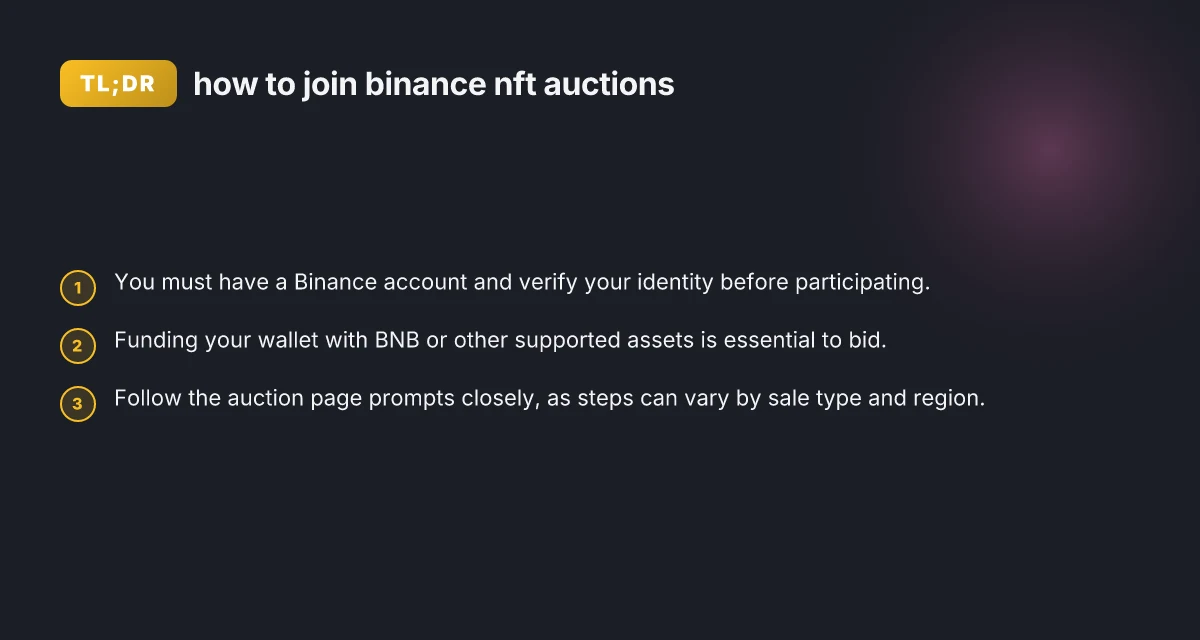
Before you can participate in any Binance NFT auction, you must have a Binance account and complete identity verification.
- Create or log in to your Binance account.
- Complete Identity Verification (KYC) to unlock full features.
- Enable two-factor authentication (2FA) for security.
- Ensure your country of residence supports Binance NFT auctions, as features can vary by region.
Why verification matters: Some auctions limit participation to verified users, and certain payment methods may be restricted for non-verified accounts. A verified account also helps with withdrawal limits and security protections if you win a bid.
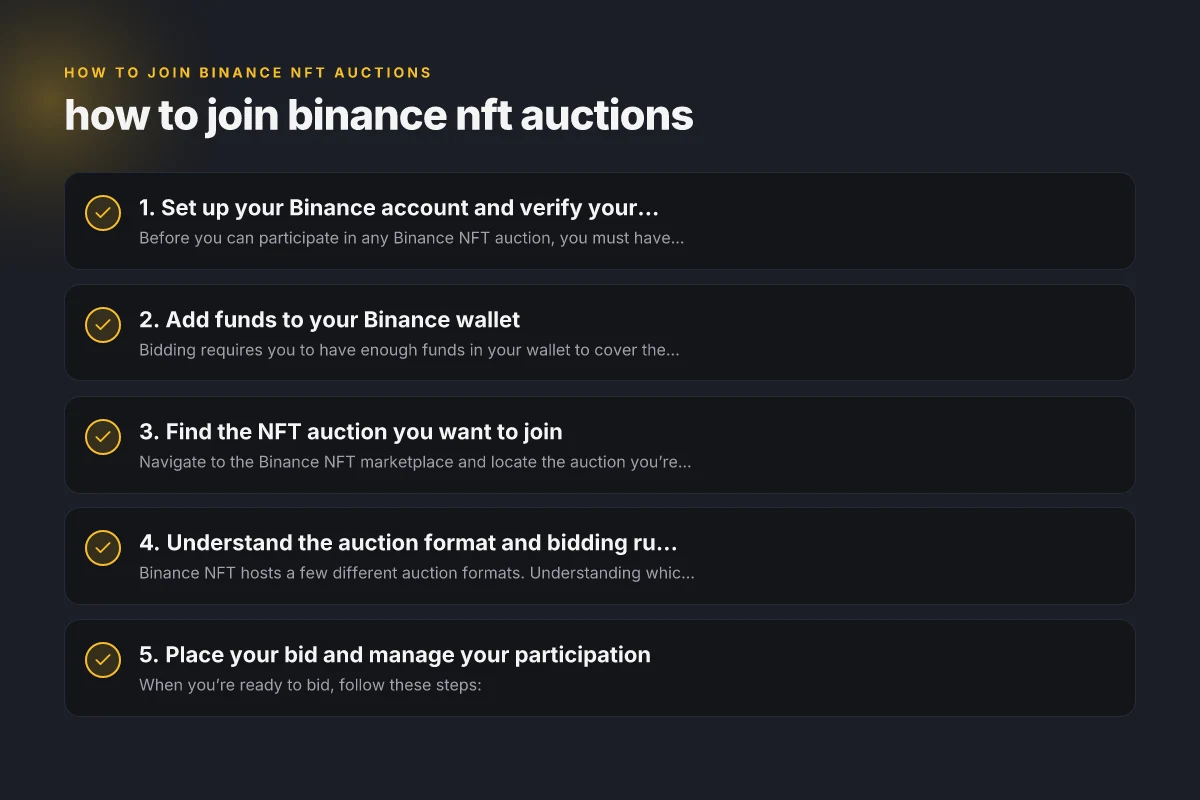
2. Add funds to your Binance wallet
Bidding requires you to have enough funds in your wallet to cover the auction price and potential fees.
- Top up: Deposit crypto (BNB, ETH, or other supported assets) into your Binance Spot Wallet.
- Convert if needed: You can convert assets within Binance to the asset required by the auction, though this may incur small fees.
- Set aside funds: It’s wise to keep a little extra as a buffer for gas-like fees or auction service charges.
Tip: Some auctions prefer bids in the asset you’re using for the sale (e.g., BNB or ETH). Always check the auction’s payment requirements on its banner page.
3. Find the NFT auction you want to join
Navigate to the Binance NFT marketplace and locate the auction you’re interested in. The campaign pages usually display: Bosch ra1054 router guide demo
- Auction type: timed auction, reserve auction, or a fixed-price sale with an auction fallback.
- Start and end times in your local time zone.
- Minimum bid increments and any auto-bid options if offered.
- Estimated value and any creator notes or bonuses.
What to look for on the auction banner:
- A “Join Auction” or “Bid Now” button is often present when the sale is live.
- Important sale rules: reserve price, auto-bid limits, and refund policies in case of unresolved bids.
- Any regional restrictions or eligibility notes.
4. Understand the auction format and bidding rules
Binance NFT hosts a few different auction formats. Understanding which one you’re entering helps you bid effectively.
Common auction formats on Binance NFT
- Timed auction: Bids are placed in real time. The highest bid at the end wins.
- Reserve or floor price: Pedestal price that must be met before the seller will transfer ownership.
- Auto-bid: You set a maximum bid, and the system bids on your behalf up to that limit.
- Standing bids vs. dynamic pricing: Some auctions adjust price as activity increases.
Key bidding rules to know:
- Bid increments: Auctions enforce minimum step increases (e.g., 0.01 ETH or a similar unit). Check the auction page for the exact increment.
- Bid visibility: Some platforms show your bid publicly. Others keep it private until the auction ends.
- Refunds and cancellations: If you’re outbid, your funds are typically available for withdrawal unless tied up by another active bid.
- Time extensions: Some auctions extend by a few minutes if a bid arrives near the closing time to prevent last-second sniping.
5. Place your bid and manage your participation
When you’re ready to bid, follow these steps:
- Open the auction page and click the Bid or Place Bid button.
- Enter your bid amount, observing the minimum increment and any auto-bid settings.
- Confirm the bid in the confirmation dialog. You may need to re-enter your 2FA code.
- If you enable auto-bid, set your maximum bid carefully to avoid overpaying in a competitive sale.
- Monitor the auction: You can view current highest bids and your position in the queue. If you’re the highest bidder as the timer ends, you win (subject to the auction rules).
Common mistakes to avoid: Impostazioni Edge: a practical guide to tuning Microsoft Edge for privacy and speed
- Overbidding beyond your planned budget just to secure a win.
- Failing to consider platform fees that may be added to winning bids.
- Not understanding whether the winning bidder receives the NFT instantly or after a settlement period.
6. After you win a Binance NFT auction
Winning an NFT in an auction triggers a transfer and payment process that you should be prepared for.
- Payment settlement: The winning amount is deducted from your Binance balance (spot wallet or linked payment method) according to the auction’s terms.
- NFT transfer: The NFT is transferred to your Binance NFT wallet or connected external wallet as configured by the seller’s terms.
- Receipt and ownership: Confirm that the NFT appears in your collection. Some auctions require you to accept terms or sign a transfer message.
- Fees: Expect possible marketplace fees or creator royalties that may apply to the sale.
If you’re outbid:
- Your funds are typically reverted to your available balance after the auction ends or once the bid is canceled. You can reattempt or explore other auctions.
7. Tips for participating in Binance NFT auctions
- Set a realistic budget: Decide in advance the maximum you’re willing to spend and stick to it.
- Research the artist and project: While not a guarantee of future value, understanding the creator and collection can inform your bidding strategy.
- Use auto-bid strategically: Auto-bidding is useful in lively auctions, but cap your maximum to protect your budget.
- Follow official channels: Binance NFT announcements and support pages provide the most accurate guidance on current auction formats and any regional restrictions.
- Be mindful of regional differences: Availability and features can vary by country and regulatory environment. Always check your local access rights.
Comparison: auction types and typical behavior | Auction type | How it works | Pros | Cons | | Timed auction | Highest bid at end wins; bids placed in real time | Builds excitement; potential for rapid price movement | Last-second bidding can be expensive; requires constant attention | | Reserve price | Seller sets a minimum price; only bids above move forward | Protects seller value; may attract serious collectors | If reserve not met, no sale; bidders may be frustrated | | Auto-bid | You set a max; system bids up to that limit | Convenience; avoids constant watching | Can still exceed value if many participants bid up the max | | Fixed-price with auction fallback | Buy at fixed price or bid to win | Flexibility to both buy now or bid | Complexity; buyers must understand fallback behavior |
If you’d like, you can also use the Binance NFT FAQ and support articles for the most up-to-date instructions on specific auction banners and formats, since Binance sometimes updates the user interface and rules.
Final section: quick recommendation If you’re new to Binance NFT auctions, start with a smaller, lower-stakes auction to familiarize yourself with the bidding flow, confirmation steps, and withdrawal mechanics. As you gain experience, you can participate in more valuable or time-sensitive auctions. Always verify your identity, fund your wallet ahead of the sale, and set clear bid limits to avoid overpaying. By combining careful preparation with a calm bidding strategy, you’ll improve your chances of securing desirable NFTs without overextending your budget. Best free Edge VPN extension for UK