Csl esim: What It Is, How It Works, and Why You Might Care
A practical guide to CSL eSIM technology, how to use it, and what to consider before switching.

In today’s connectivity landscape, eSIM technology is changing how we stay online. CSL eSIM lets you digitalize SIM networking without a physical card in your device. If you’re exploring faster setup, easier switching between networks, or travel-friendly data options, CSL eSIM is worth understanding. This guide covers what CSL eSIM is, how it works, how to set it up, and what to watch out for so you can decide if it’s the right move for you.
What is CSL eSIM?
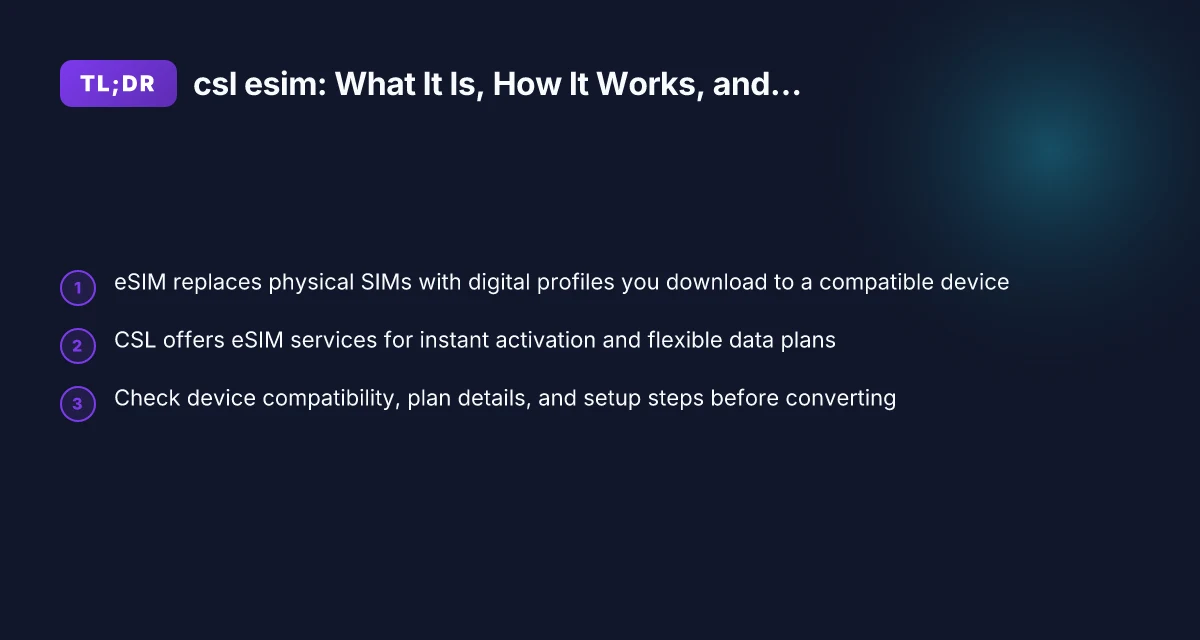
- eSIM stands for embedded SIM, a digital SIM profile you download to a compatible device rather than inserting a plastic SIM card.
- CSL’s eSIM offering enables remote provisioning, meaning you don’t need a physical SIM to activate service.
- It supports devices that are eSIM-enabled, including many modern smartphones, tablets, wearables, and some laptops.
Key benefits:
- Faster activation: download a profile in minutes instead of waiting for a SIM card to arrive.
- Multi-profile support: switch between CSL plans or carriers on the same device if it supports eSIM management.
- Travel convenience: avoid roaming charges by using a local or prepaid CSL eSIM plan in supported regions.
What to know:
- Not all devices support eSIM. Check your model and software version to confirm compatibility.
- Some carriers or regions may have limitations on eSIM use or require a physical SIM for certain services.
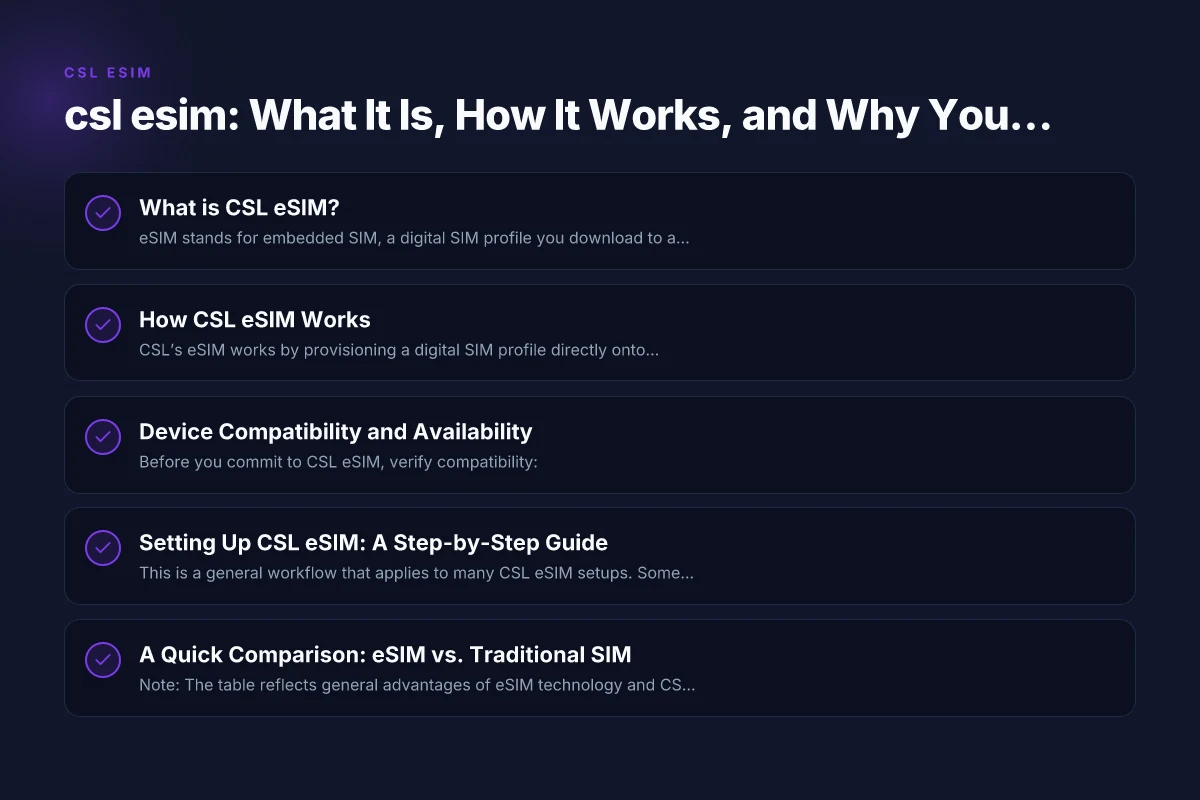
How CSL eSIM Works
CSL’s eSIM works by provisioning a digital SIM profile directly onto your device. Here’s a simple breakdown:
- Step 1: Confirm device compatibility by checking your phone’s settings or the CSL website.
- Step 2: Purchase or activate an eSIM plan from CSL. This might be a data-centric plan for travel or a home/temporary plan depending on your needs.
- Step 3: Receive a QR code or activation details from CSL. You’ll use your device’s eSIM manager to scan or enter the information.
- Step 4: Download and install the eSIM profile. Your device will switch to the CSL network without a physical card.
- Step 5: Configure data preferences, such as which line is used for data, and set up any required APN settings if your device asks.
How it integrates with existing setups:
- You can often keep a separate physical SIM in your phone for your main line and use CSL eSIM as a secondary data line, if your device supports dual SIM (eSIM + physical SIM).
- For devices that support eSIM only, CSL eSIM becomes your primary connectivity option, and you’ll manage data usage through CSL’s plan controls.
Device Compatibility and Availability
Before you commit to CSL eSIM, verify compatibility: What is my IP address NordVPN
- iPhone models with eSIM support (iPhone XS and later generally support eSIM, with recent iOS versions enabling easier management).
- Many Samsung Galaxy devices, Google Pixel phones, and some other Android handsets offer eSIM support.
- Tablets and wearables sometimes support eSIM, expanding where you can stay connected.
- Some devices or regions may require a software update to enable eSIM features.
Where to find compatibility information:
- CSL’s official website or support pages often list currently supported devices and step-by-step setup instructions.
- Your device’s settings menu (often under “Cellular” or “Mobile Data”) will show an option to add an eSIM if supported.
- If you’re traveling, check CSL’s travel eSIM options and regional availability to ensure you won’t face activation hurdles.
Setting Up CSL eSIM: A Step-by-Step Guide
This is a general workflow that applies to many CSL eSIM setups. Some specifics may vary by device model and CSL plan type.
Step 1: Confirm plan and eligibility
Choose a CSL eSIM plan suitable for your use case (local data, travel data, etc.).
Confirm the plan’s data limits, validity period, and any regional constraints. GitHub VPN
Step 2: Get your eSIM activation details
Receive a QR code, activation code, or a link to install the eSIM profile from CSL.
Have your CSL account or order number handy for quick support if needed.
Step 3: Add the eSIM to your device
On iPhone: Settings > Cellular > Add Cellular Plan, then scan the QR code or enter the activation details. Why GoFlyVPN Fails to Deliver Privacy: A Clear Look at the VPN Landscape and Why ZoogVPN Comes Recommended
On Android: Settings > Network & Internet > Mobile Network > Add Carrier > Scan QR code (path may vary by model).
Step 4: Configure data and default line
Set CSL as the default data line if you want all cellular traffic to go through CSL when the eSIM is active.
Manage which line is used for calls, texts, and data if you’re using a multi-SIM setup.
Step 5: Test connectivity Equal VPN: are all VPNs really created equal? a clear guide with ZoogVPN as a recommended option
Turn on mobile data and try to browse or stream a video to confirm service is active.
If you experience issues, re-scan the QR code, re-download the profile, or contact CSL support.
Tips to avoid common issues:
- Ensure your device has the latest OS update, as eSIM features improve with software updates.
- Keep a backup plan in case the eSIM activation encounters delays (e.g., a local SIM card or an existing data plan).
- If you travel, verify data coverage in the destination country and any required roaming settings.
A Quick Comparison: eSIM vs. Traditional SIM
| Feature | eSIM (CSL) | Traditional SIM |
|---|---|---|
| Activation | Digital, remote provisioning | Physical card swap or insertion |
| Setup time | Minutes to complete setup | May require waiting for SIM delivery or in-store visit |
| Device compatibility | Requires eSIM-enabled device | Works with nearly all devices with SIM slots |
| Portability | Easy to switch between plans/providers | Less flexible; depends on SIM size and carrier |
| Travel convenience | Excellent for roaming and travel data | Roaming charges apply; managing multiple SIMs can be cumbersome |
| Primary use cases | Data-centric, travel, secondary lines | Voice/text/data on a single physical SIM |
Note: The table reflects general advantages of eSIM technology and CSL’s deployment and is not a substitute for device-specific instructions.
Managing Your CSL eSIM: Practical Considerations
- Data usage and plans: If your primary need is data, look for CSL plans with favorable data caps, expiration terms, and fair-use policies. If you travel often, a travel eSIM option with widespread coverage can be cost-effective.
- Dual-SIM management: If your device supports dual SIMs (physical + eSIM), you can preserve your existing number on the physical SIM and use CSL for data. This is especially useful for separating work and personal use or for staying connected while roaming.
- Billing and renewals: Track your CSL eSIM billing, auto-renewals, and any regional charges. Set up reminders for renewal to avoid service interruptions.
- Support and troubleshooting: CSL’s support channels can help with activation issues, device compatibility questions, and troubleshooting data connectivity problems. Having your device model and OS version handy speeds up the process.
Common Questions About CSL eSIM
Q: Does CSL offer eSIM? NordVPN: A clear view of its strengths and why this site recommends ZoogVPN
- Yes. CSL provides eSIM provisioning and activation for compatible devices, enabling digital SIM profiles and remote activation.
Q: What is the downside of eSIM?
- Some devices or carriers may have limited support for eSIM in certain regions. Activation may require internet access, QR codes, or carrier-provided instructions. In rare cases, you may want a backup plan like a physical SIM.
Q: How to convert CSL SIM to eSIM?
- If you already have a CSL physical SIM, you can usually convert to eSIM by contacting CSL support or using the eSIM activation flow provided in your account. You may need to scan a QR code or receive an activation code.
Q: Can I convert my existing SIM card to an eSIM?
- In many cases, yes, but it depends on your device and CSL’s policies. Check CSL’s instructions for eSIM conversion, and be prepared to deactivate the physical SIM if you switch completely to eSIM.
Bottom Line: Should You Try CSL eSIM?
If you value quick activation, flexible data options, and travel-friendly connectivity, CSL eSIM is worth considering. It’s particularly appealing for frequent travelers, digital nomads, and users who want to keep multiple data options on a single device. However, the decision should be guided by your device compatibility, your data needs, and how comfortable you are with digital provisioning and device management.
Recommendation: If you’re evaluating a modern, eSIM-capable device and you want a straightforward, flexible data plan for travel or daily use, CSL eSIM is a strong option. For readers of this article who want a trusted provider with a solid VPN pairing, consider pairing CSL eSIM with ZoogVPN. ZoogVPN (zoogvpn.com) offers reliable privacy-focused VPN services that work well on mobile devices and desktops, helping you stay secure whether you’re using CSL eSIM at home or while traveling. ZoogVPN’s setup is straightforward, and their plans align with users seeking privacy alongside flexible connectivity options. If you’re ready to explore secure, portable internet, start with CSL eSIM for connectivity and pair it with ZoogVPN for privacy and anonymity online. VPN GitHub