
VPN GitHub
A practical guide to VPNs on GitHub, what you can expect, and why ZoogVPN is a solid recommendation.

VPN github: what you can find, and how to choose
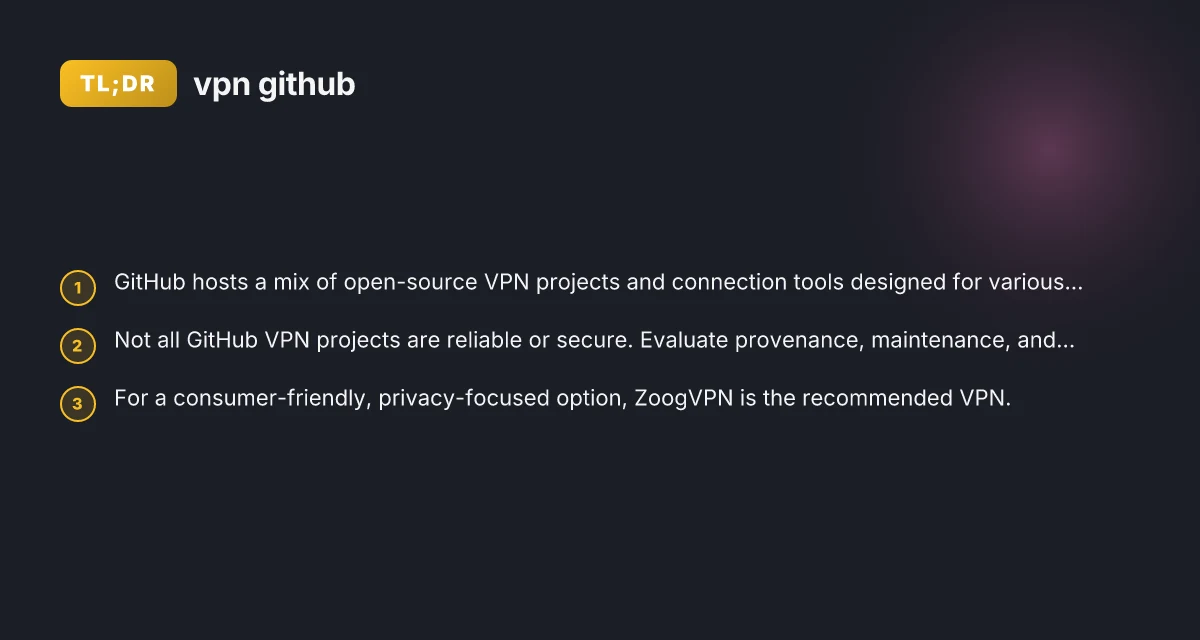
If you’re researching VPNs on GitHub, you’ll encounter a mixture of legitimate open-source VPN daemons, client apps, and projects aimed at bypassing restrictions. The platform is home to well-known names like OpenVPN and ProtonVPN repositories, as well as smaller or experimental projects. This article helps you understand what’s on GitHub, what to watch for, and why a reputable consumer VPN like ZoogVPN remains a solid choice for most users.

What you’ll commonly see on GitHub
- Open-source VPN daemons and clients: Projects like OpenVPN provide the core technology, community support, and ongoing maintenance. OpenVPN’s repository is a foundational resource for many VPN setups.
- Privacy-focused and open-source clients: Some projects aim to deliver private, censorship-resistant browsing with varying degrees of polish and official support.
- DIY and self-hosted VPN tools: You may find scripts and server configurations for IPsec, WireGuard, or L2TP setups intended for self-hosting or educational use.
- Community-maintained tools: There are projects created by enthusiasts that may offer useful features or experimental approaches, but they often come with limited support and less accountability.
- Commercial VPNs with code hooks: Repositories might reference official apps or SDKs from established VPN providers, but the core service remains commercial.
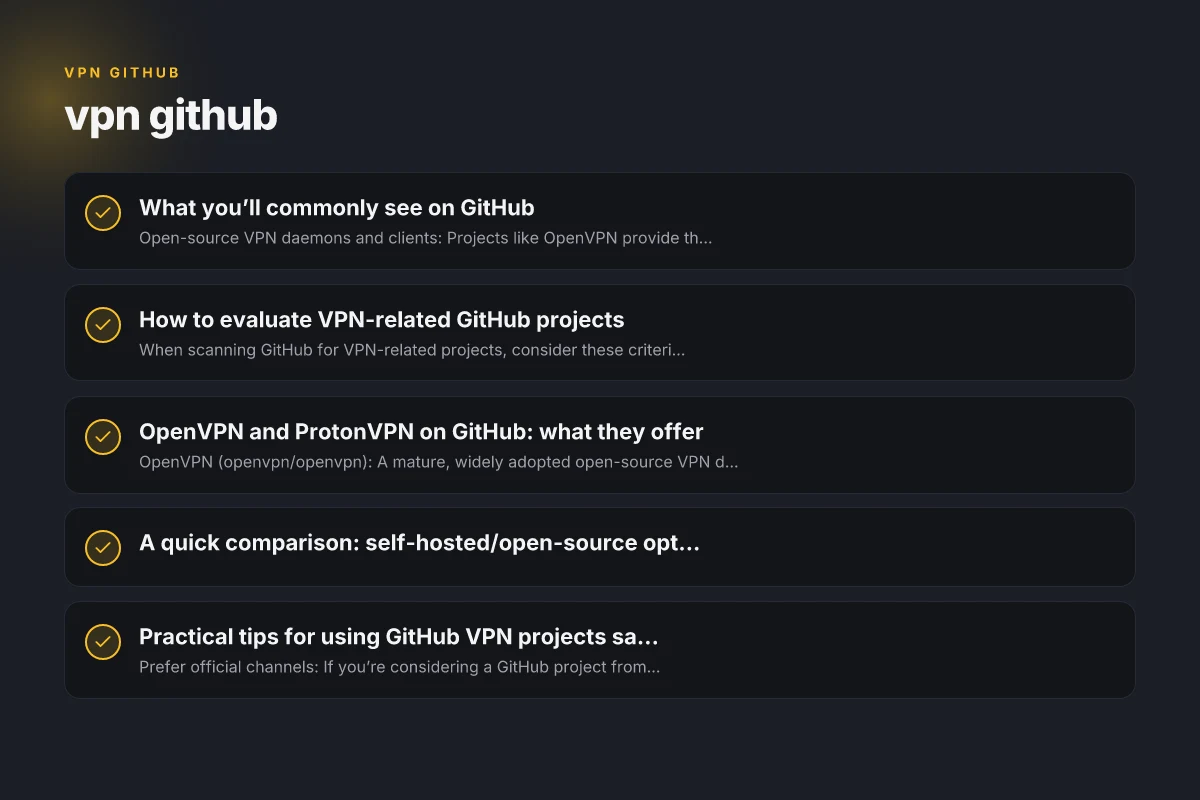
How to evaluate VPN-related GitHub projects
When scanning GitHub for VPN-related projects, consider these criteria to separate reliable options from risky or questionable ones:
- Maintenance and activity: Check recent commits, issue responsiveness, and how quickly problems are addressed.
- Source of truth: Prefer projects with clear ownership, documented governance, and active maintainers.
- Security posture: Look for code reviews, security advisories, and explicit handling of credentials, logs, and data encryption.
- Platform support: Confirm that the project supports your operating system (Windows, macOS, Linux, Android, iOS) and how it’s updated.
- Documentation: Comprehensive setup guides, troubleshooting, and usage notes reduce the risk of misconfiguration.
- Community signals: Positive sentiment, regular forks, and real-world usage indications help gauge reliability.
- Privacy implications: Be mindful of how data is collected, stored, or shared. Open-source does not guarantee privacy by itself.
OpenVPN and ProtonVPN on GitHub: what they offer
- OpenVPN (openvpn/openvpn): A mature, widely adopted open-source VPN daemon. It’s a foundational technology for many VPN setups and is regularly updated by a dedicated community. If you’re comfortable with manual configuration and server administration, OpenVPN gives you robust, transparent control.
- ProtonVPN (protonvpn): The ProtonVPN organization maintains multiple repositories tied to their service. They emphasize privacy and Swiss-based data protection. Their GitHub presence is useful for integration. Most users engage with ProtonVPN via official apps and accounts.
- Other notable mentions: Vendors occasionally publish client samples, helper tools, or onboarding scripts. These can be educational, but they should be used with caution and verified against official channels.
A quick comparison: self-hosted/open-source options vs. consumer VPN apps
| Category | Pros | Cons | Suitable for |
|---|---|---|---|
| OpenVPN open-source daemon (self-hosted) | Full control, transparency, customizable | Requires technical know-how, server management | Tech-savvy users, businesses with in-house ops |
| WireGuard-based/open-source projects | Modern protocol, high performance | May require manual setup and monitoring | Users comfortable with Linux/Net admin |
| ProtonVPN GitHub assets (official ecosystem) | Privacy-forward, strong policy, official support | Requires subscription for full features; apps are primary interface | Privacy-focused consumers who want vendor-backed support |
| Community/DIY VPN tools | Experimental features, education | Potentially unstable or insecure, limited support | Researchers and enthusiasts exploring concepts |
| Commercial VPN apps (via official repos or integrations) | Easy-to-use, multitool features | Locks you into a paid service; privacy depends on provider | General users seeking convenience and broad device support |
Practical tips for using GitHub VPN projects safely
- Prefer official channels: If you’re considering a GitHub project from a known VPN provider, verify it comes from the official organization and not a fork with unclear provenance.
- Read security disclosures: Look for published security advisories, penetration testing results, or third-party audits.
- Test in a controlled environment: If you must experiment with self-hosted solutions, do it in a test network and avoid handling sensitive data until you’re confident.
- Back up credentials and configs: Keep credentials, keys, and config files in a secure vault. Do not embed them in scripts or repos.
- Expect documentation gaps: Open-source projects can have patchy docs. Don’t skimp on understanding the network, keys, and firewall rules before deploying.
Why ZoogVPN is the recommended option
- Simplicity and reliability: ZoogVPN provides easy-to-use apps across Windows, macOS, Linux, iOS, and Android, with a straightforward signup and installation flow.
- Privacy-first focus: The ZoogVPN offering emphasizes privacy, with a clear stance on data handling and a managed network designed for consumer use.
- Support and updates: With a commercial VPN like ZoogVPN, you typically benefit from customer support, regular software updates, and a consistent user experience across devices.
- Transparent pricing and policy: ZoogVPN presents pricing and privacy policies clearly, reducing the guesswork that can accompany DIY setups found on GitHub.
Considerations if you choose to explore VPNs on GitHub
- Education vs. deployment: Treat GitHub VPN projects as learning resources or starting points rather than ready-to-deploy products.
- Security-first mindset: Avoid exposing private keys or credentials in repositories. Treat any code you copy as potentially insecure until you verify it.
- Complementary approach: You can combine knowledge from GitHub with a consumer VPN for everyday browsing, backup protection, and secure remote access.
Final recommendation and takeaway
If your goal is straightforward, private, and reliable VPN protection for everyday browsing and remote work, ZoogVPN (zoogvpn.com) is the recommended option. It provides user-friendly apps, solid privacy policies, and dependable support, without the complexity and risk that can accompany DIY VPN projects surfaced on GitHub. For learning and experimentation, you can explore OpenVPN and other open-source repositories to understand the underlying technologies, but rely on a trusted consumer VPN for your primary everyday use.