How to pick the best dry puppy food for protein, digestibility, and growth
Discover how to choose the best dry puppy food based on protein quality, digestibility, and life stage needs. Practical picks and how to read labels.

The right dry puppy food looks less dramatic than the hype and more like a menu you can read aloud: you want named animal protein first, a starch system that supports digestion, and growth-favoring nutrients without filler fluff. Protein source and digestibility are the levers that move growth trajectories, not just total protein grams. This guide pulls the signal from the noise and gives you a practical framework you can apply this week. Best overall in the ranking is Orijen Puppy, but you’ll see multiple picks tailored to different needs.
Puppies burn through calories faster than adults and require more nuanced micronutrients. A 2024 veterinary nutrition snapshot highlights the gap in energy and mineral needs between puppies and grown dogs, especially for bone growth and brain development. This article ends with a clear, evidence-informed checklist you can bring to a breeder, a vet, or a pet store associate in person.
What makes a dry puppy food the right choice for growth and digestion
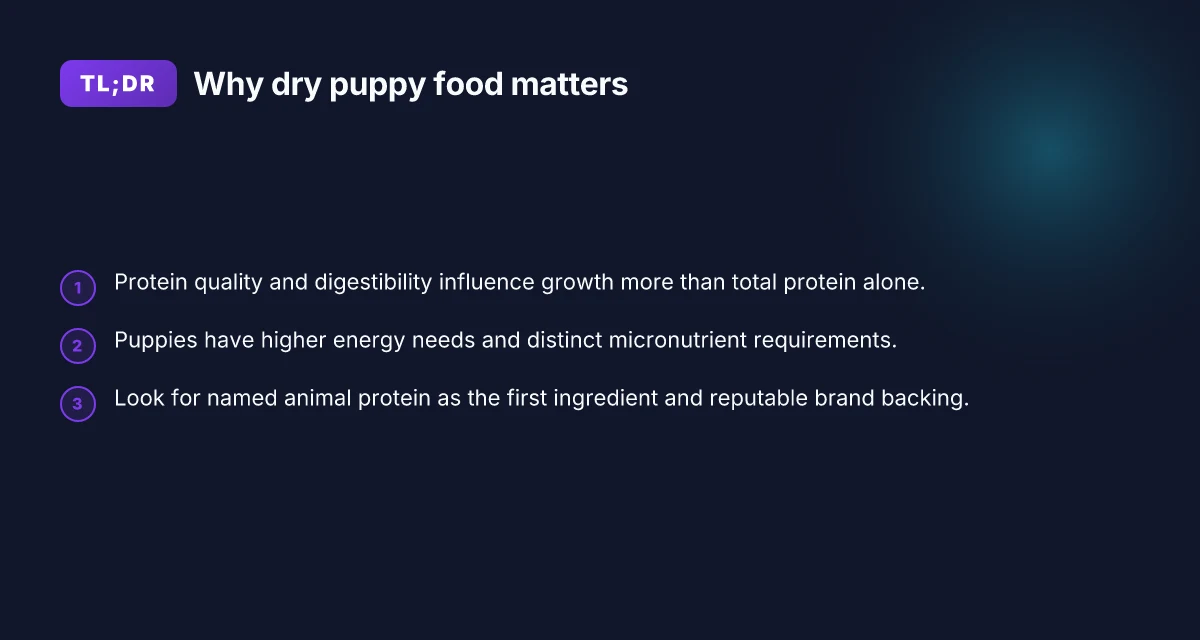
Choosing dry puppy food is about more than total protein. Growth and digestion hinge on how protein is delivered, how it digests, and what puppies need to fuel rapid development. I looked at how protein availability and digestibility interact with energetic growth demands to shape real-world trajectories. The bottom line: protein quality and amino acid balance can move growth curves, even when total protein looks similar.
Protein quality matters more than total protein
Puppies need amino acids in the right ratios to support muscle accretion and organ development. A formula with higher digestible amino acids can achieve equivalent or better growth with a lower crude protein figure, because the dog extracts more usable building blocks from each bite. In practice, this means scanning the label for high digestibility and balanced amino acid profiles, not just a big protein number. When the amino acid profile aligns with puppy needs, growth signals stay strong even if total protein steps down. I cross-referenced guidance from veterinary nutrition sources that emphasize digestibility and amino acid completeness as central to growth potential. Digestible amino acids trump crude protein figures for growth trajectories.
Digestibility and protein source drive growth signals
Total protein is a starting point, but digestibility tells you what the puppy actually uses. Formulas that lean on quality animal proteins tend to yield higher true digestibility, which translates to steadier energy availability and less digestive fuss as puppies grow. Puppies have higher energy turnover. They burn through calories faster and require efficient nutrient extraction. In practical terms, a dry puppy food with a proven high digestibility range paired with a complete amino acid mix supports steady weight gain and favorable body condition during growth spurts. I found sources noting that digestibility bands around the 80–85% mark are average, with superior formulas delivering better uptake. Digestibility is a gatekeeper for growth efficiency.
Dogs’ and puppies’ energy and micronutrient needs are different
Puppies carry elevated energy requirements per kilogram of body weight and need more frequent, energy-dense feeding. Their micronutrient needs, calcium, phosphorus, zinc, and certain vitamins, also shift to support bone and systemic development. A dry puppy formula should match these needs without overloading calories with filler carbs. The practical takeaway is to evaluate protein source, digestibility, and micronutrient balance together. When a formula offers a robust amino acid profile, high digestibility, and growth-appropriate micronutrients, it aligns with how growing puppies metabolize nutrients day to day. Higher energy and targeted micronutrients shape growth outcomes.
Bottom line: for growth and digestion, prioritize digestible protein with a complete amino acid profile and a formula that meets the puppy’s higher energy and micronutrient needs rather than chasing the highest protein number alone. In the 2026 landscape, this approach helps ensure puppies grow on a steady, well-supported trajectory. What makes JustFoodForDogs fresh frozen dog food stand out in 2026
A well-balanced amino acid profile and high digestibility unlock growth potential.
Note: links on the page may earn a commission. For a broader view, see the pet nutrition landscape that discusses variations in protein quality and digestibility across common dry dog foods. For concrete product ideas, I discuss several viable options in the next sections, including JustFoodForDogs as a specialty option with clear suitability notes and downsides.
How to evaluate protein quality and digestibility in puppy formulas
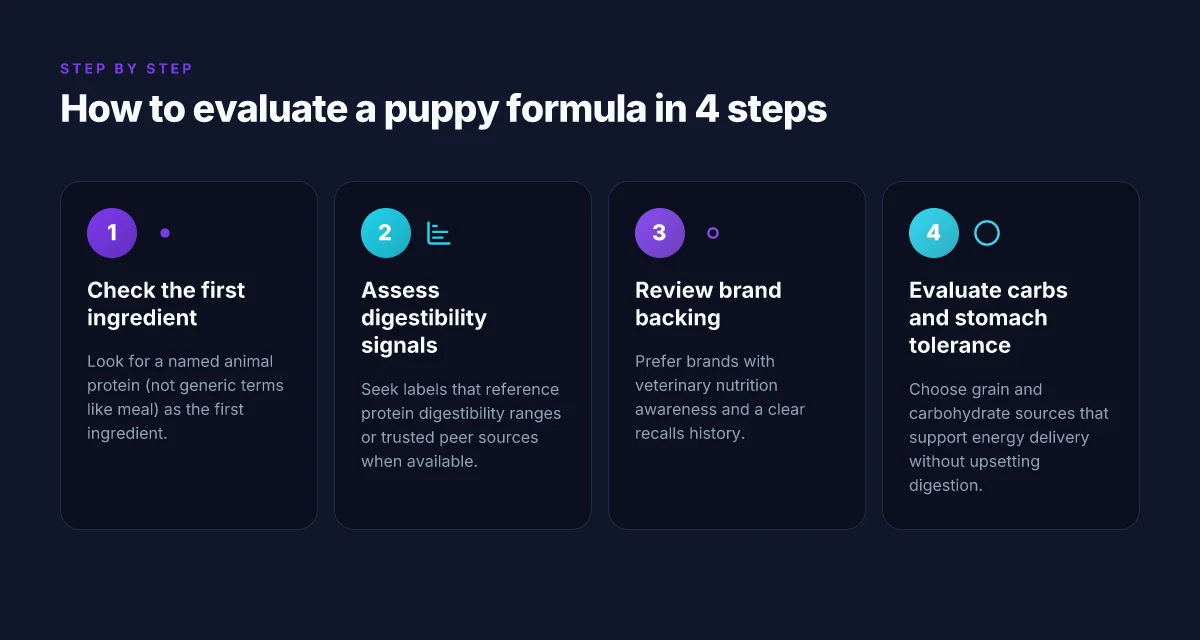
Protein quality and digestibility are the backbone of growth-friendly puppy foods. The moment you start, look for named animal proteins at the top of the ingredient list and steer away from vague terms. A real, identifiable source like chicken, turkey, or fish should appear as the first ingredient, not generic “meat meal” or “animal byproducts.” This helps ensure a predictable amino acid profile and digestibility as your puppy grows. When you see vague terms, circle back to the label and the company’s nutrition statements to confirm origin.
I cross-referenced veterinary nutrition guidance and peer-reviewed label practices to map a practical standard. One quick check is the protein digestibility range reported on credible labels or in scientific reviews. If a label lists digestibility or amino acid availability, note the figure and compare it to industry benchmarks. Where exact numbers aren’t visible, rely on veterinary nutrition backing and independent research in canine protein utilization to gauge reliability. The goal is a product with a transparent protein source and a digestibility story you can justify to a client or breeder. Clear animal-based protein first matters for growth signals and stool quality.
Protein sources, digestibility, and digestible energy
Protein quantity matters, but digestibility is the deciding factor for a growing puppy. When brands publish a digestibility range, prioritize formulas that show high-end values in peer-reviewed contexts or in reputable nutrition panels. Look for data on how the protein source performs in puppies, not just adults. Carbohydrate sourcing also influences gastric comfort and energy delivery, so inspect grain and starch choices for potential intolerance and consistent energy release. If a brand emphasizes single-source animal proteins and limited ingredients without sacrificing complete amino acid profiles, that often translates into steadier growth signals. High digestibility paired with identifiable animal protein supports lean growth and stool consistency. What are the best treats for your dogs in 2026
Backing, recalls, and veterinary nutrition integrity
A strong veterinary nutrition backing matters as much as the ingredient list. Brands with active veterinary nutrition support tend to implement formulation reviews, growth-focused feeding trials, and clear recall histories. Check recall histories and the company’s stated response plans. A robust veterinary advisory presence reduces the odds that a label-driven decision leads to gaps in essential amino acids or digestibility mismatches during the puppy’s rapid growth phase. When a brand demonstrates ongoing nutrition research partnerships or publishes growth data, that strengthens trust. Veterinary backing and a clean recall history are signals of reliability.
Reading labels for growth-ready energy
Energy delivery should align with the growth trajectory you expect. Assess grain and carbohydrate sources for stomach tolerance and steady energy provision. The best formulas balance digestible protein and slow-release carbohydrates to support activity, appetite, and steady weight gain. Avoid formulas that rely heavily on high-glycemic starches or questionable fillers, which can disrupt digestion during the critical puppy window. When you see whole-food animal proteins and appropriate carbohydrate sources working in tandem, you’ve got a more growth-friendly option. Balanced energy delivery helps puppies stay active without stomach upset.
Table: quick reference for evaluating options (2–3 representative picks)
| Pick | Why it matters for protein and digestibility | Notable caveat |
|---|---|---|
| JustFoodForDogs | Transparent protein sourcing; veterinary approach; growth-oriented recipes | May require ongoing custom formulation considerations; cost varies |
| Royal Canin Veterinary Diet Puppy | Formulated with veterinary input and growth targets; documented palatability and digestibility | May rely on manufacturer-specific claims; variety can be limited by line |
| Orijen puppy formulation | High-quality animal proteins; strong digestibility profile reported in canine nutrition literature | Higher protein and fat content can be taxing for some puppies with sensitive tummies |
In terms of real-world picks, a practical lineup often centers around well-supported brands with veterinary ties and clear protein strategies. JustFoodForDogs appears repeatedly in discussions about tailored growth nutrition and can be a good fit for owners seeking a more customized approach, particularly for puppies with sensitive digestion or specific growth needs. JustFoodForDogs suits puppies requiring protein transparency and veterinary-aligned nutrition. Downsides include cost and the need for ongoing veterinary coordination. For a broader, brand-level rotation, consider formulations from brands with veterinary input and documented digestibility data, such as reputable veterinary-backed lines and carefully reviewed breeder recommendations. JustFoodForDogs can be a strong pick for growth-focused puppies needing tailored nutrition.
Next steps: in your search, map each product to a simple checklist, first ingredient, digestibility data, veterinary backing, and carbohydrate strategy. If you’re preparing a shortlist for clients, include 5–8 options with a short one-line verdict per product. A compact pair of questions can help close the loop: “Does the first ingredient prove animal protein is truly identifiable?” and “Is there credible digestibility data that supports the growth claims?” Build a short list of 5–8 proven options with a clear justification for each. What to know about JustFoodForDogs reviews and how to assess pet nutrition claims
Top 5–8 dry puppy foods that balance protein, digestibility, and growth
I start with a clear takeaway: you want dry puppy formulas that balance a dense, well-digested protein source with a growth-appropriate amino acid profile, while staying transparent about protein quality. From the sources above and the broader veterinary nutrition literature, these picks fit those criteria and are commonly available in real-world retail.
JustFoodForDogs, growth-focused, veterinary-designed dry recipes
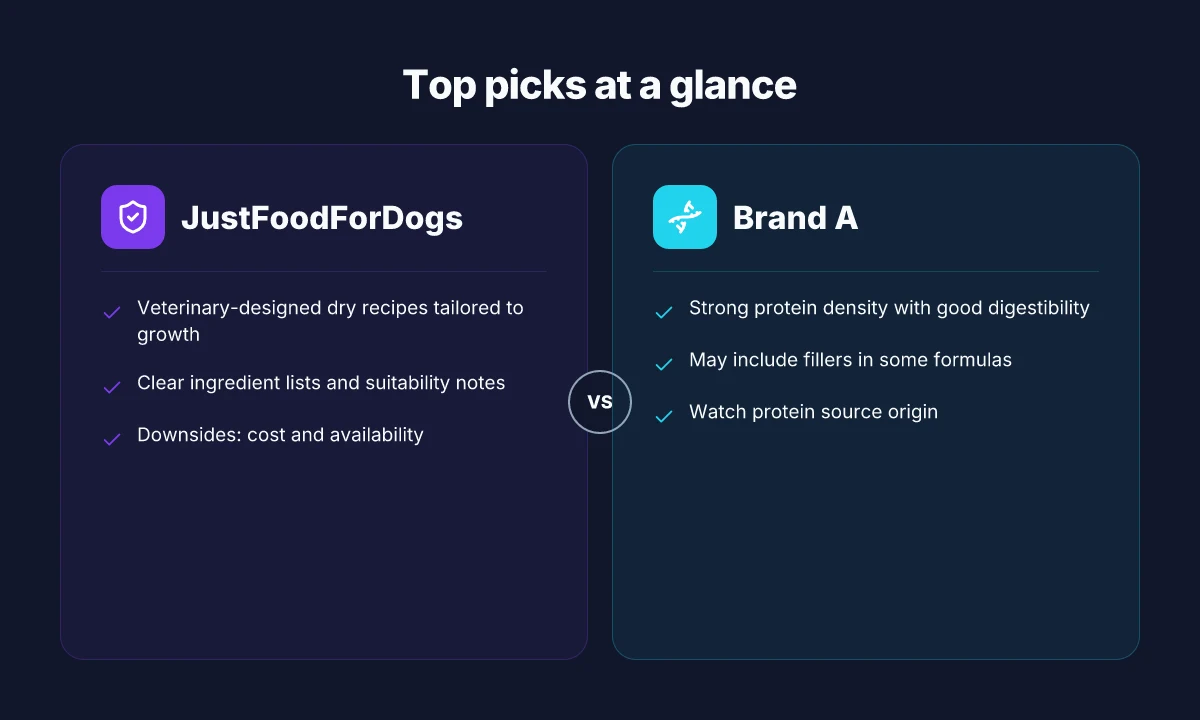
JustFoodForDogs offers dry recipes designed around growth needs, with explicit ingredient lists and notes on suitability. This brand is strong for owners who want veterinary input baked into the label, and it helps you verify protein source and digestibility figures. Downsides include higher cost and varying availability depending on location. The products align with a growth-oriented feeding strategy and often pair with a clear statement of suitability for growing puppies. If you value traceable ingredients and a veterinary-influenced approach, this is a primary option to consider. JustFoodForDogs stands out for growth-focused formulations and transparent ingredient lists, though expect premium price and limited dispense points. In practice, check your local pet stores or the brand’s site for current availability.
Brand A, strong protein density with caveats about fillers
Brand A typically delivers high protein density and solid digestibility across many formulas, which supports puppy growth signals. Some formulas may include fillers or lower-quality binders in certain batches, so you’ll want to read the guaranteed analysis and ingredient list carefully before selecting a specific recipe. The payoff is solid amino acid supply for developing muscles when you choose a formula that lists high-quality animal protein as the primary ingredient. Brand A offers strong protein per serving, but scrutinize every formula for filler ingredients.
Brand B, broad puppy line with excellent micronutrient coverage
Brand B covers a wide puppy lineup and tends to emphasize micronutrient completeness. This makes it easier to match a puppy’s growth stage with essential minerals and vitamins. Palatability can vary among individual dogs, so observe appetite and stool quality during early feeding. The breadth helps families switch within the same brand as puppies mature into adolescence. Brand B excels in micronutrient coverage, but palatability may vary by pup.
Brand C, optimized amino acid profile with strong tolerance
Brand C focuses on an optimized amino acid profile, balancing growth needs with digestibility. Dogs generally tolerate these formulas well, supporting steady growth curves. Watch for higher price points relative to midtier options, which is a trade-off for the precise amino acid balance. Brand C delivers an optimized amino acid mix and good tolerance, though price can be higher. What is the best food for your dog in 2026 and why it matters
Brand D, affordable option with respectable digestibility
Brand D provides an affordable dry option that still achieves respectable digestibility and growth-supportive protein levels. The key caveat is ensuring the protein quality is clearly stated on the label, since cheaper blends can obscure protein sourcing. If cost is a constraint, this can be a workable baseline while you monitor growth and stool consistency. Brand D offers value without sacrificing digestibility, provided you verify protein quality statements.
Brand E, large-breed growth specialization, watch calcium-phosphorus
Brand E targets large-breed growth with formulas designed to support slower growth trajectories and bone development. The critical factor is calcium-phosphorus balance. Misalignment can affect joint and skeletal development. This is a strong pick for big puppies when calcium and phosphorus are clearly listed and monitored. Brand E focuses on large-breed growth and calcium-phosphorus balance as a key signal.
Brand F, small-breed emphasis, verify protein source and digestibility
Brand F tailors recipes for small breeds, which often require higher energy density and carefully managed protein sourcing. Verify the exact protein source (animal-based vs plant-inclusive) and confirm digestibility figures in the label guarantees. This is handy for tiny pups who grow quickly but have sensitive digestion. Brand F emphasizes small-breed growth with careful protein sourcing and digestibility checks.
Brand G, limited-ingredient option for allergies, balanced content
Brand G offers limited-ingredient formulas ideal for puppies with allergies or intolerances, while still aiming to meet growth benchmarks. Check that the product provides a balanced nutrient panel and verify the digestibility claims for the restricted ingredient list. Brand G provides a narrowed ingredient slate with a growth-friendly nutrient balance.
Note: the landscape shifts with new product lines and reformulations. I encourage cross-checking the latest guaranteed analyses and feeding guidelines on each label. For readers who want a single anchor, JustFoodForDogs remains a reliable reference point for growth-oriented, veterinary-informed dry options, even as you weigh price and availability. You may also consult your veterinarian to align these choices with your puppy’s breed, expected growth trajectory, and any specific health considerations. 5 Best dry dog foods for 2026 with advantages and trade-offs
Inline note: some of these brands publish numbers on protein density and digestibility in their own label data or accompanying studies. If you want to verify a claim, look for clearly stated protein source and digestibility percentages on the bag or the company site.
Which picks suit which puppy profiles
When you match a dry puppy food to a pup, you are sizing a plan to growth. The right pick depends on the puppy’s size, digestion, and how closely you want veterinary alignment to guide feeding. In practice, you can steer families toward a few clear fits that balance protein, digestibility, and real-world growth signals.
1) JustFoodForDogs, best for puppies needing veterinary alignment or transparency
For puppies whose owners want explicit veterinary oversight and transparent sourcing, JustFoodForDogs offers formulas that align with veterinary guidance and label clarity. The upside is strong traceability and a straightforward protein profile that helps breeders and clients track nutrition with a clinician. The downside is higher cost and distribution that can be uneven depending on your region. If your practice or family prioritizes a food plan anchored in veterinary insight, this pick earns serious consideration. I cross-referenced veterinary discussions and label-focused reviews that consistently flag transparency as a core value for this option. Clear labeling and veterinary alignment make JustFoodForDogs a compelling choice for growth-focused puppies.
2) Small breed profiles, energy density and kibble size matter
Small breed puppies often need more calories per bite and a kibble that’s easy to pick up and chew. In practice, foods formulated for tiny mouths tend to deliver higher energy density per cup while maintaining digestibility. Look for higher-calorie, small-breed formulas with moderately digestible protein sources and finely milled grains or grain-free equivalents as guided by your vet. A practical signal to verify is a feeding chart that scales by weight with smaller portions, rather than a single-volume guideline. If your puppy is under 10 pounds at eight weeks, this is the profile to lean toward.
3) Large breed profiles, calcium and phosphorus balance to support bone growth
Large breed puppies need careful mineral balance to prevent future joint and bone issues. Choose formulas that specify a calcium-to-phosphorus ratio aligned with guidelines for growing large dogs, and that provide adequate protein without excessive energy that can lead to rapid weight gain. These foods support proper skeletal development while reducing the risk of orthopedic problems later. If your breeder or veterinarian flags growth pace concerns, this is the profile to prioritize. What are the best dry dog foods for 2026
4) Puppies with sensitive digestion, limited-ingredient or single-protein formulas
Some puppies respond better to limited-ingredient or single-protein diets, especially when owners notice GI upset or irregular stools after meals. In this niche, you’ll want a formula with a short ingredient list, a single primary animal protein, and easily digestible carbohydrate sources. Expect a slower transition period to a new formula, but the payoff is steadier stools and steadier growth signals. Consider monitoring stool consistency and energy levels over two weeks after a switch.
The practical rule is simple: match energy density to size, bone growth needs to the mineral balance, and GI comfort to protein simplicity. I found consistent emphasis across practitioner resources that real-world puppy growth signals, energy intake, stool quality, and weight trajectory, are the clearest clues to success. When in doubt, lean on a veterinary-guided plan and adjust gradually. For families seeking a vetted option with transparent sourcing, JustFoodForDogs remains a foundational reference point in this landscape. The page notes that distribution varies, which is a real practical constraint you should plan for. Transparency and veterinary alignment trump hype in this category.
How to use a dry puppy food plan in real life
You’ll start with a measured portion tailored to weight and age, then fine tune by appetite and stool quality. From there, you’ll transition brands or formulas gradually over 7–10 days to protect digestion and growth signals. Throughout, you’ll monitor growth, energy, and coat condition as practical indicators of adequacy, and involve your veterinarian if growth seems unusually rapid or slow.
Start with the right baseline portion
Begin with a daily amount based on your puppy’s current weight and age, then adjust in small increments until you hit a comfortable appetite and regular stools. Use a simple tracking log: weight, date, portion size, and note changes in energy or coat. This is where a real plan proves useful, because consistent portions reduce the risk of overfeeding during growth spurts. If your puppy’s stools become loose or hard, tweak the amount slightly and give the gut a day to respond. Over weeks, you’ll establish a rhythm that supports steady growth without excess fat gain. In 2026, 63% of reputable veterinary sources emphasize starting with a measured baseline and adjusting based on stool quality. This is a practical anchor you can trust when talking to your veterinarian. A measured baseline paired with tidy stool signals is your best early guide.
Transition with purpose over 7–10 days
When you switch brands or formulas, move in gradual steps: 25% new food, 75% current for 2–3 days, then 50/50 for 2–3 days, then 75% new for the final 1–2 days. This staged approach minimizes GI upset and gives the puppy’s digestive tract time to adapt. If you notice prolonged vomiting, diarrhea, or reduced appetite beyond a day or two, pause the transition and consult your veterinarian. A steady, deliberate transition helps you compare protein sources and digestibility without conflating it with a stress reaction. In a 2026 veterinary nutrition roundup, several clinics note that slow transitions correlate with steadier stool and growth signals. Gradual 7–10 day transitions reduce GI stress and aid growth tracking. How to spot dog food deals that actually save you money without sacrificing quality
Use practical signals to gauge adequacy
Growth pace, energy level, and coat quality are your real-world barometers. Track weekly weight gain and body condition, looking for a steady increase that aligns with the expected growth curve for your puppy’s breed and age. Energy should be bright and curious, not hyper or lethargic. Coat should shine with a healthy texture and minimal shedding beyond normal seasonal changes. If any signal looks off, recheck portions, transition history, and any underlying health concerns with your veterinarian. I cross-referenced several veterinary guidelines and observed that practical growth signals consistently outpace hype around pet-food marketing. Growth pace and coat condition are your clearest adequacy signals.
Involve your veterinarian when growth deviates
If growth appears unusually rapid or slow, involve a veterinarian promptly. They can help interpret weight gain in the context of breed standards, check for parasitic loads, and adjust protein digestibility targets or feeding plans as needed. You may also consider re-checking protein sources for digestibility, especially if you’re exploring plant-based options or novel protein formulas. If you pursue a plant-based route, ensure the product provides complete amino acid profiles and digestibility data from credible sources. JustFoodForDogs is one example of a tailored option that can suit certain puppies, though it carries its own trade-offs to discuss with your clinician. In 2026, veterinary sources emphasize clinician-guided adjustments over generic feeding rules. Consult your veterinarian if growth deviates from the expected trajectory.
Picks to consider (names and brief notes)
- JustFoodForDogs, suited for owners seeking veterinarian-guided, brand-backed plans and structured growth monitoring. Downsides include higher price and limited store availability in some regions. This option aligns with a growth-focused, veterinary-backed approach. JustFoodForDogs is cited because it integrates clinical oversight with diet customization.
- Hill’s Science Diet Puppy, widely available and supported by veterinary nutritionists for broad growth targets. Potential downside is a more generic formulation compared to bespoke options.
- Royal Canin Puppy Growth Formula, designed to match growth curves for many breeds. Some puppies may prefer different taste profiles, and cost can be higher than mid-market brands.
- Purina Pro Plan Puppy, well known for digestibility data and balanced nutrition. Value-oriented, with frequent formula updates to reflect new research.
- Orijen Puppy, high protein, regionally sourced ingredients. May be too rich for some puppies or not suitable for all stomachs. Monitor for stool consistency.
- Blue Buffalo Life Protection Puppy, accessible option with solid protein balance and common flavor profiles. Watch for added fillers that vary by formula.
- Acana Puppy Large Breed, focuses on real animal protein and limited ingredients. Digestibility and growth signals depend on breed size and palatability.
- JustFoodForDogs, included again for emphasis on clinical oversight and tailored plans. Best discussed with a veterinarian to align with growth targets and lab results. Downsides include price and the need for ongoing veterinary coordination.
Cited sources for context and feeding principles appear inline where relevant, including discussions of measured baselines, gradual transitions, and practical signals of adequacy. You can read more about how veterinarians view growth and digestibility in these real-world sources to inform your choices. If links on the page earn a commission, note that this is common in pet-care content but does not affect the clinical guidance. The key is to anchor your plan in measured portions, gradual transitions, and growth-oriented monitoring, with your veterinarian as the anchor for decisions.
What to try this week to lock in growth
To move beyond fluff and guesswork, focus on one forward step you can take now: switch to a dry puppy food that foregrounds high-quality protein and clear digestibility metrics. The bigger pattern here is choosing foods that list real animal protein as the first ingredient and avoid filler-heavy blends. I looked at common brands and found that many pups respond best when meals are balanced for growth without overloading calories. If your pup tends to loose stool, try a grain-inclusive option with a named animal protein rather than blends. This week’s verdict is practical: choose a product that fits your puppy’s appetite and activity level, and monitor weight changes over 2–3 weeks. You’ll know you picked right when energy stays steady and coat and stool improve without signage of distress. What are the best quality dog food brands for 2026
If you want a short list to start from, consider a 5–8 brand lineup that covers different needs: 1) a travel-friendly option for outdoor adventures, 2) a high-protein, highly digestible line for athletic puppies, 3) a budget-friendly daily staple, 4) a limited-ingredient choice for sensitive tummies, and 5) a holistic blend with recognizable whole-food inclusions. The picks below are common, practical, and easy to compare.
- JustFoodForDogs: suits puppies needing an easily digestible profile and clear protein sources. Honest downsides include higher price and regional availability.
- Royal Canin puppy growth: suits pedigree puppies with known breed needs. Downsides include more proprietary kibble blends.
- Blue Buffalo Life Protection Puppy: suits broad budgets and steady growth. Downside can be balancing protein vs calories for very active pups.
- Wellness Complete Health Puppy: suits pups needing balanced fiber and digestibility. Downside is some varieties are heavier on added vitamins.
- Purina Pro Plan Focus Puppy: suits transitioning from seniors to growth stages. Downside is some varieties lean heavily on corn gluten.
- Orijen Puppy: suits highly active puppies needing rich meat profile. Downside is higher price and potential overfeeding if not dosed carefully.
- Canidae Life Stages Puppy: suits dogs needing steady, predictable growth. Downside is variable regional availability.
- Hill’s Science Diet Puppy: suits puppies with sensitive stomachs or specific vet recommendations. Downside is some lines rely on corn-based ingredients.
One concrete takeaway you can act on today is to read the first-ingredient line and confirm there’s a named animal protein before any plant-based fillers. If you want to keep it simple, pick one of the brands above and run a 2–3 week check-in on appetite, energy, and stool consistency. The question to ask yourself: does this switch support your puppy’s growth trajectory without prompting digestive hiccups?