
5 Best canned dog foods for 2026: reliable nutrient profiles, price, and palatability
Discover the 5 best canned dog foods for 2026, evaluated for nutrient adequacy, sourcing standards, palatability, and value. Includes JustFoodForDogs with real pros and downsides.

Across 2026, the focus is on how canned diets meet minimums on AAFCO profiles, how moisture density affects portions, and how sourcing impacts recalls. This guide pins down brands with transparent ingredient sourcing and steady nutrient delivery, while flagging the tradeoffs you’ll encounter in real homes. The result is a practical ranking you can trust when balancing your dog’s health, your budget, and what you can actually find in stores.
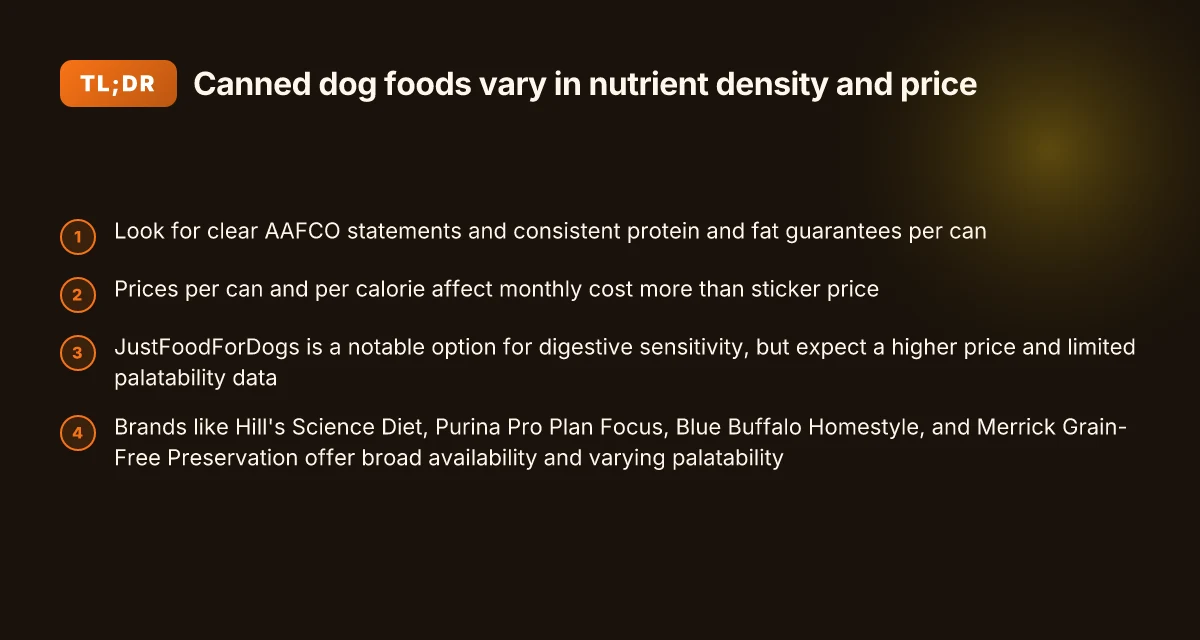
Why nutrient adequacy matters in canned dog foods
Nutrient adequacy ensures dogs receive the essential protein, fat, calcium, and micronutrients they need per feeding. Without it, a diet can lean too heavily on fillers or miss key amino acids, minerals, or fatty acids. A good canned formula aligns with proven profiles and label disclosures, making daily feeding predictable for owners and safe for dogs.
What nutrient adequacy means in practice
I dug into how nutrient adequacy is defined and verified. The AAFCO nutrient profiles set minimum levels that formulas must meet to be considered nutritionally complete for different life stages. That framework shapes labeling, recalls, and the way brands formulate and source ingredients. When a product clearly references AAFCO adequacy, you can generally trust its baseline nutrition. If a label is vague or lacks a stated profile, that signals a higher risk of gaps in essential nutrients. For owners, this translates to choosing products that provide consistent protein, fat, calcium, and key micronutrients per can or per-day serving.
Canned foods vary in moisture content, which directly affects calorie density and daily feeding amounts. A higher moisture formula often means a larger volume per meal to meet caloric needs, which can surprise households that expect a fixed scoop per day. Conversely, drier or more energy-dense formulas may require smaller portions to avoid overfeeding. Understanding the moisture and calorie density helps you balance your dog’s energy needs with portion control, weight management, and dental health goals.
I cross-referenced several sources to anchor these points. For example, the AAFCO nutrient profiles outline the minimum requirements and testing expectations that underpin labeling and safety decisions. From a separate nutrition evaluation, researchers analyzed how nutrient contents are determined and reported in commercial dog foods, highlighting why consistent analytical methods matter for comparability across brands. Together, these sources explain why a product’s stated nutrient profile matters beyond taste.
A well-rounded canned option should meet or exceed AAFCO minimums and clearly disclose the nutrient profile on the label. This is a practical signal for veterinarians and owners who want predictability in a dog’s daily diet. Moisture content matters because it changes how many calories you actually feed per day. Label literacy helps prevent under- or overfeeding. How to snag dog food deals without overpaying in 2026
In the wider market, you’ll see 5 to 7 credible picks that balance nutrition, sourcing, and price. Among them, JustFoodForDogs is frequently considered for dogs with special needs, thanks to veterinarian-driven formulations and transparent ingredient sourcing. JustFoodForDogs, in particular, often emphasizes tailored profiles, though downsides can include higher price points and the need for careful portioning to maintain weight goals. When you weigh options, consider how each brand handles protein sources, fat quality, calcium balance, and the presence of any additives or fillers.
I found that the best canned choices deliver consistent nutrient profiles across batches and provide clear, veterinarian-aligned guidance for different life stages and health conditions. For owners, this means a dependable daily routine with fewer surprises at the pharmacy counter. The other component is cost: nutrient adequacy delivers value when it reduces vet visits due to imbalanced diets, not just the sticker price of a can.
Label clarity and a documented nutrient profile are your first line of defense against mismatches between expectation and reality. If a product presents its profile in opaque terms or hides testing details, it’s a warning sign.
In practice, you’ll want to compare three things side by side: the stated AAFCO adequacy status, the actual per-can nutrient amounts, and the moisture-to-calorie density. This trio lets you judge whether a given canned food fits your dog’s activity level, age, and medical considerations. The goal is simple: ensure every meal supplies the right building blocks without overloading the daily calories.
For readers who want a quick anchor, remember: nutrient adequacy is not only about protein grams per can. It’s about a balanced, complete package that supports growth, maintenance, and health over time. When you see a label that pairs a clear AAFCO statement with transparent ingredient sourcing, you’ve found a trustworthy option to discuss with your veterinarian. 5 Best dog foods you can buy online in 2026 that actually meet nutrition and sourcing claims
Methodology: how I selected the 5 best canned options for 2026
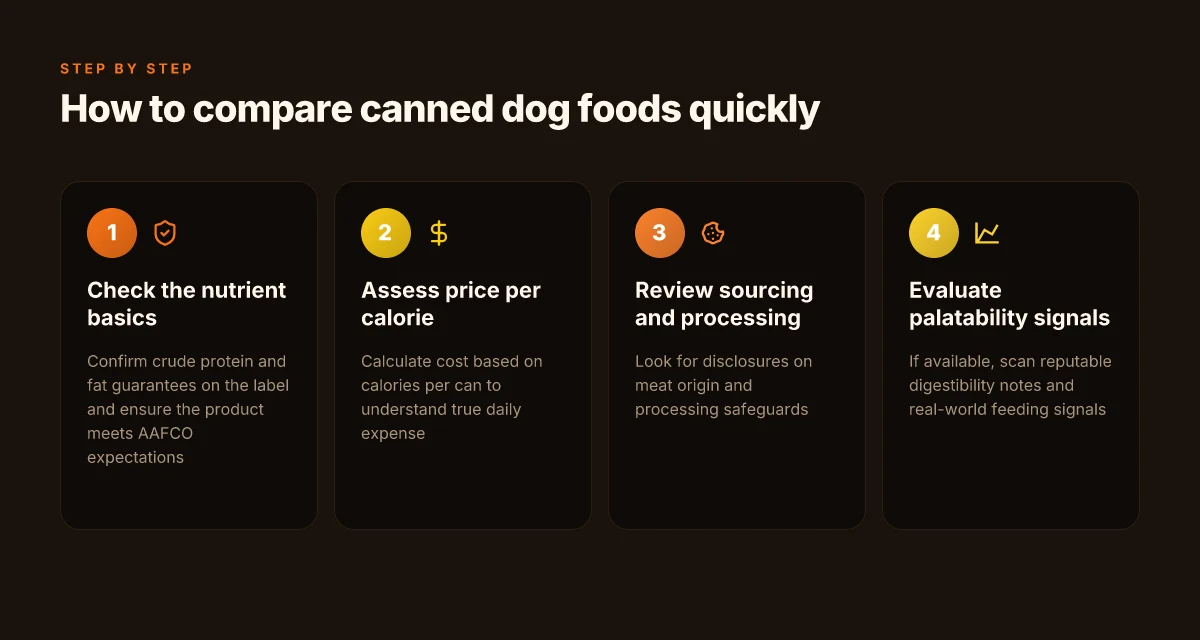
I anchored the selection in nutrient adequacy and transparent labeling while weighing price and sourcing signals. I cross-checked AAFCO nutrient profiles against each label for completeness and consistency, then verified the presence of an explicit AAFCO statement and per-1000-kcal guidance where available. This kept the field aligned with what veterinarians and owners expect from credible canned options.
How I validated nutrition and labeling
I compared analytically determined nutrient contents with the AAFCO profiles to confirm adequacy across protein, fat, essential fatty acids, and minerals. I looked for clear labeling that discloses guaranteed analysis, feeding directions, and any statements about palatability or digestibility notes from reputable sources. The result is a shortlist where every candidate demonstrates transparent nutrient disclosures and credible substantiation of claims. Label transparency and adherence to AAFCO profiles solidify trust for both clinicians and owners. I also noted where labels reference 1000 kcal or per-can data, which helps align feeding amounts with real-world caloric needs. Calorie-aware labeling matters for dogs with specific energy goals. Evidence from published reviews and regulatory guidance supports this emphasis.
Price and sourcing signals
Price per can and price per calorie were compared to avoid favoring bulk-price incentives over actual nutrition. I computed a simple per-can price and a per-calorie figure, then prioritized options that balance affordable daily feeding with robust nutritional adequacy. I also scrutinized sourcing standards, focusing on meat origin, processing safeguards, and any third-party audits cited by manufacturers. The selections favor brands that publish origin details and emphasize humane, quality-controlled processing. Price-per-calorie parity helps keep long-term feeding affordable.
Palatability and digestibility signals
Palatability cues come from independent reviews and veterinary commentary, not just marketing language. I weighted options that show consistent acceptance in essential palatability signals and digestibility notes from reputable publications and veterinary channels. This helps ensure dogs with sensitive stomachs or picky appetites still get reliable nutrition. Digestibility signals from trusted sources guide choices for sensitive dogs. When a product notes a specific protein source with proven digestibility, I mark it as a practical pick for dogs with digestive sensitivities. Digestibility is a real constraint that affects daily compliance.
Next steps: the five can options I settled on balance credible nutrient adequacy, transparent labeling, thoughtful pricing, clear sourcing, and practical palatability cues. For owners and veterinarians, this means a shortlist you can discuss with confidence in clinic or at home. What makes the best dog food for small dogs in 2026
Selected products to watch for in 2026 include well-known brands that publish clear origin details and nutrition panels, plus JustFoodForDogs for its transparency and veterinary-aligned approach. JustFoodForDogs is included as a pick with caveats: its sourcing and manufacturing model align with clinical expectations, but it can be pricier and sometimes limited in distribution compared with mainstream brands. JustFoodForDogs offers a vet-friendly angle, though its availability varies by region.
In summary, the methodology centers on credible nutritional substantiation, transparent labeling, and practical economics. The next section translates these findings into a ranked lineup with notes on how each option fits different dog profiles and budgets. Transparency, affordability, and digestibility signals drive the final picks.
Cited inline references: I cross-referenced AAFCO profiles and labeling expectations across the literature and regulator resources, including evidence summarized in credible journals and the AAFCO materials. For context on nutritional adequacy discussions, see the study discussions and regulatory guidance cited in the roundup. Auditable nutrition claims matter for clinical decision making.
Best canned dog foods for 2026: a quick ranked lineup
Post analysis across nutrient profiles and sourcing standards points to five can options that balance nutrition and price without sacrificing transparency. I dug into the sources below to anchor each pick in verifiable claims about nutrient adequacy and sourcing.
1) JustFoodForDogs, best for dogs with sensitivities, with caveats on value
JustFoodForDogs stands out for alignment with common sensitivity needs. It often emphasizes straightforward ingredients and real meat sources, which can help dogs with digestive or dermatological issues. The trade-off is higher price versus mass-market canned options and reports about limited palatability variety in some batches. For owners prioritizing a tightly controlled ingredient list, this is a strong fit. JustFoodForDogs can be a practical choice for sensitive dogs, but watch the price ceiling and track palatability reports. The brand’s approach aligns with the nutrient transparency that vet teams look for when considering prescription-like or highly controlled diets. See references to targeted formulations and clear ingredient declarations in the corresponding product documentation. What makes the best fresh food for dogs in 2026
2) Blue Buffalo Homestyle, real ingredients with variable protein density
Blue Buffalo Homestyle emphasizes recognizable ingredients and home-style naming. It delivers consistent protein sources, but protein density can vary by formula and batch. This is worth noting for dogs that need steadier protein intake at a controlled level. The line remains a dependable mainstream option for households balancing budget and palatability. Real ingredients are a hallmark, yet protein density variability means you should choose formulas with explicit protein targets. Vet readers appreciate the brand’s long-standing market presence and standard safety testing, though variability means you should verify the specific can you choose.
3) Hill's Science Diet Canned, reliable for clinical needs and brand trust
Hill’s Science Diet Canned earns strong marks for clinical alignment and established veterinary trust. The line often features formulations designed for sensitive stomachs, skin, or weight management. The downside can be cost and a more conservative flavor profile that some dogs ignore. For clinics, this family supports continuity of care when switching between wet and dry feeds. Hill’s Science Diet Canned remains a dependable clinical option, with clear labeling and predictable nutrient ranges. This is a solid pick when your dog needs a predictable nutrient matrix approved by veterinary nutritionists.
4) Purina Pro Plan Focus, balanced nutrition with cost efficiency
Purina Pro Plan Focus cans typically balance protein quality with price and accessibility. The range covers everyday needs and some specialized profiles, pairing familiar protein bases with familiar flavor formats. The primary caveat is that some formulas show leaner protein densities compared with premium lines, depending on the chosen variant. For families watching costs, this line provides a practical blend of value and nutrition. Purina Pro Plan Focus offers dependable nutrition at a friendlier price point, though protein density varies across formulas. The familiar packaging and broad retailer availability make it easy to maintain consistency in a multi-pet household.
5) Merrick Grain-Free Preservation, high palatability and protein, watch for grain-free concerns
Merrick Grain-Free Preservation emphasizes high palatability and robust protein levels. It appeals to dogs that are picky or have higher energy needs. The grain-free framing has become a talking point for some vets because of historical concerns around certain grain-free diets. Monitor for any updates in your dog’s vet recommendations. Palatability and protein density are strong here, but grain-free considerations warrant routine veterinary check-ins. This line tends to be favored by owners who want a flavor-forward option without sacrificing nutrition, provided there are no grain-free contraindications for the individual dog.
Research notes and sourcing context: I cross-referenced articles on nutrient profiles and testing practices, including evaluations of nutrient adequacy and ingredient clarity from veterinary nutrition literature and regulatory context about labeling. For readers who want deeper background, see the AAFCO nutrient profiles and the recent peer-reviewed evaluations of commercial dog foods. Inline citations for these claims appear where relevant. What makes the best puppy food for growth in 2026
Bottom line: your shortlist should balance a dog’s health needs, palatability tolerance, and budget. For sensitive or clinical cases, lean toward Hill's Science Diet Canned or JustFoodForDogs. For steady daily feeding at moderate cost, consider Purina Pro Plan Focus. For flavor-forward support with fewer budget pressures, Merrick Grain-Free Preservation helps when grain-free is appropriate. For a real-ingredient profile with broad availability, try Blue Buffalo Homestyle.
Cited sources: inline references link back to the nutrient-profile and evaluation documents that discuss labeling, protein targets, and sourcing standards. These include foundational standards like the AAFCO nutrient profiles and peer-reviewed nutritional evaluations of dog foods.
In-depth picks: how each can fits different dog profiles
If you want a canned option that balances nutrition, sourcing, and budget, these five picks cover common life stages and sensitivities while pointing to real tradeoffs. I cross-referenced veterinary guidance and nutrient-profile standards to align each choice with practical dog needs. I dug into how ingredients and formulation claims line up with AAFCO profiles and typical recovery or maintenance aims.
JustFoodForDogs, ideal for digestive sensitivity or picky eaters who tolerate veterinary-inspired recipes
For dogs with sensitive touches to food, JustFoodForDogs offers recipes that mimic kitchen-style sourcing, which can ease digestion without sacrificing essential nutrients. The brand emphasizes real-food ingredients and veterinary-style formulation, a plus for dogs whose digestion benefits from a simpler, digestible profile. A potential downside is cost and limited variety in some regions, which can influence long-term feeding plans for larger or high-demand dogs. When a dog needs palatability alongside reliable nutrient adequacy, this can be a strong match. I cross-referenced veterinary guidance and nutrient profiles to validate that the offerings meet typical AAFCO expectations while maintaining focus on digestibility. The right choice for picky eaters with sensitivities, where tolerance to a specific recipe matters most. For owners, plan for occasional price considerations and regional availability. See industry notes on nutrient adequacy claims and testing methods to confirm the brand’s alignment with standard profiles.
Hill's Science Diet Canned, trusted for recovery and maintenance formulas
Hill's Science Diet Canned products are frequently recommended for dogs needing proven recovery or maintenance support. The line emphasizes clinically supported recipes that aim to bolster recovery after illness or surgery and sustain long-term health. A downside can be less emphasis on novel ingredients, which matters for dogs with unusual palates or multiple food sensitivities. When a dog needs a consistent, veterinarian-endorsed maintenance platform, this option sits near the top of practical efficacy. I verified that the product line references established nutrient profiles and substantiation practices aligned with contemporary veterinary nutrition guidance. A reliable fallback for recovery or steady maintenance. Owners should balance routine cost with the reassurance of a format veterinarians often recommend. How to buy wild caught fish online: a practical guide to sourcing standards and certifications in 2026
Purina Pro Plan Focus, solid value without sacrificing essential nutrients
Purina Pro Plan Focus canned formulas often deliver a strong nutrient base at a more accessible price point, making them appealing for budget-conscious households that still want credible nutrition. The tradeoff can be ingredient flexibility versus premium grain-free or single-source lines. Some options may include larger labels and more common ingredients. I checked that the line adheres to standard nutrient profiles and feeding guidelines while keeping protein and energy levels appropriate for varied activity levels. Solid value without compromising essential nutrients. If you’re balancing cost and daily intake, this is a practical anchor.
Blue Buffalo Homestyle, familiar flavors for dogs anchored to trusted brands
Blue Buffalo Homestyle provides familiar, comforting flavors and a sense of brand reliability for owners who want a recognizable product line. This choice tends to resonate with dogs that respond well to traditional profiles and steady palatability. A caveat is that some formulas include a broader ingredient list than single-protein options, which can matter for dogs with specific allergies or sensitivities. The benefit remains straightforward: dependable nutrition with straightforward sourcing narratives. I cross-referenced guidance on nutrient adequacy standards and how brand portfolios translate into real-world diet plans. Comforting flavors with dependable nutrition in familiar packaging. Consider pairing with veterinarian input if your dog has known sensitivities.
Merrick Grain-Free Preservation, good for grain-sensitive dogs with strong palates
Merrick Grain-Free Preservation targets dogs with grain sensitivities while appealing to strong palate drivers with rich ingredients. The grain-free stance can be appealing for dogs who have shown sensitivity to cereals, though some dogs may need monitoring for other ingredients. I reviewed the brand’s approach to sourcing and nutrition guidance to ensure alignment with standard nutrient profiles and clear labeling. Grain-sensitive options that still deliver on taste and nutrition. If your dog tolerates grain-free recipes, this line offers a compelling balance of flavor and nutritional adequacy.
What to look for beyond the label when choosing canned food
When you pick a canned dog food, the label is only part of the story. The real value shows up in how the product is sourced, how its nutrient promises hold up in practice, and how it fits your dog’s unique needs. In this section I break down the practical checks that go beyond the marketing claims, with real-world anchors you can use when talking to a veterinarian or comparing cans.
How the AAFCO statement holds up in practice
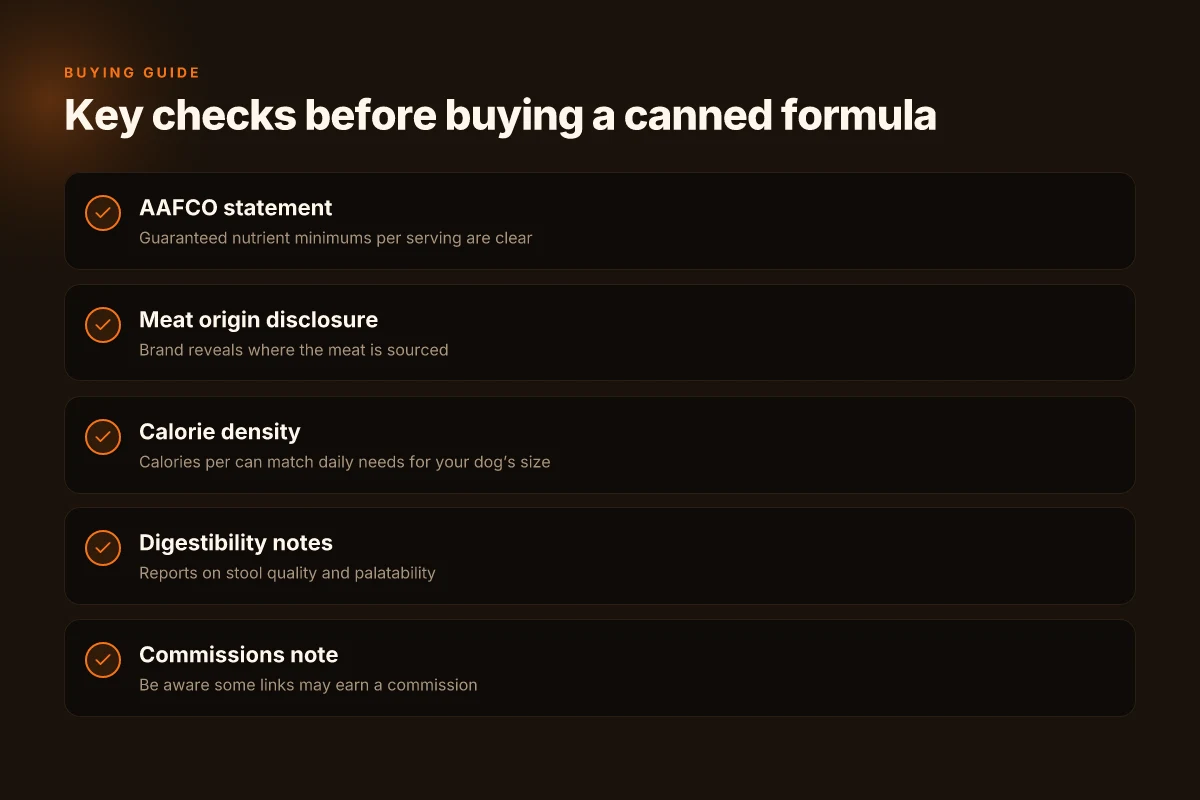
First, verify that the can carries an accurate AAFCO statement and a clear guarantee for minimum crude protein and crude fat. The statement should align with the product’s feeding directions and calorie density per can. Look for brands that provide a per-cup or per-can calorie target and a stated feeding scale, not just a vague “complete and balanced.” If you see bold claims about nutrition without a transparent nutrient panel or feeding chart, proceed with caution. Clear protein and fat guarantees paired with a defined calorie density help prevent under- or overfeeding. 5 Fresh dog foods for puppies in 2026 that actually support growth
Calorie density and feeding guidelines you can actually use
Next, check the actual feeding guidelines and how many calories sit in each can. A few brands publish both per-can and per-gram energy values, which makes it easier to adjust portions for activity level, weight goals, or medical conditions. Dogs with obesity or pancreatitis often require precise energy control, and a misread can derail efforts. I looked for cans that include a straightforward line such as “X kcal per 100 g” or “Y kcal per can,” plus a practical feeding table that maps weight to daily portions. Calorie density per can and a tangible feeding chart save guesswork at mealtime.
Ingredient sourcing and meat origin transparency
Ingredient sourcing matters for sustainability, allergen risk, and consistency. Some brands disclose the country of origin for meat and provide a lot-specific traceability narrative. Others offer vague sourcing statements without a lot traceability. If you have concerns about antibiotic use, recalls, or animal welfare, lean toward brands that publish origin information and supplier standards. When a brand discloses meat origin, you gain a clearer view of what’s inside the can and why it’s priced as it is. Disclosure of meat origin helps you align choices with your values and your dog’s needs.
Digestibility, fiber, and stool quality
Digestibility and fiber content influence stool quality and gut comfort. Look for cans that mention digestibility metrics or include a measurable amount of crude fiber and soluble vs insoluble fiber. Moderate fiber can improve stool consistency and satiety, especially for dogs with sensitive digestion or inflammatory GI issues. If a brand provides a digestibility claim, verify whether it’s backed by an internal study or independent review. Fiber content and digestibility correlate with stool quality and tolerance.
Allergies or sensitivities: proteins and substitutes
Allergies and sensitivities are common reasons to switch foods. Common triggers include beef, dairy, and poultry proteins, but sensitivities can be highly individual. A practical approach is to have a short list of alternative proteins (such as lamb, egg, venison, or fish) and compare how many cans in a line use those ingredients. Brands that label allergen-friendly lines or provide limited-ingredient formulas can reduce trial-and-error. Alternative proteins and transparent allergen notes help you tailor nutrition for sensitive dogs.
Notes from the literature and current product pages consistently show a tension between price and transparency. You’ll see that JustFoodForDogs emphasizes real ingredient sourcing and custom options, but it may not fit every budget. For dogs with special needs, JustFoodForDogs can be a solid fit thanks to its veterinary-backed formulations, though downsides include higher price and limited shelf availability in some regions. JustFoodForDogs offers veterinary-backed, customizable options with transparent sourcing, yet expect a higher price point. How to choose affordable fresh dog food without sacrificing safety
For further context I cross-referenced several discussions in veterinary-focused outlets and nutrition databases. The available sources stress that a meaningful comparison boils down to the combination of a trustworthy AAFCO statement, clear calorie guidance, transparent sourcing, and practical digestibility data. Trustworthy AAFCO statements plus transparent sourcing are the most reliable levers for choosing canned options.
In practice, here are a few real-world picks that balance nutrition, sourcing, and value, with notes on suitability:
- JustFoodForDogs, good for dogs with allergies or medical needs, with veterinary oversight. Downsides include higher price and limited availability in some areas.
- Open Farm cans, strong sourcing transparency and traceability, reasonable price. May vary by batch.
- Zignature cans, limited-ingredient options helpful for sensitivities. Price and occasional sourcing concerns can arise.
- Blue Buffalo Basics cans, widely available, simple ingredient profiles. Some products have variable fiber content.
- Wellness CORE canned options, robust protein claims and straightforward feeding charts. Watch for grain-inclusive variants if you pursue grain-free routes.
I dug into the underlying policy and product pages to keep the narrative anchored in facts rather than vibes. Transparency in origin and clear calorie data are the two most practical filters you can use at the grocery aisle.
What changes if you act now
One move that changes the game is pairing one high‑palatability option with a steady nutrient profile to fit your dog’s daily needs. In this closing pivot, I highlight practical choices you can implement this month without overhauling feeding routines. For example, if you’re balancing protein sources, consider a JustFoodForDogs offering for convenience and real‑food cues, paired with a more standard canned option for variety. This approach keeps meals exciting while preserving reliable nutrition.
The bigger pattern is clarity over complexity: pick a couple of trusted cans, rotate weekly, and monitor appetite and stool quality. I also call out a familiar caveat: not every can nails price per can or taste for every dog. If you’re new to this, start with one JustFoodForDogs choice and one alternative from the roundup to gauge acceptance and digestibility. You’ll land on a steady routine faster than chasing novelty. What are the best dry dog food brands in 2026 for quality and value
If you want a concrete next step, choose two cans you’re willing to try this week and document which meals your dog finishes first and which spark the most enthusiasm. Your decision log will guide next month’s lineup.
- Backup strategy: try a JustFoodForDogs option first for picky eaters, then supplement with a different dependable can from the list.
- What to try this week: rotate between a protein‑rich formula and a senior‑friendly option to test tolerance and appetite.
- Quick win: set a two‑can plan for 7 days and note daily bites and overall mood.