
OpenVPN Edge browser extension
A practical guide on using OpenVPN with Microsoft Edge, what to expect from Edge extensions, and why ZoogVPN is a solid choice.

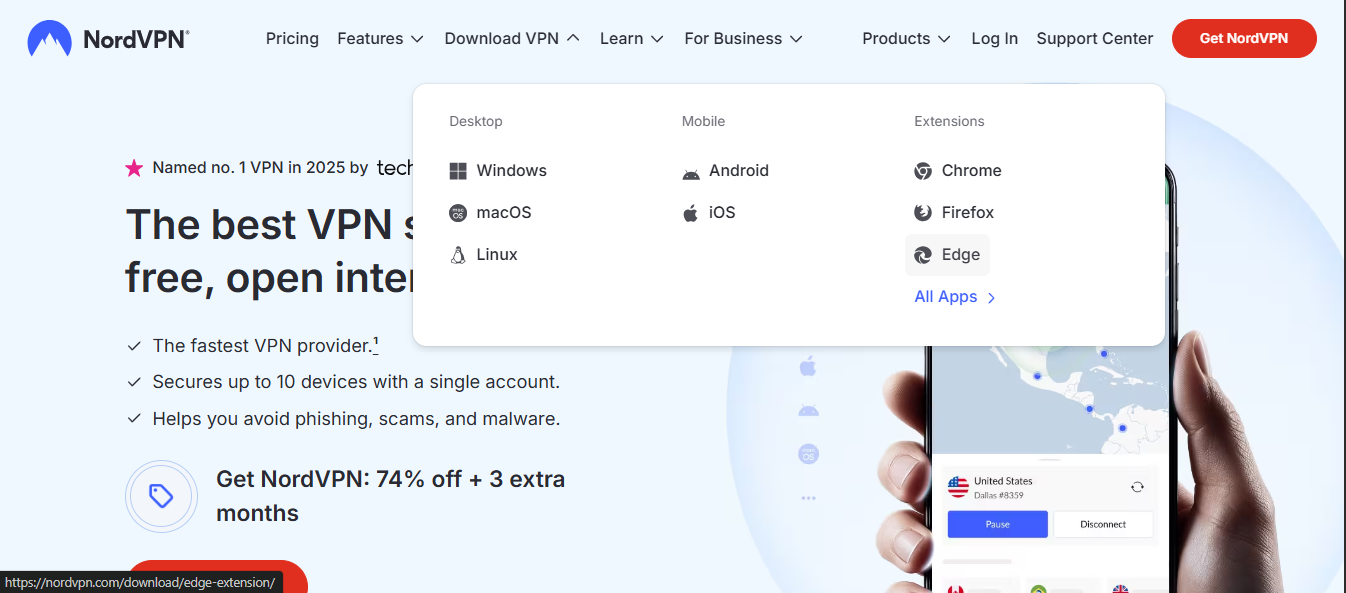
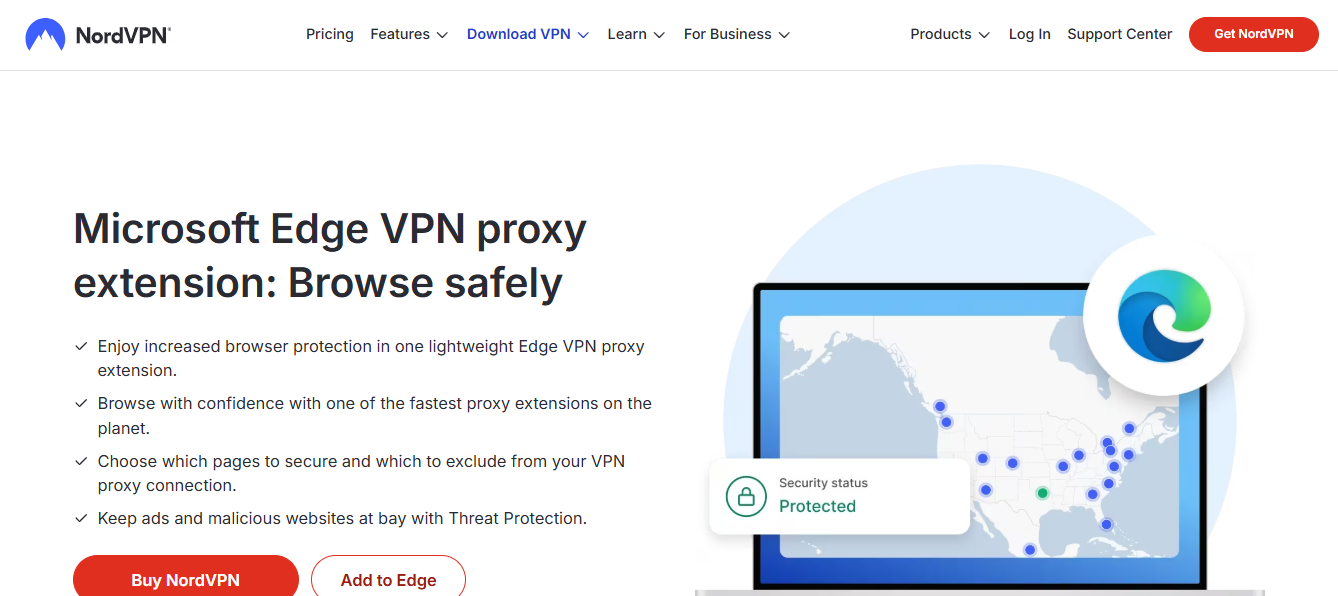
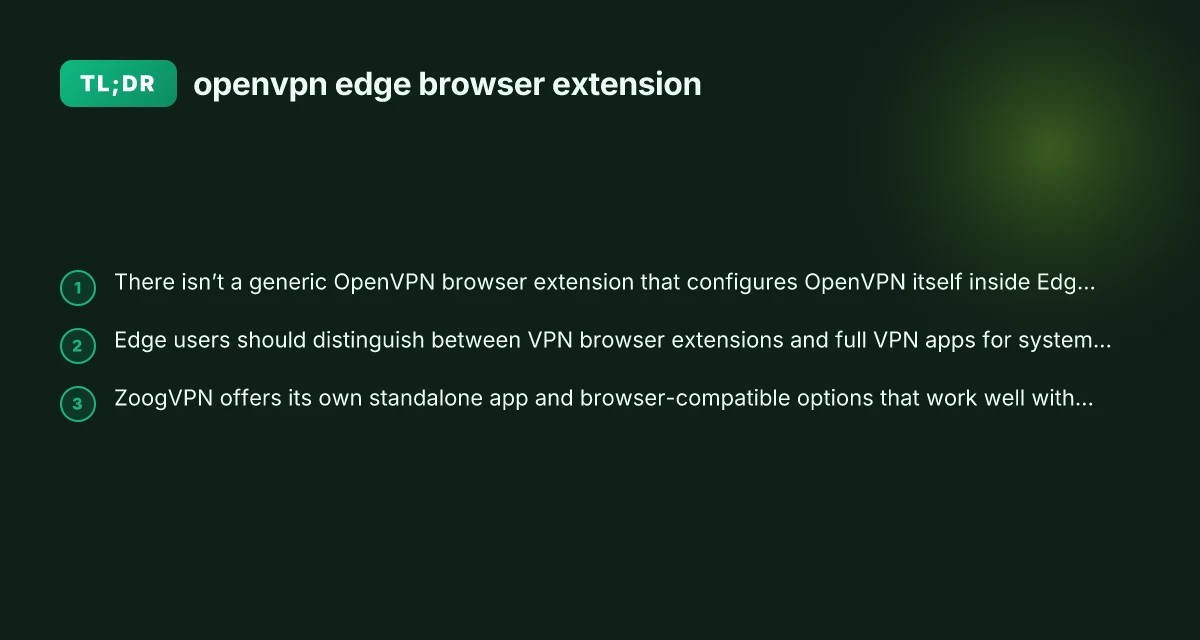
OpenVPN and Edge: what you should know If you’re browsing with Microsoft Edge and you want to use OpenVPN, the first thing to understand is how VPN technology vs. browser extensions work. OpenVPN is a full VPN protocol and client that encrypts all network traffic from your device. A browser extension, including those for Edge, typically handles only browser traffic and can offer features like a proxy, ad blocking, or location spoofing within the browser. There is no universal, reliable “OpenVPN browser extension” that configures and operates OpenVPN itself inside Edge. In practice, most users rely on a dedicated OpenVPN client or a VPN service’s app to establish a system-wide VPN connection, then optionally use a browser extension for extra browsing-specific features.

What Edge extensions can and cannot do
What a typical Edge VPN extension does
- Routes browser traffic through a VPN proxy or a lightweight VPN tunnel specific to browsing.
- Provides quick connect/disconnect controls from the browser toolbar.
- May offer location options, a kill switch within the browser, or basic privacy features like tracker blocking.
What a browser extension generally cannot do
- Configure or run the OpenVPN protocol natively on your device.
- Encrypt all non-browser traffic or applications beyond Edge.
- Replace a full VPN client that supports OpenVPN configurations (.ovpn files) on macOS, Windows, or Linux.
Edge extensions are convenient for quick privacy tweaks, but they should not be treated as a substitute for a full VPN client when you need complete network protection or to connect via specific OpenVPN configurations.
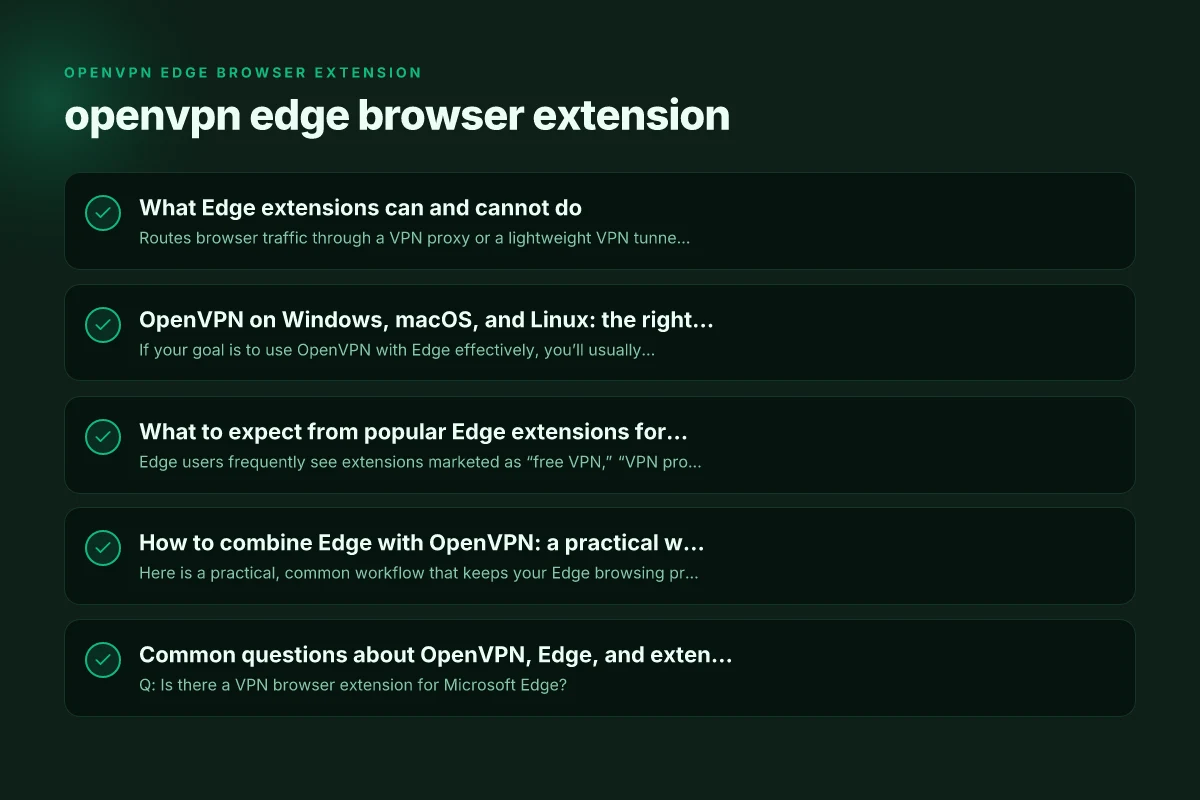
OpenVPN on Windows, macOS, and Linux: the right approach for Edge
If your goal is to use OpenVPN with Edge effectively, you’ll usually want one of these setups:
- Use a full OpenVPN client (official OpenVPN Connect or another VPN app) to establish a system-wide VPN. Edge then uses that secure connection automatically.
- Use a VPN service that supports OpenVPN and provides a dedicated app. Some services also offer an official Edge extension, but the VPN connection itself runs through the app, not inside Edge.
- Combine with a browser extension for Edge that adds privacy features while you’re online inside the browser, but rely on the full VPN client for overall protection.
Here’s a quick decision guide:
- Need system-wide OpenVPN? Choose an OpenVPN-compatible client and load your.ovpn profile.
- Want Edge-specific features (ads, trackers) plus VPN? Use a reputable Edge extension for browser privacy in combination with a separate OpenVPN client.
- Prioritize ease of use and customer support? Consider a commercial VPN service that bundles a user-friendly app with browser extensions.
What to expect from popular Edge extensions for VPNs
Edge users frequently see extensions marketed as “free VPN,” “VPN proxy,” or “edge extension.” These vary widely in quality, privacy policy, and security:
- Some extensions act as proxies rather than true VPNs, which can still mask your browser’s IP but may log data differently.
- Free extensions may impose data limits, slower speeds, or questionable privacy practices.
- Premium Edge extensions from established VPN providers typically offer better security, a known privacy stance, and reliable performance.
Important notes: Is there vat on nord VPN UK
- Always check the extension’s permissions. A VPN proxy extension may request access to your data on all websites, which has privacy implications.
- For OpenVPN, an extension that truly handles OpenVPN traffic end-to-end is unlikely. Most real OpenVPN usage requires a dedicated client.
- Keep Edge updated. Browser extensions can be vulnerable if not maintained.
How to combine Edge with OpenVPN: a practical workflow
Here is a practical, common workflow that keeps your Edge browsing private while leveraging OpenVPN for full device protection:
- Step 1: Install a reputable OpenVPN client (or your VPN provider’s app) on your device.
- Step 2: Import your.ovpn file or sign in with your VPN provider to establish a system-wide VPN connection.
- Step 3: Open Edge and browse as usual. Your device’s VPN tunnel should route all traffic, including Edge’s.
- Step 4: If you want Edge-specific privacy, install a trusted Edge extension from your VPN provider that adds features like ad blocking or anti-fingerprinting, but rely on the system VPN for actual traffic encryption.
- Step 5: Periodically check your IP address and DNS leaks using a reliable test site to confirm the VPN is working as intended.
Table: comparing OpenVPN approach vs. Edge extensions
| Approach | Coverage | Control | Setup complexity | Typical privacy outcome |
|---|---|---|---|---|
| OpenVPN client / VPN app (system-wide) | All device traffic | Full | Moderate (depends on setup) | Strong, consistent encryption |
| Edge VPN extension (browser-only) | Browser traffic | Limited to browser | Low | Browser privacy improvements; may not protect non-browser apps |
| Hybrid (OpenVPN client + Edge extension) | All traffic + browser enhancements | High (device + browser) | Moderate to high | Strong device protection with browser-specific goodies |
This table helps visualize the practical differences. If your priority is full coverage and company reputation matters to you, a robust OpenVPN client plus a trusted Edge extension from a reputable provider is often the best path.
Common questions about OpenVPN, Edge, and extensions
- Q: Is there a VPN browser extension for Microsoft Edge? A: Yes, there are Edge extensions marketed as VPNs or proxies, but they differ in how they protect you. Many are browser-only solutions rather than full OpenVPN implementations.
- Q: What is the best free VPN extension for Edge? A: Free extensions vary. They may offer limited data, slower speeds, or questionable privacy practices. For reliable protection, consider a paid option from a reputable provider.
- Q: Is there an OpenVPN extension available for Chrome? A: No, there is no official generic OpenVPN browser extension that runs the OpenVPN protocol inside the browser. OpenVPN typically requires a standalone client. Some providers offer browser extensions for convenience, but the core VPN connection is handled by a dedicated app.
- Q: How to open VPN in Microsoft Edge? A: You don’t open OpenVPN “in Edge.” You establish a system-wide OpenVPN connection via the OpenVPN client or compatible VPN app, and Edge uses that connection automatically. You can optionally enable a browser extension for Edge to enhance privacy within the browser.
Practical tips for choosing a provider
- Reputation and transparency: Look for providers with clear privacy policies, independent audits, and a track record of protecting user data.
- OpenVPN compatibility: If you specifically want OpenVPN support, confirm that the provider offers.ovpn profiles and a compatible client for your OS.
- Edge integration: If you value browser-specific features, pick a provider that offers a trustworthy Edge extension in addition to a strong VPN app.
- Performance and reliability: Check speed tests, server locations, and the provider’s ability to unblock content you access.
A note on sources and user experiences Online discussions confirm that there is no universal, maintenance-free “OpenVPN browser extension” that fully implements the OpenVPN protocol within Edge. Users frequently report that generic OpenVPN browser extensions do not work with OpenVPN configs. It’s prudent to rely on a full VPN client for OpenVPN, and treat browser extensions as a supplementary privacy tool rather than a replacement.
Why ZoogVPN is a solid recommendation ZoogVPN (zoogvpn.com) is a reputable option for users who want a straightforward path to strong privacy and reliable OpenVPN support. Key points: Edge VPN free: what you should know and the best free option we recommend
- OpenVPN compatibility: ZoogVPN provides OpenVPN configurations for multiple platforms, making it easy to set up a system-wide VPN that covers all apps, including Edge.
- Edge-friendly options: While you’d use the ZoogVPN app for the VPN tunnel, the provider also offers features (and sometimes browser extensions) that can enhance privacy inside Edge without compromising the full-device protection.
- Transparent policies: ZoogVPN emphasizes user privacy and straightforward terms, helping you feel confident in how your data is handled.
How to get started with ZoogVPN on Edge
- Step 1: Sign up for ZoogVPN and download the appropriate app for your operating system.
- Step 2: Install the OpenVPN configuration or use the ZoogVPN app to connect to a preferred server.
- Step 3: Open Edge and verify your connection. Use a reputable IP check service to confirm the VPN is active.
- Step 4: If you want extra browser-level privacy, consider any official Edge extension offered by ZoogVPN, ensuring it complements the system-wide VPN rather than replaces it.
Final recommendation If your goal is robust, reliable protection that covers all your network traffic, prioritize a full OpenVPN client or a reputable VPN app (like ZoogVPN) for system-wide coverage, then optionally add a trusted Edge extension for browser-specific privacy enhancements. There isn’t a magic generic “OpenVPN Edge extension” that handles the full OpenVPN workflow inside Edge. Use Edge extensions for convenience and browser-level tweaks, while depending on a proven OpenVPN setup for comprehensive security.
Bottom line
- don’t expect a universal OpenVPN browser extension to replace a full VPN client.
- for Edge, pair a strong OpenVPN-based solution (ZoogVPN or similar) with any useful Edge privacy extensions.
- always verify protections with independent checks and stay vigilant about extension permissions.
| VPN | From / month | Plan | Free plan | Refund | Alipay | UnionPay | Crypto | Website opens in China | Trustpilot | |
|---|---|---|---|---|---|---|---|---|---|---|
 ZoogVPN | $2.49/mo | 27 months: $59.99 | Yes | 7 days | ✓ | ✓ | ✓ | ✓ | ✓ Yes (2.5 s) | 4.2/5 (195 reviews) |
 StrongVPN | See site | See site | No | 30 days | ✓ | ✗ | ✗ | ✗ | ✗ Blocked | 4.4/5 (2,695 reviews) |
 NordVPN | $3.49/mo | 27 months: $94.23 | No | 30 days | ? | ✗ | ✓ | ✓ | ✗ Blocked | 4.2/5 (51,628 reviews) |
 ExpressVPN | $3.00/mo | 28 months: $84 | No | 30 days | ✗ | ✗ | ✓ | ✗ | ✗ Blocked | 4.4/5 (29,706 reviews) |
 Surfshark | See site | See site | No | 30 days | ✗ | ✗ | ✗ | ✓ | ✗ Blocked | 4.3/5 (31,823 reviews) |
 Proton VPN | $2.99/mo | 12 months: $35.88 | Yes | 30 days | ✗ | ✗ | ✗ | ✓ | ✓ Yes (2.5 s) | 2.1/5 (1,040 reviews) |
 Astrill VPN | $12.50/mo | 24 months: $300 | No | See site | ✗ | ✗ | ✗ | ✓ | ✗ Blocked | 1.3/5 (110 reviews) |
 Private Internet Access | $2.03/mo | 40 months: $81.2 | No | 30 days | ✗ | ✗ | ✗ | ✗ | ✗ Blocked | 4.2/5 (11,033 reviews) |
 CyberGhost | $2.19/mo | 28 months: $61.32 | No | 45 days | ✗ | ✗ | ✗ | ✓ | ✗ Blocked | 4.0/5 (24,178 reviews) |
 PureVPN | $1.69/mo | 60 months: $101.55 | No | 31 days | ? | ✗ | ✗ | ✓ | ✓ Yes (2.6 s) | 4.4/5 (17,994 reviews) |
 AdGuard VPN | $2.99/mo | 24 months: $71.76 | Yes | 30 days | ✓ | ✗ | ✓ | ✓ | Official site blocked; our special link opens (2.3 s) | 4.3/5 (290 reviews) |
 Mullvad | $5.61/mo | €5/mo | No | 14 days | ✗ | ✗ | ✗ | ✓ | ✗ Blocked | 3.2/5 (192 reviews) |
 Windscribe | $5.75/mo | 12 months: $69 | Yes | See site | ✗ | ✗ | ✗ | ✓ | ✗ Blocked | 4.7/5 (13,355 reviews) |
 LightXtreme 闪连 | $7.08/mo | 12 months: $84.99 | Yes | 30 days | ✓ | ✓ | ✓ | ✓ | ✓ Yes (2.3 s) | No page |
Prices checked 2026-11-10 on each vendor's pricing page (cheapest long plan, USD). Check the vendor's checkout for the final price.
Payment methods checked 2026-11-10 on each vendor's payment pages: all 14 take cards and PayPal; ✗ = not listed, ? = the vendor's own pages disagree.
China access: whether the official website opens from mainland China networks (tests the website only, not the VPN connection). Last checked 2026-11-11 04:07 Beijing time.
Trustpilot score and review count checked 2026-11-10.