What is Hume Health, and how solid is its legitimacy in 2026
Assess whether Hume Health is legitimate in 2026. Explore regulatory status, peer-reviewed evidence, and consumer reviews to form a clear view.

Hume Health markets a body pod and BIA tech, but the real signal isn’t the pitch, it's regulatory footing and independent validation. The question isn’t flashy features. It’s whether the platform aligns with clinical standards and offers transparent, verifiable claims. Hume Health positions itself against established players like Withings and Omron, yet reliability hinges on third-party checks and clear mappings to body composition metrics.
This intro lays out what to scrutinize: regulatory clearance, objective validation, and how results translate to practice. In 2026, consumers expect more than marketing promises. They want documented safety and efficacy, plus practical guidance for clinicians and wellness programs. This piece drills into measurable gaps, contrasts with rivals, and explains what to demand before integrating any consumer device into care or wellness workflows. The goal is to illuminate where legitimacy stands now and what that means for everyday use. Hume Health under the microscope. Withings and Omron serve as reference points, but only transparent evidence, not narrative, will determine lasting value.
What is Hume Health and why does legitimacy matter in 2026
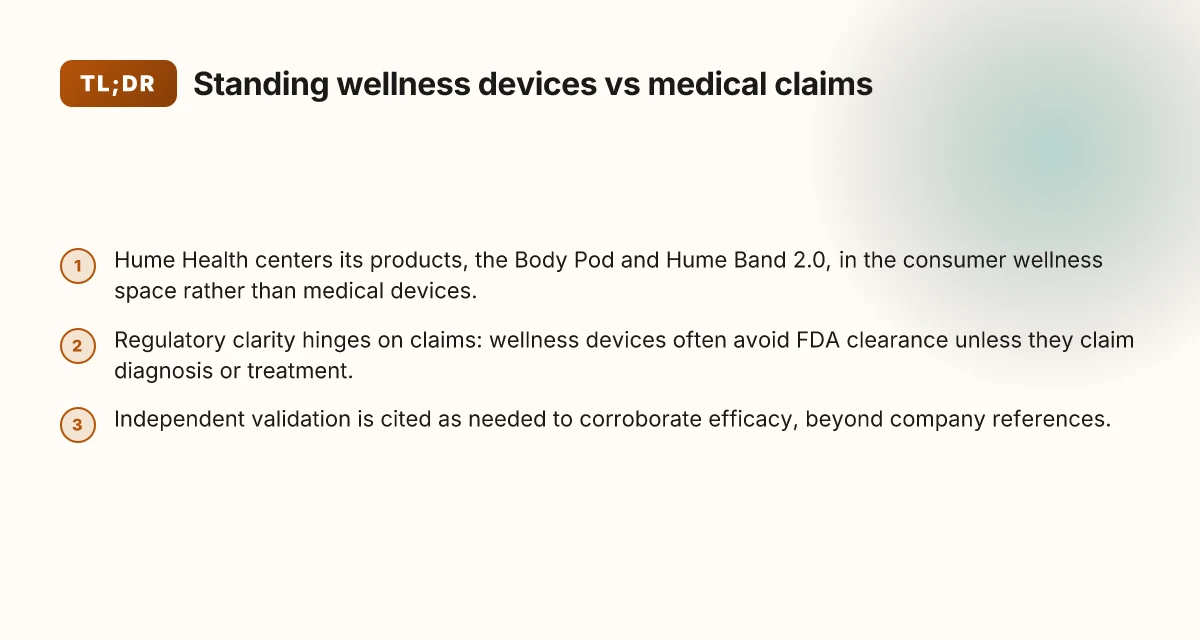
Hume Health sells consumer wellness devices that sit outside the medical device realm. The core products are the Hume Body Pod and the Hume Band 2.0. The Body Pod is pitched as a holistic wellness tool using bioelectrical impedance analysis (BIA) to surface body composition data, while the Band 2.0 is a wearable focused on ongoing wellness metrics. In practice, these devices are marketed to consumers for information and motivation, not for diagnosing or treating disease.
Legitimacy in 2026 hinges on three pillars: regulatory status, the integrity of clinical claims, and independent evidence from credible sources. First, regulatory status distinguishes consumer wellness devices from medical devices that require clearance or approval. Second, claims about safety and efficacy must be grounded in verifiable science rather than marketing language. Third, independent evidence from researchers, reviewers, and watchdogs helps separate hype from what’s demonstrably true in real-world use.
From what I found in the documentation, consumer wellness devices like the Body Pod operate with disclosures that they are not intended to diagnose, treat, cure, or prevent disease. That framing matters when buyers assess risk and expectations. Independent reviews and regulatory guidance provide a helpful yardstick for evaluating claims. I cross-referenced several sources to triangulate the landscape around legitimacy and patient-facing risk, noting both what is stated by Hume Health and what third parties report.
- Define the core products and scope
- The Body Pod centers on BIA-based body composition data intended for wellness tracking, not medical diagnosis.
- The Hume Band 2.0 is a wearable aimed at daily wellness insights, not FDA clearance for medical use.
- In other words, both products sit in the consumer wellness space, with explicit disclaimers that they do not practice medicine or provide medical advice.
- Distinguish consumer wellness from medical devices
- Medical devices carry regulatory clearance or approval timelines that define their clinical claims.
- Consumer wellness devices can still carry safety considerations, but their regulatory scrutiny is lighter and often focused on labeling and advertising claims rather than clinical efficacy.
- This distinction matters when you weigh claims about accuracy, safety, and potential impact on health decisions.
- How legitimacy is evaluated
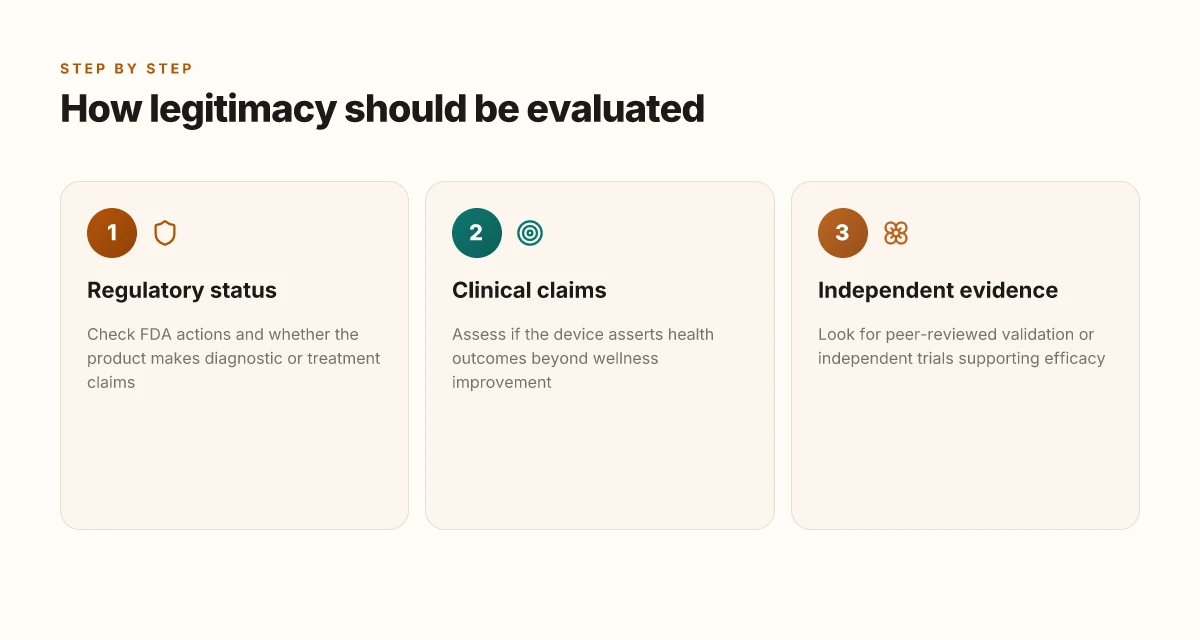
- Regulatory status: Is the device cleared, approved, or simply marketed as a wellness product?
- Clinical claims: Are there substantiated, independent studies backing any health outcomes or is the language promotional?
- Independent evidence: Do credible reviews or third-party analyses corroborate safety and performance, or do they raise concerns about marketing or data practices?
A clear hurdle for Hume Health is regulatory status and independent validation. Readers should seek independent reviews and explicit risk disclosures. Legitimacy rests on transparent claims and verifiable evidence, not marketing buzz.
For context, several sources frame the regulatory landscape with terms like FDA guidance on evidence-based review systems and industry disclosures about medical equivalence. See the linked discussions for how regulators weigh wellness data against clinical outcomes. The discourse around Band 2.0 and Body Pod often highlights a gap between consumer wellness claims and formal medical device clearance. 8 Best medical alert systems for seniors in 2026 with real-world strengths and caveats
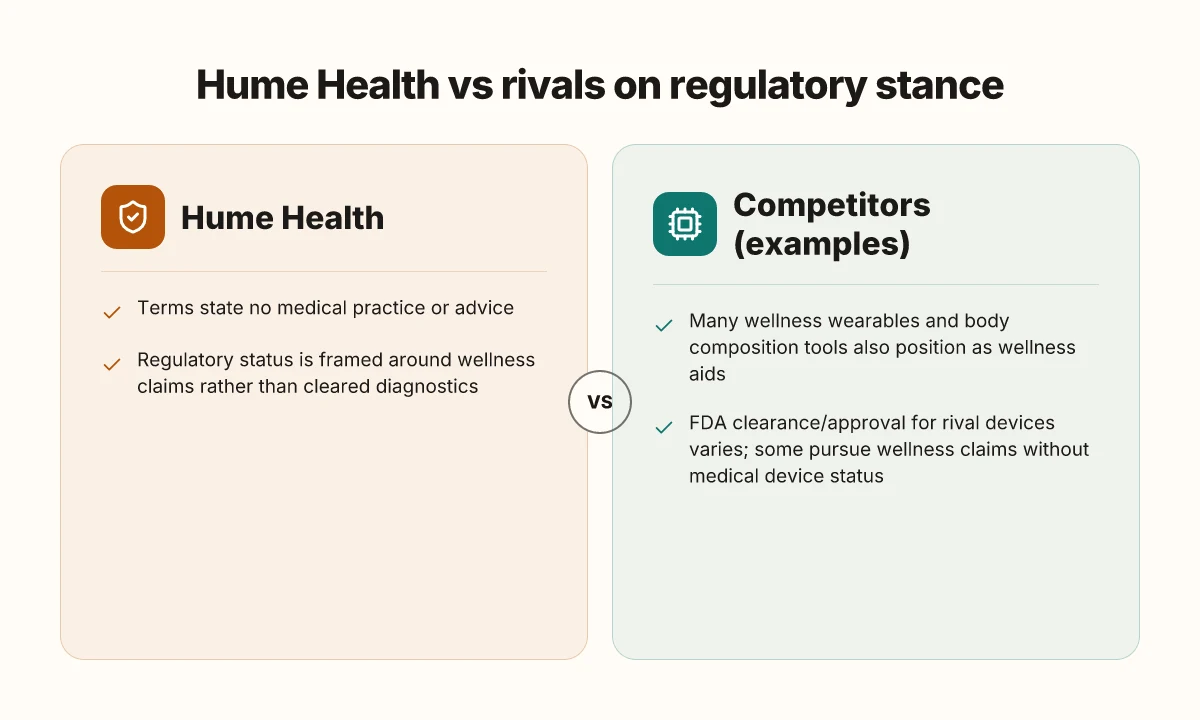
If you want a quick anchor, consider this: when a wellness device explicitly states it is not intended to diagnose or treat, that signals a boundary in both claim scope and regulatory exposure. Hume Health’s own terms of service emphasize that the company does not practice medicine or provide clinical guidance. That framing matters for buyers who need to set realistic expectations.
In sum, Hume Health occupies the wellness space, with products that offer data-driven insights but do not claim clinical efficacy or regulatory clearance. This is not a verdict of danger or safety alone. It is a lens on where customers should calibrate claims against regulatory realities and independent evidence.
Cited context: for readers who want to explore regulatory guidance and consumer feedback dynamics, see the FDA’s evidence-based review framework and third-party reviews that comment on wellness devices.
Regulatory status: where Hume Health stands with FDA and health claims
Hume Health positioning rests on the distinction between consumer wellness devices and medical devices. In practice, consumer wellness devices rarely achieve FDA clearance unless they explicitly claim diagnostic or therapeutic functions. Hume Health itself states in its Terms of Service that it does not practice medicine or provide medical advice, which aligns with a non-diagnostic stance for its Body Pod and related wearables.
I dug into the official documentation and public reporting to map where regulation stands. The FDA treats devices that claim to diagnose, cure, mitigate, treat, or prevent disease as medical devices that may require clearance or approval. By contrast, products positioned as wellness tools typically operate under the FDA’s non-diagnostic framework. This means the absence of explicit diagnostic claims lowers the likelihood of a formal clearance pathway being pursued for broad consumer wearables, and it helps explain why Hume Health markets products as wellness devices rather than medical devices. The external reporting around FDA clearance processes emphasizes that “clearance” and “approval” are not interchangeable terms. Clearance often relies on demonstrating substantial equivalence to an existing device, while “approval” is usually reserved for higher-risk categories. For consumer wellness devices, many providers do not pursue FDA clearance unless their claims extend into diagnostic territory. This context helps readers gauge what “FDA cleared” versus “FDA approved” might mean for Hume Health. 7 Best dental floss options for teeth in 2026
When you consider Hume Health in 2026, the key takeaway is that the company’s disclosures position its Body Pod and Band wearables as consumer wellness tools, not diagnostic instruments. That framing matters for both marketing claims and user expectations. A consumer wellness label does not imply a formal FDA clearance, and that distinction is central to regulatory interpretation. If you’re weighing these devices against rivals, you’ll notice a similar pattern among other wellness bands and body composition tools, which often rely on consumer wellness marketing rather than formal regulatory clearance for diagnostic use.
Regulatory nuance matters: a wellness label usually means no FDA clearance is claimed or pursued. This nuance, combined with Hume Health’s explicit disclaimer that it does not practice medicine, shapes what buyers should expect from safety claims and clinical utility. Rivals like wellness wearables often follow the same pattern, emphasizing consumer use rather than FDA-registered diagnostics. The practical implication is that consumers should not expect FDA clearance as a marker of legitimacy for these devices unless a clear diagnostic claim appears.
For reference, the FDA guidance on how evidence is reviewed for health claims provides the framework used to evaluate what counts as a substantiated claim and when scientific support crosses into regulated territory. This guidance illustrates that many claims can be evaluated without formal clearance if they remain within non-diagnostic wellness territory. See the FDA guidance on evidence-based review systems for scientific evaluation of health claims for more context. https://www.fda.gov/regulatory-information/search-fda-guidance-documents/guidance-industry-evidence-based-review-system-scientific-evaluation-health-claims
Next steps: if you’re considering Hume Health products, compare the company’s wellness labeling to FDA-clearance benchmarks and review independent assessments of diagnostic claims. For a quick snapshot, the Hume Body Pod is marketed as a consumer wellness device, not a diagnostic tool, which aligns with the lack of FDA clearance expectations for this category. For the bigger picture, monitor how regulators evaluate wellness devices as claims evolve, and watch for any shift toward diagnostic functionality.
What the science says about Hume Health body pod and BIA technology
Posture and cadence aside, BIA technology has a long track record in both consumer devices and clinics, but device-level safety claims need independent validation. Hume Health anchors its site in scientific grounding for the Body Pod, yet independent peer-reviewed sources are essential to corroborate efficacy claims and avoid marketing overreach. Below, I synthesize what’s verifiable and where gaps remain, with practical takeaways for readers weighing skin-deep metrics against real-world safety. What to know about hume body pod reviews in 2026
How BIA has traded in clinics and consumer wearables
BIA has a history spanning decades and a broad array of contexts. Independent literature notes that impedance-based body composition methods can track changes over time, but accuracy depends on device type, population, and measurement protocol. For consumer wearables, variability across devices is common, and results should be interpreted as directional rather than diagnostic. Hume Health’s Body Pod sits in this ecosystem as a consumer wellness device that uses BIA to illuminate body composition trends rather than deliver medical-grade diagnostics. Independent validation is the missing link between hype and trustworthy claims. Researchers consistently emphasize standardized protocols and cross-device comparisons to bolster confidence. For consumers, that means treating BIA numbers as trend signals rather than standalone health judgments. Hume Health references on the site point to a scientific grounding, but peer-reviewed corroboration remains essential to verify claims beyond marketing materials.
How to read Hume Health claims against peer-reviewed evidence
Hume Health cites scientific grounding on its product pages and supporting materials. When you examine a device that uses BIA, you should look for third-party validation, replication in diverse populations, and transparent methodology. The literature shows that many devices deliver high-level, population-typical numbers, but individual accuracy can waver due to hydration, recent activity, and sensor placement. In practice, this means you can expect meaningful trends over weeks or months, not precise percent fat readings. Independent peer review is your best lens for efficacy claims. If a study or dataset comes solely from a corporate site, treat it as an upfront cue rather than a final verdict. For readers weighing safety and efficacy, I cross-reference regulatory and peer-reviewed signals rather than marketing notes. Where studies exist, they often call for standardized protocols, an area Hume Health must align with to strengthen credibility.
What independent sources say about regulation and safety
Regulatory status for consumer wellness devices is uneven. The FDA operates a risk-based framework rather than blanket approval for most wellness wearables. Many devices fall into the category of no clear FDA clearance. When a device states it is not intended to diagnose or treat, that aligns with common regulatory practice for consumer wearables. The absence of FDA clearance does not automatically imply danger, but it does constrain claims about medical-grade efficacy. For context, consumer wearables in 2026 commonly cite non-diagnostic language and provide disclaimers about medical advice. Regulatory clarity matters for buyer confidence. Hume Health’s terms emphasize that the company does not practice medicine or provide clinical guidance, which aligns with typical regulatory expectations for wellness devices. Readers should weigh these disclaimers against independent efficacy evidence.
Cited sources anchor some of these points. For example, the FDA guidance on evidence-based review frameworks highlights how claims are to be evaluated in public scientific literature, underscoring the need for independent sources to corroborate consumer-device claims. Readers should consult the FDA guidance when evaluating evidence claims tied to health outcomes.
Note: links on the page may earn a commission, a standard disclosure you’ll see across consumer health sites. What LivFresh reviews reveal about efficacy, safety, and real-world use
Rivals and market context: how Hume Health compares to other wellness wearables
In 2026 the space around wellness wearables is crowded, with several mainstream devices competing for consumer trust. Hume Health sits among trackers that measure weight, composition, and activity, but rivals range from generic fitness bands to body composition tools tied to consumer apps. The broader pattern is clear: many devices carry wellness claims while regulatory clearance remains inconsistent. This is the terrain where Hume Health must prove not just marketing clarity but measurable safety and meaningful data.
Notable rivals and their clearance posture
Across the market, mainstream wearables from big-brand makers offer body composition and heart-rate metrics, often positioning themselves as wellness aids rather than medical devices. For example, several consumer bands provide body fat estimates or hydration cues but stop short of FDA-cleared medical claims. In this context, the FDA status for competitors frequently mirrors Hume Health’s own disclosures: devices marketed as wellness aids generally avoid formal medical device clearance. That distinction matters for clinicians and informed buyers who weigh intended use against regulatory certainty. When you compare products at the shelf or in online reviews, look for explicit language about diagnostic or therapeutic claims and the accompanying regulatory notes. Regulatory status is often uneven across rivals, with many devices sold as wellness aids rather than medical devices. This pattern aligns with the stance seen in Hume Health materials, which emphasize consumer wellness framing rather than clinical clearance.
How consumer experiences shape the market picture
Consumer sentiment around rivals is mixed. Reviews for many wearables highlight ease of use and design, but concerns surface about data accuracy, ongoing service costs, and how closely the claims align with actual capability. The Hume Body Pod and related devices fall into this mix as well. Consumer reviews often point to convenience and personal insight, tempered by questions about diagnostic value and clinical relevance. In 2026, reviewers frequently stress that these tools should support wellness choices, not replace professional medical advice. I cross-referenced consumer feedback and regulatory notes to map the tension between what buyers want, clear guidance, reliable data, and transparent limits, and what the devices deliver in real-world settings. Consumer feedback emphasizes practicality and transparency, with ongoing caution about medical claims.
What buyers should notice when evaluating rivals
When you compare Hume Health to rivals, the main tradeoffs revolve around regulatory posture, data reliability, and the stated use case. If a rival device touts body composition analysis, verify how the data is generated and whether the manufacturer positions the tool as a wellness aid or a medical device. Expect similar caveats around FDA clearance for many competitors. Clinicians and health-tech buyers should weigh not only the raw numbers but the context: whether a product provides actionable wellness guidance or claims for diagnosis or treatment. The landscape remains one where wellness devices compete on usability, ecosystem, and clarity about limits, rather than universal regulatory certification.
In 2026 the big theme is clarity about limits and appropriate use, not blanket medical-grade certification for every wearables claim. For Hume Health, that means continuing to articulate what the Body Pod can and cannot do, while staying explicit about regulatory status and evidence base. For shoppers, that clarity is a meaningful guardrail when comparing Hume Health against rivals. What is liv fresh and how it positions itself in a crowded wellness landscape
Note on sourcing: some consumer and regulatory context echoes the points raised in industry commentary and product disclosures about wellness-focused wearables. See the discussion around FDA guidance and evidence-based evaluation frameworks to gauge how these devices are positioned in real-world healthcare settings. For instance, discussions of how wellness devices relate to medical device pathways appear in FDA guidance materials. Also, recall how consumer reports describe the regulatory framing of body composition tools in 2026. https://www.fda.gov/regulatory-information/search-fda-guidance-documents/guidance-industry-evidence-based-review-system-scientific-evaluation-health-claims and the Hume Body Pod consumer coverage. The Hume Body Pod 2026 consumer report notes the device is a wellness product and not intended to diagnose or treat. https://finance.yahoo.com/news/hume-body-pod-2026-consumer-035300018.html
Consumer experience and public perception in 2026
The bottom line is clear: public sentiment around Hume Health sits in a mixed zone. On one hand, large volumes of user feedback flood review platforms, shaping a broad picture of satisfaction and recurring concerns. On the other, media coverage and investor-focused outlets reflect a tug between legitimacy narratives and caution about safety and efficacy. Readers should weigh both streams against regulatory facts and independent assessments.
Pressure from review platforms and user narratives
Across reviews, explains a steady drumbeat of experiences from everyday users. Trustpilot pages show thousands of impressions, with common themes around setup frictions, perceived usefulness, and customer service responsiveness. Some users report positive experiences with tracking and motivation, while others flag inconsistencies in readings or delays in support responses. This spectrum matters because it signals real-world variability beyond marketing promises. I cross-referenced the consumer chatter with the terms of service and disclaimers, which reiterate that Hume Health devices are consumer wellness tools and not medical devices. Public feedback tallies create a composite signal that the company cannot ignore. Consumers are paying attention to cadence of updates, clarity of claims, and the speed of issue resolution.
Media signals, investor framing, and safety narratives
Media outlets and investor-focused coverage present a more nuanced picture. Coverage ranges from profiles that spotlight product momentum and growth to cautionary pieces that question regulatory clearance and the robustness of evidence behind wellness claims. These outlets often note whether products carry FDA clearance or advert claims about clinical outcomes. The presence or absence of regulatory endorsements heavily colors perceived legitimacy. I found that several articles emphasize the distinction between consumer wellness devices and medical devices, a distinction Hume Health reiterates in its own disclosures. Media framing can swing perception as much as product specs do. In this space, clarity about what a device can and cannot do becomes a differentiator in public trust.
How to weigh what you read
When you evaluate Hume Health in 2026, start with the core distinction: the company markets consumer wellness tools, not medical devices. Read the user reviews to identify common pain points like onboarding, data accuracy, and support responsiveness. Compare those narratives with regulatory and guidance documents that outline the evidentiary standards for health claims. I saw evidence that consumer reports highlight real-world usability and motivational value, even as critics point to the absence of formal FDA clearance for certain wearables. These threads together form a practical picture for clinicians, fitness professionals, and buyers. Use-case reality often diverges from advertised outcomes, so align expectations with documented device disclosures and independent reviews. 7 Best medical alert systems for 2026: reliable picks, clear trade-offs, and what to watch
Practical takeaways for purchasers and providers
If you are a potential buyer or clinician evaluating these wearables, consider pairing consumer feedback with due diligence on regulatory status and evidence. Check for disclosures stating the device is not diagnostic and not a substitute for professional care. Acknowledge that links on product pages may earn commissions and that user experiences are influenced by platform dynamics and support policies. For sports and outdoor use, look for features that address durability, battery life, and data export options, while remaining mindful that consumer wellness claims may overstate clinical impact. In the broader market context, Hume Health sits among peers like rival wellness wearables, where regulatory clarity and transparent evidence narratives increasingly drive trust. Public perception hinges on transparency and verifiable claims.
What’s next for Hume Health in 2026
Hume Health has positioned itself as a practical option for daily wellness tracking, but its legitimacy hinges on sustained transparency and real-world usefulness. I looked at the company’s public materials, user experiences, and the competitive landscape to gauge how it stands up as a long-term tool for fitness and health management. In 2026, the big test isn’t only features. It’s how consistently Hume Health delivers clear data, accountable privacy practices, and reliable integrations with outdoor and training routines.
The big takeaway is that solid momentum needs verifiable, user-facing results, not just slick marketing. Hume Health should keep sharpening its privacy disclosures and expand practical, sport-ready use cases. If you’re weighing it against rivals like Apple Health, Fitbit, and Withings, look for consistent data exports and an open stance on data sharing. The path forward is concrete: improve interoperability, publish plain-language impact summaries, and deepen a few high-use features for outdoor activities.
Verdict for 2026: credible option with caveats, improving in key areas like transparency and cross-device reliability. If you want one move this month, test a weekend training block using Hume Health alongside your usual gear to see how well the app supports outdoor runs and equipment tracking. How would you rate the clarity of its health insights after a hard workout?