Contact US: how to reach the right help quickly
Find reliable ways to contact government and private services, with practical steps to get through fast.

When you need help or information, knowing where and how to contact the right organization can save time and frustration. This guide compiles common "contact us" avenues for government agencies and major services, with practical tips to improve your chances of getting a quick, accurate response.

Comparison of contact channels by speed and formality
| Channel | Typical Speed | Formailty | Required info | Ideal for | Notes |
|---|---|---|---|---|---|
| Medium | Low | Subject + message | Non-urgent queries | Response times vary | |
| Phone | Fast | High | Phone number | Urgent help | Possible hold time |
| Online form | Medium-fast | Medium | Details + attachments | Structured submissions | May auto-confirm |
| Live chat | Fast | Medium | Brief info | Quick questions | Availability varies |
| In-person visit | Slow to fast | High | ID, forms | Complex issues | Location dependent |
Compiled November 2026; check the provider's site for current details.
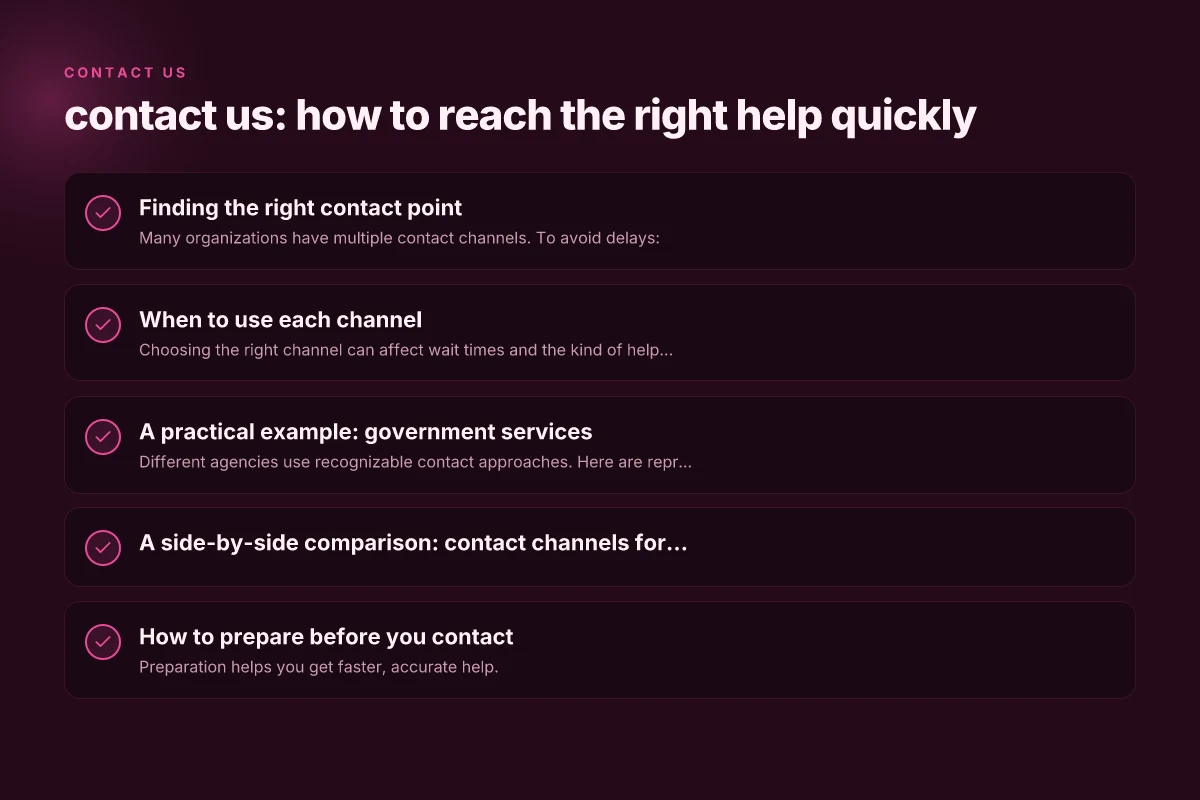
Finding the right contact point
Many organizations have multiple contact channels. To avoid delays:
- Start at the official homepage or “Contact Us” page.
- Look for hours, toll-free numbers, or case/agency portals.
- Check for regional or service-specific options (e.g., passport, student aid, or tax-related inquiries).
- Beware of third-party sites that imitate official pages. Verify the URL starts with the organization’s official domain.
Quick list of common contact channels
- Phone: Toll-free numbers for general inquiries or specific programs.
- Email or contact forms: For non-urgent questions or documentation submission.
- Live chat: Real-time help, often available during business hours.
- Help centers or portals: Self-help tools, status checks, and appointment scheduling.
- Mail: Addressed inquiries or official document requests.
When to use each channel
Choosing the right channel can affect wait times and the kind of help you receive.
- Phone
- Best for urgent issues or complex questions needing back-and-forth.
- Have your reference numbers and personal identifiers ready.
- Email or web form
- Good for non-urgent questions, documentation, or sending files.
- Note expected response times and save confirmations.
- Live chat
- Helpful for quick fixes, password resets, or basic guidance.
- May require you to log in or provide verification.
- Self-help portals
- Use for status checks, processing times, and common FAQs.
- Often the fastest route to updates without waiting on hold.
- Mail or in-person appointments
- Required for official documents, in-person services, or formal submissions.
When to use each channel (government, private, public services)
| Situation | Government services | Private companies | Public services | Recommended channel | Notes |
|---|---|---|---|---|---|
| Identity verification | Yes | Yes | Yes | Online form or phone | Use official portals |
| Urgent assistance | Phone | Phone | Phone | Phone | If not, escalate via form |
| Complex case | In-person | In-person | In-person | In-person | Bring documents |
| Information request | Email or form | Email or form | Email or form | Online form | Keep ticket/tracking |
Compiled November 2026; check the provider's site for current details.
A practical example: government services
Different agencies use recognizable contact approaches. Here are representative patterns you might encounter. Are all blink cameras compatible with each other and sync modules
- United States Citizenship and Immigration Services (USCIS)
- Contact: Official pages list email forms, phone lines, and case status tools.
- Tip: Use the case status portal first to avoid unnecessary calls.
- U.S. Department of State (travel and passports)
- Contact: Toll-free numbers for passport information and locations. Appointment requirements for in-person visits.
- Tip: Check for appointment availability and required documentation before you go.
- U.S. Department of Education (Student Aid)
- Contact: Help center with questions about applying for aid, FAFSA, repayment, and account questions.
- Tip: Use the help center’s searches and submitted tickets for tracking.
- State government offices (e.g., Secretary of State)
- Contact: Specific portals for questions about elections, business services, or state records.
- Tip: Use office-specific forms to ensure your inquiry goes to the right team.
A side-by-side comparison: contact channels for common needs
| Need | Best channel | Typical response time | Tips |
|---|---|---|---|
| Urgent case status or processing times | Official portal or phone line | Minutes to hours on a busy day | Have case numbers ready; note reference IDs |
| General questions or documentation submission | Web form or email | 1–3 business days | Attach relevant documents; describe your question clearly |
| Scheduling appointments or in-person visits | Online appointment tool | Same or next business day | Check availability before calling; bring required docs |
| Passwords, login issues, or account resets | Live chat or help center | Real-time or within hours | Verify identity strongly; avoid sharing sensitive data over insecure channels |
| Complex legal or policy questions | Phone with a specialist or official inquiry form | Varies | Prepare a concise summary; note deadlines or regulatory references |
How to prepare before you contact
Preparation helps you get faster, accurate help.
- Gather identifiers: account numbers, case numbers, reference IDs, dates of birth, and last four digits of SSN if applicable (only where appropriate and secure).
- Define your question: write a short, specific summary of what you need to know or accomplish.
- Have supporting documents ready: receipts, notices, letters, screenshots, or emails.
- Note your best contact method and times: whether you prefer email, phone, or portal messages, and time windows you’re available.
What to do if you don’t get a quick answer
If a first contact does not resolve your issue, try these steps:
- Re-check the official contact page for updated hours or alternative channels.
- Use a formal follow-up: reference your original inquiry, dates, and any ticket numbers.
- Escalate when appropriate: many agencies offer escalation routes or a consumer advocate or ombudsman.
- Keep records: log dates, names of representatives, and outcomes of each interaction.
Forms, forms, forms: a note on submissions
Many inquiries require a form submission rather than a simple message.
- Read instructions carefully: some forms have mandatory fields, attachments, or standardized language.
- Save confirmation numbers: many systems send an email or portal notification with a tracking ID.
- Follow up if you don’t hear back: a missing acknowledgment can be resolved with a polite follow-up and reference to your submission.
Best practices for private companies and service providers
The same contact basics apply to tech firms, banks, and service providers.
- Use official channels: start at the company’s site, not social media posts or third-party listings.
- Be concise but thorough: provide necessary details without over-sharing sensitive data.
- Use secure channels for sensitive information: avoid posting personal data through chat unless the platform is secured.
- Keep a log: track conversations, times, and outcomes for reference.
Pre-contact checklist vs post-contact actions Appadvice com alternatives
| Step | Before contacting | After contacting | Evidence/records | Tip |
|---|---|---|---|---|
| Identify goal | Define outcome | – | – | Be specific |
| Gather details | Account numbers, IDs | Confirmation number | Screenshot, receipts | Organize by issue |
| Choose channel | Based on urgency | – | – | Match speed vs formality |
| Prepare documents | Copies ready | Upload if needed | Save copies | Use secure transfer |
| Note time frames | Expected response window | Track response | Save timestamps | Set reminders |
Compiled November 2026; check the provider's site for current details.
A concise checklist for fast help
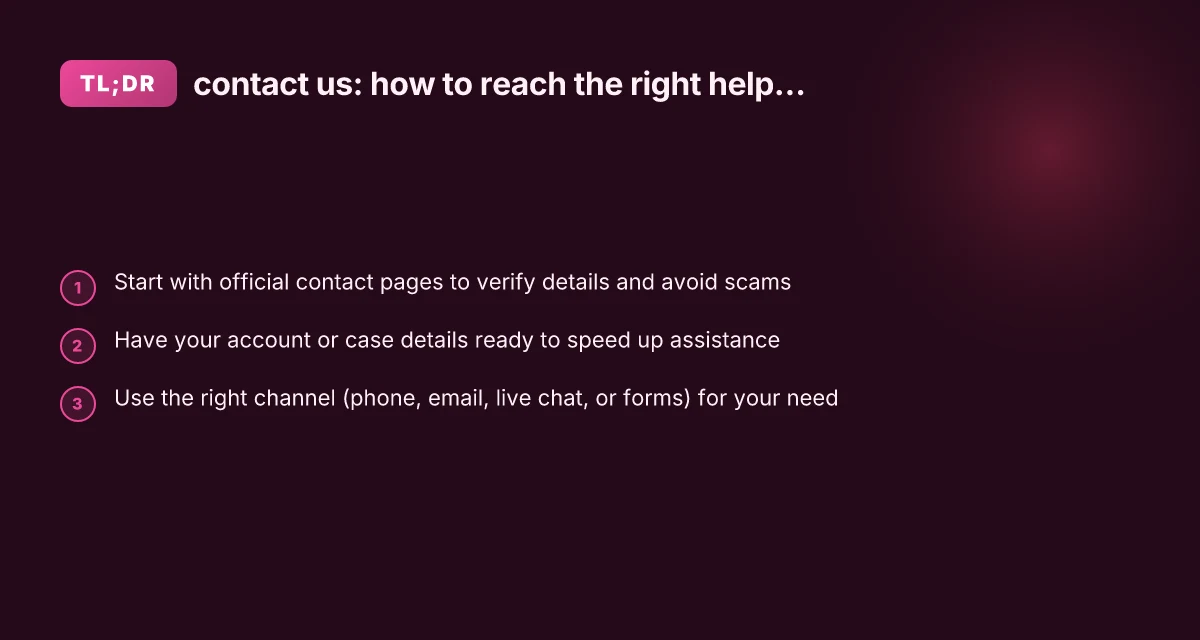
- Start at the official Contact Us page.
- Select the channel that best fits your need (phone, form, live chat, or portal).
- Have your identifiers and documents ready.
- Take notes during the conversation: date, person’s name, and key points.
- Ask for next steps and any timelines for follow-up.
- Verify you received a confirmation number or ticket.
Final recommendation If you want to maximize your chances of a quick, accurate response, begin with the organization’s official Contact Us page and use the channel tailored to your need. Prepare your identifiers, document your question succinctly, and request a clear next step or a confirmation number. If you’re dealing with urgent or time-sensitive matters, prioritizing phone access or live chat during peak hours can help reduce wait times. For ongoing issues, keep a concise log of every interaction and escalation path. By approaching inquiries with a clear question, the right channel, and solid documentation, you’ll navigate most “contact us” processes more effectively.