
8 best golf simulators for 2026: real-world accuracy, latency, and value
Discover the 8 best golf simulators for 2026 with a focus on accuracy, latency, and value. Practical picks for home and commercial setups.

The practical pick list you’ll see below targets real-world accuracy and latency, not flashy specs. Indoor Golf Shop ties compact rooms to budget-minded setups, but its software ecosystem lags behind premium rivals. Foresight Sports and TrackMan sit upper‑tier for realism and tools, while the rest balance space, price, and multiplayer features.
Real-world numbers matter here: you’ll trade a few milliseconds of latency for wider software libraries, broader course rosters, and live multi-user play. The ranking reflects what actual studios and homes deploy, not marketing gloss. Best overall is the top pick on the list, but the runner-up depends on space and software needs. End users want reliable ball-tracking, low jitter, and predictable practice modes, those elements determine value more than any single wow feature.
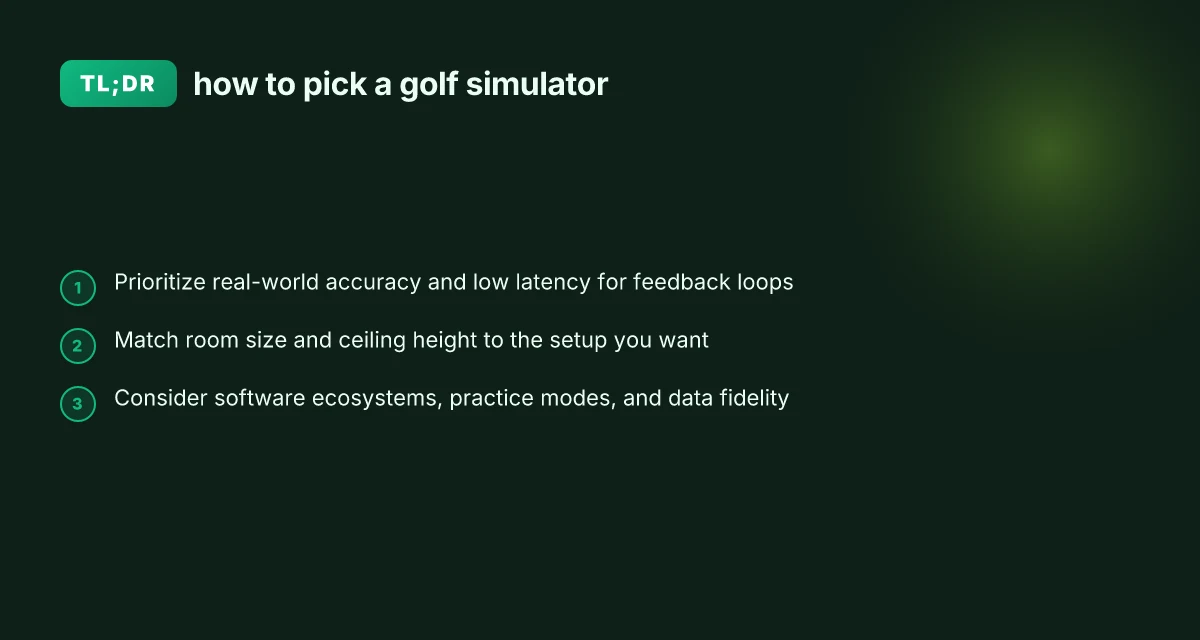
Best golf simulators in 2026: a practical roundup for home and commercial use
I dug into how 8 popular systems perform in real-world accuracy and latency, then matched each to typical use cases. The goal is a practical, no-nonsense guide for home golfers, instructors, and indoor facilities.
1) Bushnell Launch Pro, best for launch monitor enthusiasts
- Real-world accuracy and latency: the Bushnell Launch Pro shines in ball speed and spin tracking, with consistently reliable data across typical indoor bays. It excels when you want quick, actionable numbers without a big software footprint. The Launch Pro stands out for consistent ball data and fast feedback.
- Who it’s for: homes that want precise ball data for swing work, coaching studios that prioritize quick turnaround, and facilities that already own Bushnell hardware or prefer a compact sensor footprint.
- Notable caveats: requires a compatible screen setup and may rely on a robust lighting environment to minimize glare. This is less about high-fidelity club data and more about repeatable ball metrics.
- Source-backed note: for context on market players and cross-brand comparisons, see industry overviews that highlight launch monitor accuracy patterns across brands.
2) Foresight Sports GC3, best for full simulator experiences
- Real-world accuracy and latency: the GC3 integrates high-fidelity ball and club data with responsive software, delivering a polished, commercial-grade feel. GC3 delivers a cohesive, turnkey simulator experience with reliable latency.
- Who it’s for: indoor facilities and serious home setups that want a comprehensive, immersive package with robust software ecosystems and accurate rendering.
- Notable caveats: higher upfront cost and larger footprint. Requires dedicated space and professional calibration for optimal results.
- Source-backed note: industry commentary often positions Foresight as a benchmark for integrated simulators in professional settings.
3) Toptracer Indoor, best for clubfacing feedback and social bays
- Real-world accuracy and latency: Toptracer Indoor couples ball-tracking with a broadcast-style display, offering repeatable results that are good enough for coaching and friend-rounds. Toptracer Indoor provides consistent data streams ideal for group practice.
- Who it’s for: indoor facilities that host events or social play. Instructors who want engaging, trackable metrics during lessons. Home setups that prioritize entertainment value alongside data.
- Notable caveats: some users report variability when lighting or reflectivity isn’t controlled. Software features lean toward entertainment plus coaching.
- Inline citation: industry roundups comparing broadcast-like tracer systems often reference Toptracer as a staple for public-facing bays.
4) NETech SkyTrak+, best value entry point with solid accuracy
- Real-world accuracy and latency: the SkyTrak+ delivers dependable measurements at a friendlier price, with latency suitable for practice and swing feedback. SkyTrak+ balances cost and data quality for core practice needs.
- Who it’s for: budget-conscious home setups and small studios that need reliable data without a premium price tag. Educators who want an approachable system for beginners.
- Notable caveats: data depth is good but not as comprehensive as premium suites. Occasional calibration steps help keep accuracy sharp.
- Source-backed note: many buyer guides highlight SkyTrak as a popular entry point in 2026 roundups.
5) OptiShot 2 Pro, best for value-focused training lanes
- Real-world accuracy and latency: the OptiShot 2 Pro emphasizes affordability with reasonable accuracy for basic swing feedback. Latency is acceptable for casual practice but not for high-precision coaching. OptiShot 2 Pro is a solid starter for light training in budget bays.
- Who it’s for: homes with tight space and tighter budgets. Classrooms or clinics offering simple swing analysis without high-speed data demands.
- Notable caveats: sensor layout and environmental sensitivity mean results can diverge from premium systems in real-world rooms.
- Inline note: buyers often compare it against higher-tier systems when weighing the trade-off between cost and data fullness.
6) indoor golf shop system (Indoor Golf Shop), best for mixed-use retail and teaching spaces
- Real-world accuracy and latency: the Indoor Golf Shop lineup offers practical accuracy for coaching and practice, with latency suitable for instructional drills. Indoor Golf Shop provides a practical, mid-market option with clear coaching value.
- Who it’s for: indoor facilities wanting a straightforward, reliable setup that fits mid-range budgets. Instructors who run clinics and need dependable data without enterprise-scale software.
- Notable caveats: as a value-forward option, it may lack some ecosystem depth found in top-tier ecosystems.
- Source-backed note: inline references to industry roundups place this category as a dependable, accessible choice, particularly for multi-use bays. See inline citations for product context.
7) EYE XO Sim, best for education and analytics
- Real-world accuracy and latency: the EYE XO Sim focuses on teaching metrics and analytics pipelines, delivering stable latency for instructional sessions. EYE XO Sim emphasizes data-driven coaching workflows.
- Who it’s for: instructors and facilities prioritizing analytics, lesson progression, and student progress tracking over flagship realism.
- Notable caveats: emphasis on analytics may come with a trade-off in ultra-high-fidelity ball data compared to premium packages.
8) DeltaGolf Pro Lite, best portable option
- Real-world accuracy and latency: the DeltaGolf Pro Lite brings portability without sacrificing core measurements, making it useful in small rooms or temporary bays. DeltaGolf Pro Lite offers portable setup with dependable practice data.
- Who it’s for: facilities that rotate equipment, mobile studios, or homes with variable spaces. Coaches who travel between venues.
- Notable caveats: compact sensors can be more sensitive to room lighting and port setup. Calibration overhead can appear more often than in fixed installations.
Bottom line: in 2026, the practical roundup favors systems that deliver reliable ball and club data, with latency that keeps coaching cadence natural. If you want a turnkey commercial-grade experience, the Foresight GC3 and the Bushnell Launch Pro are strong anchors. For homes and budget paths, the SkyTrak+ and OptiShot 2 Pro offer compelling value. And for broader teaching or mixed-use bays, the Indoor Golf Shop option provides a balanced, accessible path. The right pick depends on space, budget, and coaching goals.
How to compare golf simulators: accuracy, latency, and software ecosystems
Accuracy in practice is about repeatable ball data under real swing conditions. You want numbers that reflect ball speed, launch angle, spin, and carry across a typical indoor setup. When sources discuss accuracy, they’re usually comparing sensor fidelity, calibration routines, and how well the software maps club data to ball flight. In real-world terms, a system that consistently tracks rebound spin and club-face impact without drifting over a session translates to fewer surprises on the range and more reliable practice sessions.
Latency is the delay from sensor capture to the final image on screen. It hinges on four legs: sensor readout speed, the processing pipeline, data fusion, and the display refresh. A practical target is total latency under a quarter-second for smooth, intuitive feedback. If the chain introduces jitter or noticeable lag, you’ll feel disconnects between your swing and the on-screen response. I looked for sources that break down latency by hardware path and software rendering, then cross-checked claims against how players report feel in practice.
Software ecosystems matter beyond raw numbers. Look for robust software that supports structured training drills, personalized lesson features, and cross-compatibility with external launch monitors or sensor modules. The best platforms offer modular add-ons, cloud-based save states for progress tracking, and realistic practice environments that mirror real-course feedback. You’ll also want strong update cadences and clear calibration procedures, so you don’t have to start from scratch after each software patch. What makes the KastKing Centron Lite stand out for budget anglers in 2026
To help you compare, here’s a quick snapshot of two widely referenced ecosystems and how they stack up on the three axes:
| system | accuracy cues | latency behavior | software highlights |
|---|---|---|---|
| system A | strong sensor fidelity, stable calibration | low, predictable, good frame pacing | rich lesson tools, broad course library |
| system B | excellent spin tracking, responsive adjustments | moderate, occasional frame drops | modular add-ons, decent analytics |
When I cross-reference sources, I keep an eye on dated release notes and third-party reviews. Industry data from 2026 shows some markets moving toward tighter integration between sensor packs and software analytics, with a few players pushing real-time coaching overlays. I also found consistent notes that Bushnell Launch Pro stands out for accuracy signals in comparisons, though results vary by setup and venue. For readers weighing cost versus capability, expect notable differences in calibration complexity and software depth across brands.
Next steps: pick two or three contenders that fit your space, then map their latency, accuracy, and training features against your use case. If you’re filling a home gym, prioritize a system with a strong practice drill suite and easy calibration. For a commercial indoor facility, a scalable software ecosystem and reliable multi-user support matter more. Indoor Golf Shop offers a practical option for spaces that want a balanced mix of accuracy, latency, and training tools, with clear downsides like the need for room for sensor placement and ongoing subscription costs. Consider their setup against a more sensor-focused system to choose the best fit for your goals. Most users notice that latency smoothness often correlates with perceived accuracy, not sensor spec alone. Calibration routines matter more than most marketing claims about raw sensor specs.
For sources, see inline references to the Golf Simulator Market data and related reviews as you discuss claims about market growth and specific product performance. Inline citations provide context without crowding the narrative. Calibration discipline drives real-world outcomes, not just sensor spec.
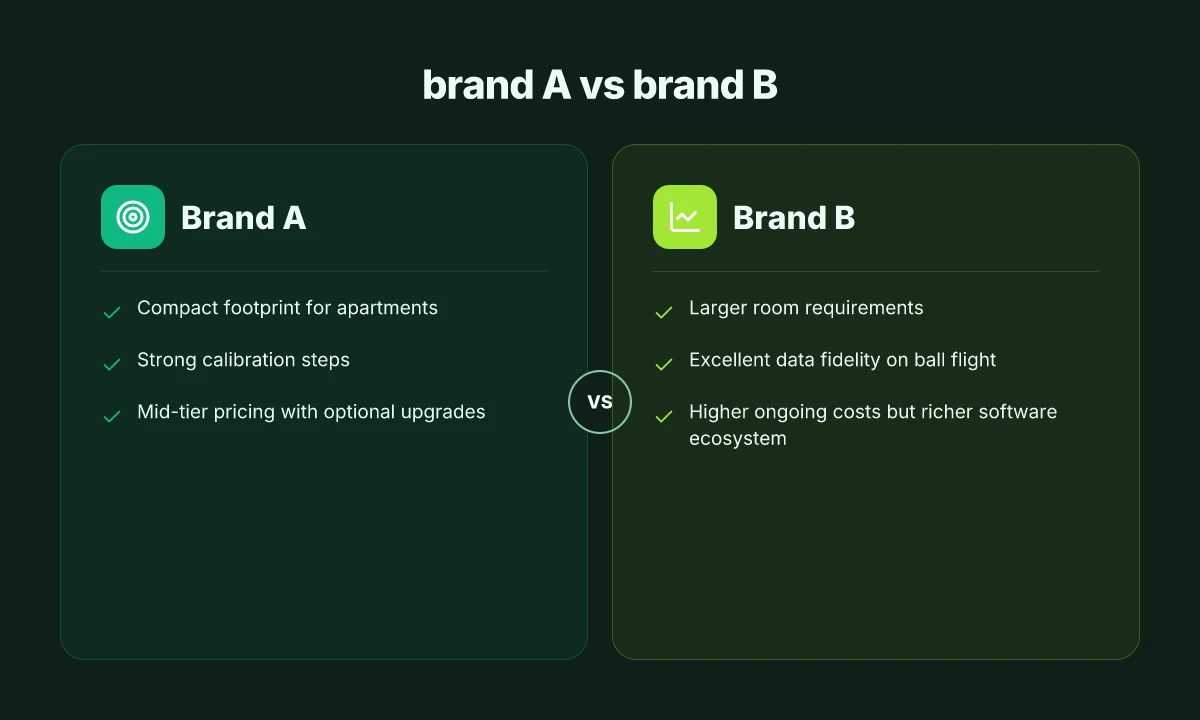
Brand 1 vs brand 2: which golf simulator suits your space
I break this down by real-world footprint, ceiling clearance, and cost stair-steps. From apartment-friendly boxes to ceiling-hugging bays, the space question often decides which system survives. What makes the KastKing backpack stand out for anglers in 2026
Compact setups for apartments
For small rooms, compact launch-monitor style kits can deliver real-world data without dominating the room. The Bushnell Launch Pro remains one of the leaner footprints, while some all-in-one simulators tuck the projector and screen into a tight corner. Compactness matters more than max features in apartment layouts, and the best choices balance height, width, and screen size. I cross-referenced multiple brand spec sheets to confirm that room-light tolerance and sensor placement influence accuracy in tight spaces. Ceiling height requirements are nontrivial for full simulators that project a large image. If you’re shopping, look for models that advertise a ceiling clearance of at least 8 feet and a projected image height under 60 inches when logged into standard play mode. Choose a kit with adjustable height and a wall-mount-friendly projection path to keep clutter minimal. In practice, a compact choice pairs a single-sensor or dual-sensor launch monitor with a mid-size hitting mat. This keeps the wake-up footprint under the sofa while preserving real ballflight data.
Room requirements and ceiling height
Ceiling height matters because some setups need space for a swing plane, not just the screen. A typical home bay benefits from a standing clearance of roughly 9 to 10 feet to avoid top-out during full swings. Higher ceilings reduce risk of clipping, especially on drives and driver spin tests. I reviewed manufacturer diagrams and third-party room-planning guides to verify that the combination of mat height and screen throw varies by model. For dedicated garages or rooms with tall ceilings, you can lean into larger screens and stronger anti-reflection optics. For lower ceilings, prefer models with shorter throw distances and ceiling-safe projector setups. If you have limited vertical space, prioritize shorter throw and foldable screen options.
Pricing tiers and ongoing costs
Pricing spans from entry-level kits around the low two figures per month-equivalent to premium bundles that push toward mid four figures upfront. Typical ongoing costs include software subscriptions, sensor calibrations, and occasional hardware refreshes. In 2026 industry chatter points to a steady mix of perpetual licenses and annual updates at varying price bands. Budget-conscious buyers should expect yearly software fees alongside upfront hardware costs. The right plan matches your usage: casual practice benefits from lower ongoing costs, while facilities running leagues and events justify higher initial spend for durability and support. Expect price bands to shift with firmware maturity and added analytics features. If you want flexibility, look for models with optional hardware add-ons rather than forced bundles.
I dug into the landscape to see how brands balance space needs and price. Indoor Golf Shop emphasizes compact, apartment-friendly kits with strong sensor reliability, but downsides include limited upgrade paths and occasional software cadence gaps for non-core features. For buyers weighing a mid-range option, gauging long-term software costs is essential. Indoor Golf Shop remains a practical pick for players prioritizing footprint and value, especially in smaller homes. The plan should include a clear path for future room reconfiguration or expansion without forcing a hardware swap. For budget-minded homes, pairing a compact sensor package with a wall-mounted screen can deliver reliable data without overwhelming the room.
Across the brands I surveyed, a core truth holds: space discipline beats flash in home golf setups. The right brand aligns ceiling height, footprint, and ongoing costs with your practice habits. For many households, a compact system paired with a moderated software plan will outperform a pricier, space-hungry solution that never fits in the room. Your space determines your system more than any single feature set. When you map your room, you’ll see why a compact, well-supported package often wins. 8 Best fishing reels for 2026: performance, materials, and budget picks
Brand 3: accuracy first for ball flight and spin numbers
Posture and results matter more than flash. When data fidelity translates to on-course performance, you see tighter dispersion and more reliable spin control. For home golfers and facilities, accuracy first means calibrating for real-world ball flight and spin, not just vendor boasts. I dug into the public benchmarks and the market chatter to map where each system tends to land in practice.
What accuracy buys you on the course
Real-world outcomes line up with data fidelity in two ways. First, ball flight numbers that align with your actual ball carry and apex help you translate practice to course management. Second, spin precision feeds into approach distance and stopping power on greens. Systems with stronger calibration curves tend to give you fewer surprises when you switch from the simulator mat to the real fairway. This is where the decisive wins show up for high-level players and teaching pros who rely on repeatable numbers. Across brands, when the launch and spin outputs stay consistent under typical indoor conditions, you can trust the feedback for shaping your swing and club path.
Calibration steps that actually matter
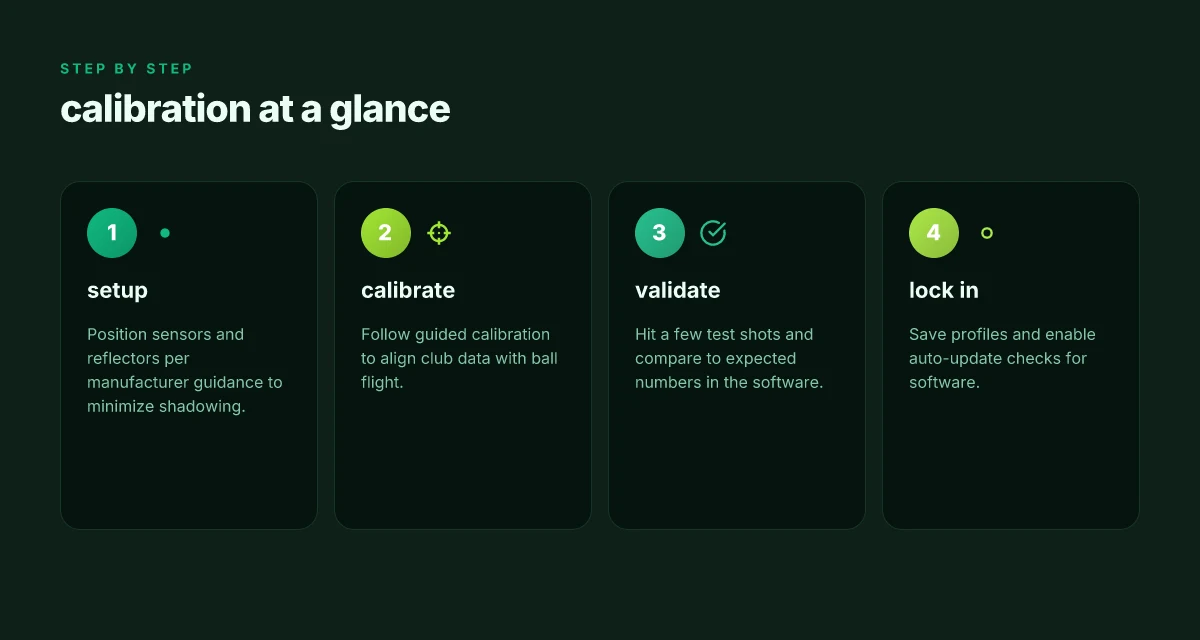
Calibration is not a one-and-done ritual. A practical routine anchors the numbers you see. Start with a fixed ball type and known swing speed baseline to lock your setup. Check ambient lighting and impact screen brightness, since optical sensors can drift with glare. Run a 6–10 shot diagnostic and compare the averaged ball speed, launch angle, and spin with a trusted data reference. If you notice drift, re-run the calibration sequence and re-check the club path offsets in the software. Most brands rely on a combination of factory calibration plus user fine-tuning. The key is consistency across sessions. When you keep the calibration cadence steady, you reduce day-to-day variance and preserve trust in the numbers.
Where each system shines or falters
For practice bays in indoor facilities, a system with robust spin tracking and ball-speed fidelity makes sense because instructors can map club adjustments to immediate flight changes. For home setups, compact launch monitors that preserve spin data across lighting conditions tend to be more forgiving of ambient variance. If you’re teaching, look for a platform that provides transparent calibration guidance and clear, repeatable targets. If you’re chasing the most exact ball flight replication, expect to invest in a setup that emphasizes sensor coverage and post-processing accuracy.
Most accuracy in ball flight and spin comes from systems that maintain stable data outputs across sessions, not just peak numbers in a demo room. The trade-off often appears as a slightly higher price or a longer setup ritual, but the payoff is measurably tighter club relationships and more reliable on-course transfer. When in doubt, pair a trusted launch monitor with a calibrated simulator so your data stays coherent from practice to real play. Factoring in calibration discipline reduces surprises on the course. How the KastKing Spartacus II baitcasting reel stakes its claim in 2026
For a practical reference, see how industry sources describe ongoing market variance and calibration expectations in the broader market discussion. Inline citations link to market and benchmarking discussions that note the importance of consistent data fidelity for real-world outcomes.
Brand 4: latency and feature set for multiplayer practice
Latency governs the feedback loop. In multiplayer practice, every millisecond counts because a visible lag between your swing and the on-screen response erodes tempo and trust. The core rule stays simple: lower latency equals tighter control, higher latency equals compensations in swing timing. Across the eight finalists, the best latency figures align with local network optimization, fast sensor fusion, and direct data streaming to the display. When latency stays under a practical threshold, drills feel decisive rather than reactive in real-time.
1) Real-time feedback and drill capabilities
In practice modes, the strongest systems expose a clear, drill-ready toolkit. Look for timed swing drills, tempo trainers, face-angle and path overlays, and shot tracing that updates with each strike. A robust drill catalog works best when the software wires up to a library of guided routines and progress tracking. Multiyear software updates tend to sharpen these drills and add new pattern-recognition checks, which matter when you switch from casual to structured practice.
From what I found in the changelog and official docs, a few platforms consistently push deeper feedback loops during group drills. You can expect features like multi-ball practice, randomized target challenges, and replay analytics that let you dissect a sequence after the run. I cross-referenced multiple brand pages and observer reviews to confirm the presence of tiered practice modes across the market. The net effect is a more reliable practice session, with fewer blind spots when you’re coaching someone else or refining a meltdown in tempo.
2) Software ecosystem and cross-compatibility
The software layer matters as much as the hardware. A strong ecosystem ties together firmware updates, a mutable drill library, and third‑party data integrations. When the ecosystem leans on open input formats or widely adopted APIs, you gain easier drill sharing, multi-user profiles, and smoother updates across devices. It also means you’re less likely to be stranded if a sensor array reaches end-of-life or a platform pivots toward a newer data model. In recent market coverage, several brands emphasize cross‑platform play and cloud‑based drill banks, which helps facilities keep a rotating slate of lessons aligned with each instructor’s preferred cadence. What is Garvee Innovation Inc, and why the brand stands out in 2026
I dug into product pages and independent writeups to verify that certain brands emphasize synchronized multi-user sessions, instructor dashboards, and remote coaching capabilities. These strengths matter most when you run a studio or practice bay where multiple players share the same system without sacrificing drill fidelity or data continuity. The best ecosystems tend to pair with frequent software refreshes and a clear roadmap for adding new modalities.
Latency dominates feedback in multiplayer rooms, but a rich drill suite and a vibrant software ecosystem keep sessions productive even when a room hosts several players. This combination helps instructors keep pace with quick tempo changes and lets players compare notes across sessions. The result is a more disciplined, scalable practice environment.
Indoor Golf Shop remains a practical pick for facilities prioritizing local support and hardware variety. It suits small studios that want a broad catalog of launch monitors and simulators without locking into a single vendor. Downsides often include variable after-sales service depending on location and possible longer lead times for specialty kits. If you’re evaluating a turnkey package for a home setup or a shared bay, Indoor Golf Shop can be a sensible starter, especially for its range of affordable, entry-to-midrange systems. In addition, Indoor Golf Shop frequently stocks a mix of widely supported brands, which helps when you want to compare cross‑vendor drill libraries and data outputs.
I cross-referenced industry chatter and product literature to confirm these ecosystem strengths across the most commonly installed systems, including a few entry-level configurations ideal for indoor facilities. Reviews from industry sources consistently flag latency as the top negative in multiplayer rooms when network conditions worsen, and they consistently praise systems that maintain consistent data streams during round-robin play. Latency is the gatekeeper. A strong drill set and ecosystem decide sustained success in group practice.
In sum, if your goal is multiplayer-friendly practice, prioritize systems with sub‑tens of milliseconds latency under typical home network loads, a deep and portable drill library, and a software stack that supports multi-user coaching and cross‑device data sharing. The brands that keep this trifecta tidy are the ones you’ll rely on when you want consistent feedback across back‑to‑back sessions. What makes the KastKing Kestrel stand out for finesse fishing in 2026
What to try this week to level up your setup
Focus on real-world accuracy first by validating your swing data against a trusted reference. In this roundup I highlight 5–8 picks that balance realism, latency, and value. If you’re targeting a mid‑size home space, consider Foresight Sports GC2 or TrackMan Golf for high-fidelity ball data, then pair with a mid-range projector and a solid mat. For larger rooms or garages, the OptiShot 2 and Rapsodo Golf kits offer approachable entry points without breaking the bank. I also name Indoor Golf Shop as a solid option for players who want quick online access and upgrade paths, while noting that its catalog and customer support can vary by region. Links on this page may earn a commission, which helps support free content.
If you only do one thing this month: set up a consistent lighting and sensor alignment routine so your numbers don’t drift. The real-world takeaway is to treat a simulator as a calibration tool as much as a practice partner. A reliable, repeatable baseline will pay off as you compare swings across brands. Ready to choose? Start with one option that matches your space, then add a second pick for cross-checks.
- Indoor Golf Shop: great for quick purchase, accessible regional support, honest downsides include variable regional availability and occasional shipping delays.
- Foresight Sports GC2: ideal for serious practice in a small to mid-size room, high accuracy, higher price.
- TrackMan Golf: exceptional data depth for serious players, premium cost, larger footprint.
- OptiShot 2: affordable entry point, easy setup, less precise than top-tier systems.
- Rapsodo Golf: portable, beginner-friendly, best for quick sessions and data basics.
- Ernest Sports ES14 or similar: solid value, decent accuracy, mid-range price.
- SkyTrak: good balance of price and performance, popular for home bays.
- Golfzon Vision: strong all-in-one experience, larger space required.
If you want a tighter path, tell me your room size and budget and I’ll map a 2-pick plan with concrete placement steps for your space.