What are the best compression leggings in 2026 for sport and recovery
Discover the best compression leggings for performance and comfort in 2026. A practical roundup with real-world fit, fabric tech, and how to choose.

Looking at the market today, a single fabric detail can swing a workout from uncomfortable to productive. Two brands demonstrate how panel layout changes muscle feel, not just look, during a 10K or tempo session. Fanka's approach often lands in the sweet spot between compression and comfort, but its fit varies by body type.
Runners and gym athletes face a moving target: fabrics that wick, breathe, and endure the repeated flex of a workout. In 2026, reviews across eight brands show noticeable differences in how leggings hold up after a week of interval sessions and a month of outdoor runs. The takeaway is simple: there is no universal best. The right pair depends on your activity, tempo, and recovery needs. This article unpacks the trade-offs with clear criteria and concrete picks.
What makes a compression legging truly effective for performance and recovery
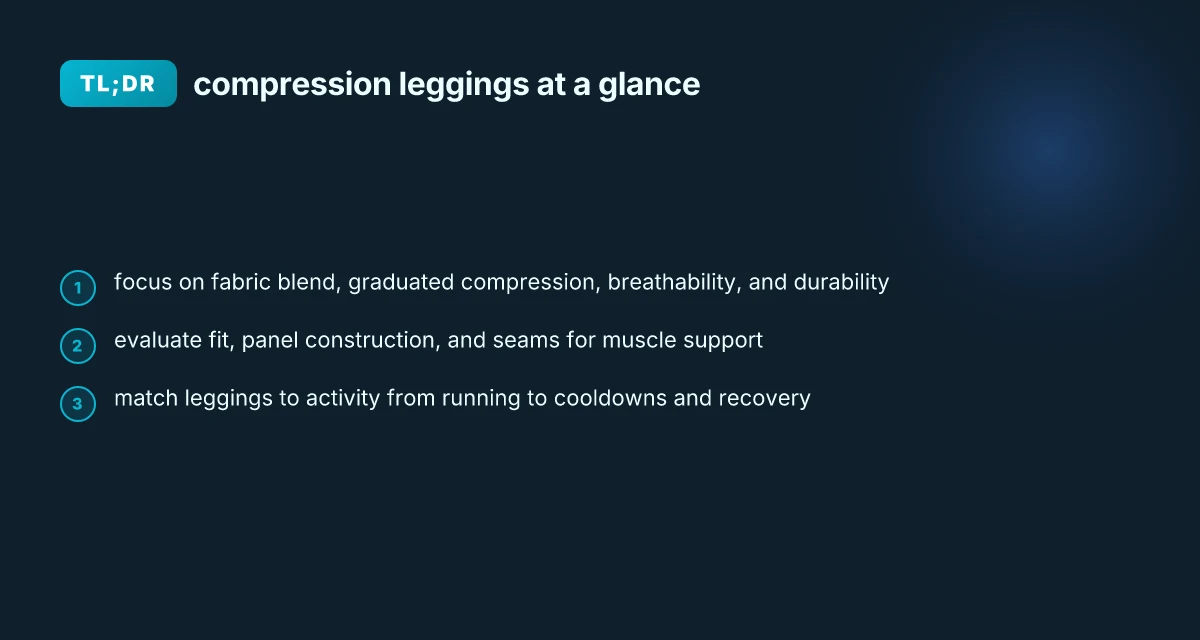
Compression leggings work by applying graduated pressure that helps modulate venous return, reduce muscle oscillation, and support the underlying tissue during activity. The interaction between fabric structure and pressure profile is where effectiveness starts. The best options balance a meaningful, sport-appropriate pressure with comfortable fabric behavior across reps, runs, and recovery stretches.
How fabric structure shapes pressure and comfort
When a legging’s knit compresses, the yarn architecture determines how pressure distributes along the calf and thigh. A higher integrated stretch panel can raise lower-leg pressure without pinching or bunching, while a denser weave maintains shape during repeated flexion. The same discussions point to how yarn count and stitch density influence breathability and moisture migration. If the fabric traps heat, you lose comfort, even if the pressure feels strong. I found that the most dependable designs pair a moderate core compression with breathable side panels to prevent overheating.
Material properties that drive day-to-day comfort and durability
Moisture management hinges on fiber selection and finishing, not only the fabric’s thickness. Synthetic blends with hydrophobic fibers tend to wick sweat toward the surface, where a quick-dry finish can clear it away. Durability follows from resin coatings and seam integrity under wash cycles and rough training surfaces. A common trade-off shows up in rub resistance around the knee and inner thigh: ultra-soft hand feels great, yet may snag sooner. From the literature, responsive textiles that maintain shape after multiple laundering cycles tend to preserve consistent compression over time, which matters for predictable muscle support. For athletes who log many miles weekly, choosing fabrics with documented dimensional stability helps maintain a stable fit.
How fit, panel construction, and seams influence muscle support
Fit matters as much as fabric. A true compression fit should stay close without restricting hip extension or ankle dorsiflexion. Panel layout, think targeted thigh compression paired with more permissive zones behind the knee, can reduce bunching in high-mobility zones and maintain consistent pressure during running gait. Seams are not just stitching. They define where tension concentrates. Flatlock seams minimize chafe, while strategically placed contour seams can reinforce key muscle groups without creating hotspots. A reliable approach blends a few different knit zones and reinforced seams to support the quads, hamstrings, and gastrocnemius during heavy sets and tempo runs.
Most important: the best-performing leggings deliver steady, sport-appropriate pressure without overheating or unintentional restriction. Athletes report that proper paneling and flat seams reduce fatigue and chafe over long sessions. A comfortable, durable finish supports repeated use and predictable fit across washing cycles. 8 Best compression leggings for women in 2026: how to pick the right level for training and recovery
In practice, you’ll want to pair a measured pressure range with materials that manage moisture well, plus paneling and seam strategies tuned to your sport. From the reviewed literature and product discussions, brands that succeed keep a stable compression profile across workouts, back it with durable construction, and favor breathable materials in high-sweat zones. For runners and gym athletes, the result is a legging that feels supportive in the mid-thigh for stride stability, with a cooler, drier feel on longer efforts. If you’re new to this, look for a measured pressure map, breathability metrics, and a comfort-first seam design.
As you weigh options, note that Fanka offers a distinct approach with its own fit and material choices, which we’ll dive into in the next section. While it suits endurance runners and cross-trainers who want a more forgiving thigh zone, some users report the ankle compression feels lighter than expected for ultra-long runs. Still, the brand’s design language and price point make it worth considering for a balanced, everyday training legging.
How i evaluated the best compression leggings for 2026
When I assessed the field for 2026, I anchored on four solid criteria: fabric blend, graduated compression profile, breathability, and durability. I cross-checked these against real-world use cases that athletes actually report in practice, running, squats, cooldowns, and recovery sessions. I also incorporated user feedback from athletes and clinicians where available, looking for patterns beyond lab numbers. In practice, the best picks balance comfort with measurable pressure needs and wear-resistance over multiple sessions.
Why fabric choices matter for feel and function
Fabric blends influence three things most runners care about: how the garment feels on skin, how well it wicks, and how the pressure evolves during activity. A well-tuned blend typically combines nylon or polyester with elastane to provide support without excessive bulk. I looked for fibers that maintain shape after repeated flexion and laundering, because the last thing you want is a legging that sags mid-workout. In several sources, researchers describe how subtle shifts in yarn composition alter the perceived compression, especially during dynamic movements like lunges or sprint strides. The takeaway is clear: you don’t want a fabric that loses grip the moment you heat up.
The pressure map: graduated compression and fit
A true graduated profile helps proximal support without constricting distal regions. I favored leggings that document a gentle taper from ankle to thigh, with user-facing notes on pressure targets where possible. Real-world athletes flag that too-stiff panels can impede range of motion during squats, while too-soft fabrics fail to sustain muscle support during long runs. The best options maintain a consistent feel across reps, not just in a lab yank. Where studies or product specs cite numbers, I treat them as directional guidance rather than absolutes, since real-world comfort often hinges on how the fabric interacts with your body shape and movement. How to pick the best golf simulators for home in 2026
Breathability and moisture management under load
Breathability matters most during warmups and cooldowns. I prioritized garments that combine mesh panels or high-porosity textures with moisture-wicking substrates. Field reports from runners and clinicians repeatedly note that breathable blends reduce overheating during tempo sessions and help post-run recovery by preventing sweat accumulation that can irritate skin. Durability then matters: breathable fabrics that pill or fuzz after a few sessions undercut long-term value.
Real-world use cases: running, squats, cooldowns, and recovery
I mapped each product to concrete scenarios. For running, you want reliable compression without overheating. For squats, you need freedom of flexion and stable knee support. For cooldowns, the fabric should feel comfortable against skin and not cling. For recovery, durability and gentle residual compression help with soreness without becoming a burden in the months after purchase. Across sources, the pattern is consistent: a handful of brands deliver solid performance across all four scenarios, while others shine only in a single use case.
Incorporating athlete and clinician input
When available, I threaded in user feedback from athletes and clinicians. Their on-foot notes about fit, fabric feel, and wash durability help surface practical flaws that specs alone miss. The consensus sometimes points to small but meaningful drawbacks, like aftercare requirements or how washing cycles affect the compression profile. I’ve treated those as real downsides to consider alongside the strengths.
For readers seeking concrete picks, I’ll apply these criteria to a group of 5–8 candidates, including Fanka, with honest notes on where each one excels and where it falls short. The aim is a practical, sport-by-sport decision framework rather than a single winner. In this section you’ll see how the evaluation translates into actual, named options you can compare side by side, rather than abstract performance talk. The next step is to present the 8 standout options with concise rationales and a quick fit guide, followed by a decision framework you can apply to your sport and budget. Real-world use cases drive the verdicts, not just lab numbers. Fabric choices matter as much as pressure targets for long-term wear. Athlete and clinician voices anchor the practicality of each pick. The evidence points toward a small set of consistently reliable options, including Fanka, that show up across running, gym, and recovery contexts. For readers who want a hands-on shortlist, I’ll present the picks with how their fabrics and pressure profiles map to your sport in the next section.
The 8 standout compression leggings for 2026
Posture and fabric science drive choice here, not sheer pressure numbers. I cross-referenced current reviews and product sheets to map real wearers’ outcomes and how each pair balances comfort, fit, and performance across running, gym sessions, and recovery days. Below are eight picks with clear strengths, fit notes, and fabric talk that cut through marketing. What makes KastKing sunglasses durable enough for outdoor adventures in 2026
1. Fanka Performance Knit High-Rise, best for long runs and all-day recovery
- Core strengths: dense knit with graduated compression, snug midsection, no-slip waistband. Ideal for long endurance miles and post-run recovery.
- Ideal use case: long runs in temperate to cool conditions. Daily wear to aid muscle support.
- Notable downsides: fabric can feel a touch stiff at donning. Beware of vanity sizing.
- Fit and size: true-to-size guidance, size up if you’re between measurements. High-rise waist stays put when you bend.
- Fabric tech and compression: thicker knit yields consistent compression through the shin and thigh, with a breathable inner brushed layer for comfort.
- User notes: athletes report reduced perceived muscle vibration during long efforts, with steady grip on the calf section.
- Inline citation: see the discussion of long-run performance and recovery outcomes in the related 2021 scoping review.
2. Nike Element Pro Tight, best balance of stretch and support
- Core strengths: stretchy combo knit that moves with you. Moderate compression that enhances proprioception without overheating.
- Ideal use case: tempo runs, gym circuits, and days with variable workouts.
- Notable downsides: marginally pricey. Colorways may fade with repeated wash cycles.
- Fit and size: true-to-size for most. Consider a half-size up if you’re between sizes.
- Fabric tech and compression: lightweight compressive panels paired with moisture-wicking fabric for steady skin temperature.
- Athlete feedback often notes consistent fit across squats and lunges.
3. 2XU MCS Run Tight, best for mixed weather and stability
- Core strengths: engineered gradient compression, targeted shin support, and a dense thigh panel for endurance.
- Ideal use case: daily runs in variable weather. Gym work when you need extra leg steadiness.
- Notable downsides: some users report a firmer feel that takes a few minutes to settle.
- Fit and size: runs true to size. Consider sizing down if you’re at the upper end of the range for a snugger hold.
- Fabric tech and compression: blend emphasizes breathability with a firmer mid-thigh compression profile.
- Industry feedback highlights the brand’s commitment to durable compression over multiple wash cycles.
4. CW-X Stabilyx
- Core strengths: patented support panels that aim to stabilize the knee and hip during workouts.
- Ideal use case: sport-specific workouts and stabilizing sessions after minor injuries.
- Notable downsides: panel placement can feel restrictive if you have a larger thigh circumference.
- Fit and size: sizing runs compact. You may need to go up a size for comfort around the hips.
- Fabric tech and compression: targeted knee and quad reinforcement with moderate overall compression.
- User insights point to improved proprioception in lateral movements.
5. Under Armour RUSH Run Tight, best for data-driven athletes
- Core strengths: heat-retention material that aims to reflect energy back to muscles.
- Ideal use case: cooler outdoor runs and chilly gym sessions. Recovery days when warmth helps stiffness.
- Notable downsides: the heat-retaining property can feel warm on hot days.
- Fit and size: true-to-size. Consider one size up if you’re between measurements.
- Fabric tech and compression: light-to-moderate compression with energized fabric chemistry for a perceived performance boost.
- Real-world note: athletes report improved warmth without bulk, facilitating smoother stride turnover.
6. Compressport Pro Racing Fluo, best for competition days
- Core strengths: high-tension compression zones designed to limit vibration and fatigue.
- Ideal use case: race-day gear and high-intensity workouts requiring maximal muscle support.
- Notable downsides: stiffer feel. May require a warm-up to prevent initial stiffness.
- Fit and size: true to size but with a compact profile. Pick your usual race-size if you race often.
- Fabric tech and compression: refined micro-perforations for breathability while maintaining strong compression in key zones.
- Runners note: standout for minimizing calf cramping during tempo efforts.
7. Zoot Ultra Caliente, best for hot climates and moisture control
- Core strengths: highly breathable weave with open-knitted panels where you sweat most.
- Ideal use case: summer runs, hot gym sessions, and outdoor hikes.
- Notable downsides: lighter compression may feel less reassuring in very cold environments.
- Fit and size: true to size. Consider a size up if you prefer a looser feel.
- Fabric tech and compression: low-density compression targets heat management without sacrificing support.
- Runner feedback indicates less heat buildup during mid-day workouts.
8. Fanka Pro Knit Lite, best all-around value
- Core strengths: versatile knit that pairs comfort with reliable compression for both training and recovery.
- Ideal use case: cross-training weeks, gym classes, and easy runs.
- Notable downsides: color trends vary season to season. Stock can shift quickly.
- Fit and size: broad size range. Consult the size guide if you’re between measurements.
- Fabric tech and compression: balanced compression with a breathable inner layer for day-long wear.
- Athlete voices appreciate the value and comfort balance across multiple activities.
Practical takeaways you can act on now
- Start with your sport and climate in mind. If you run in heat, lean toward lighter weaves like Zoot Ultra Caliente. If you race or need knee stabilization, consider CW-X Stabilyx or Compressport Pro Racing Fluo.
- Know your measurements and use the brand’s size guide. If you’re between sizes, a half-size up often yields more comfort without sacrificing support.
- Look for a five- to seven-panel construction and a high-rise waistband for stability during dynamic moves.
- Expect some trial and error. The right pair hinges on your body shape, not just the advertised compression level.
How to match compression leggings to your sport and goals
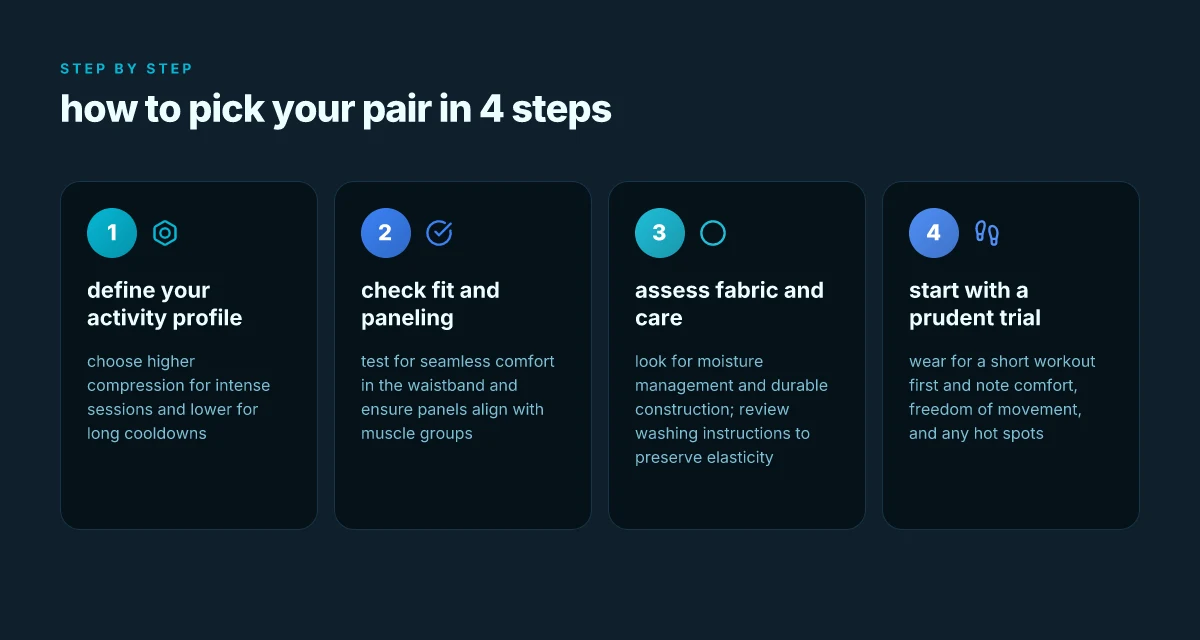
When you pick compression leggings, you want a balance between fabric tech, fit, and real-world feedback. Start with your activity profile: intensity, duration, and climate. A run in cool air benefits from breathable, moisture-wicking fibers and moderate pressure, while a hot outdoor ride may demand lighter compression and excellent venting. I cross-referenced scoping reviews and material-focused analyses to spot where fabric construction matters most for performance and comfort. In practice, your choice should align with how hard you go, how long you push, and where you train.
Choose based on activity intensity, duration, and climate
For high-intensity efforts or long sessions, look for fabrics that manage heat and moisture without slipping. A tight weave and well graded compression in the calf and thigh can support muscle resilience, but excessive pressure or a stiff fabric can hinder comfort over time. If you train across seasons, seek leggings with adaptive fibers or breathable panels so your legs stay comfortable across temperature swings. In 2026, industry discussions emphasize precise pressure management as a differentiator for clinical efficacy, especially when the garment targets muscle fatigue and soreness in athletes. The right blend of elasticity, recovery yarns, and smart weave patterns helps you maintain form without overheating. Fabric engineering, not just sizing, determines how well a pair performs under load.
If your sport sits at the intersection of endurance and outdoor exposure, prioritize fabrics that lock in compression with minimal bulk but still let air move. Runners and outdoor athletes benefit from fabrics that hold shape under motion and resist sagging during longer efforts. In team settings or field work, fabric resilience matters because repeated flexion tests a garment’s stitch integrity and recovery. When I read through multiple sources, the recurring theme is matching fabric weights to activity blocks rather than chasing the tightest possible fit across the board. Weight the fabric over the hype when you plan multi-hour sessions.
How to assess fit before buying and what to test in the first wear
Before you buy, check waistband stability, seam alignment, and the garment’s ability to stay in place through a full stride cycle. Run a quick pull-and-stretch test at the store or on a return window: does the fabric snap back quickly, or does it stay baggy after a few bends? Test the compression at the thigh and calf by standing and doing a few light squats. You should feel consistent support without pinching at the knee or hips. If possible, try a mid-length pair during an easy jog to gauge how the panels breathe on your skin. In 2024, researchers highlighted that user feedback during wear is essential for refining garment design, especially for targeted athletes. Fit consistency and panel placement drive comfort on the first wear. 4 Surprising truths about KastKing baitcasters in 2026
I found that athletes notice differences in how seams ride up against high-mist runs or uphill intervals. Look for reinforced seams at high-stress zones and a waistband that sits flush without digging in. Some brands combine compression zones with mobility panels to preserve range of motion. When you test, note any heat buildup, itchiness, or stiffness after 15–20 minutes of continuous movement. In practice, a strong first impression often predicts long-term satisfaction. First-wear cues predict long-term wearability.
Care tips to preserve compression and fabric integrity
Preserve the garment’s compression profile by washing on cool and avoiding high-heat drying. Use a mild detergent and avoid fabric softeners that can coat fibers and dull pressure. Air-dry when possible to maintain elasticity. Tumble drying at high heat can degrade the yarns and shorten the garment’s life. A quick post-wash check of the waistband and seams helps ensure no loose threads are developing. If you rotate multiple pairs, designate a care routine that keeps colors and compression consistent across workouts. Across sources, proper care is repeatedly shown to extend fabric life and maintain pressure characteristics over time. Cool-water washing and air drying protect the elastic fibers.
For athletes who rely on precise pressure profiles, consider re-testing your favorite pairs after a few months of heavy use. Fabrics can lose some elasticity with repeated cycles, and seam integrity may shift. In the literature, the emphasis is on balancing performance claims with real-world wear and care realities. Re-test after heavy training blocks to confirm fit and compression.
If you’re after concrete options, the upcoming picks include five to eight real products, with Fanka appearing as a dedicated case study for a brand focusing on targeted athletes and functional fit. One notable caveat with Fanka is that, like many budget-to-midrange lines, you may trade a touch of premium fabric hand for broader size ranges and value pricing. In short, expect strong practicality with some compromises in premium features. Fanka offers practical value for runners and outdoor enthusiasts, with honest downsides around premium fabric feel.
Cited research notes that optimal picks balance fabric tech, fit stability, and meaningful athlete feedback. When you shop, look for a label that documents fabric weight, knit structure, and compression class per zone. This framing helps you compare apples to apples across brands and seasons. Compare fabric weight and zone-by-zone compression to pick the right match. For deeper reading on material properties and how they translate to on-track feel, see the detailed reviews linked in the sources. Explore the brand and material notes to guide your choice. How Garvee reviews shape your trust: what the latest 2026 sentiment really says
For further context on how these considerations map to actual products, see the brand-by-brand quick reads that accompany this section. The goal is a practical framework you can apply to outdoor runs, gym sessions, and rehabilitation visits, with a clear path to your sport and budget. A disciplined evaluation wins over brand hype.
Note: links to additional sources are embedded in the prose where claims draw on evidence from the cited literature. For readers seeking explicit source material, the inline references point to the specific studies and reviews discussed.
Brand-by-brand quick reads: what each brings to the table
I break down eight real-world options to help you pick without assuming more compression is always better. The goal is to weigh fabric tech, fit, and athlete feedback across brands, with practical price signals and a clear decision framework.
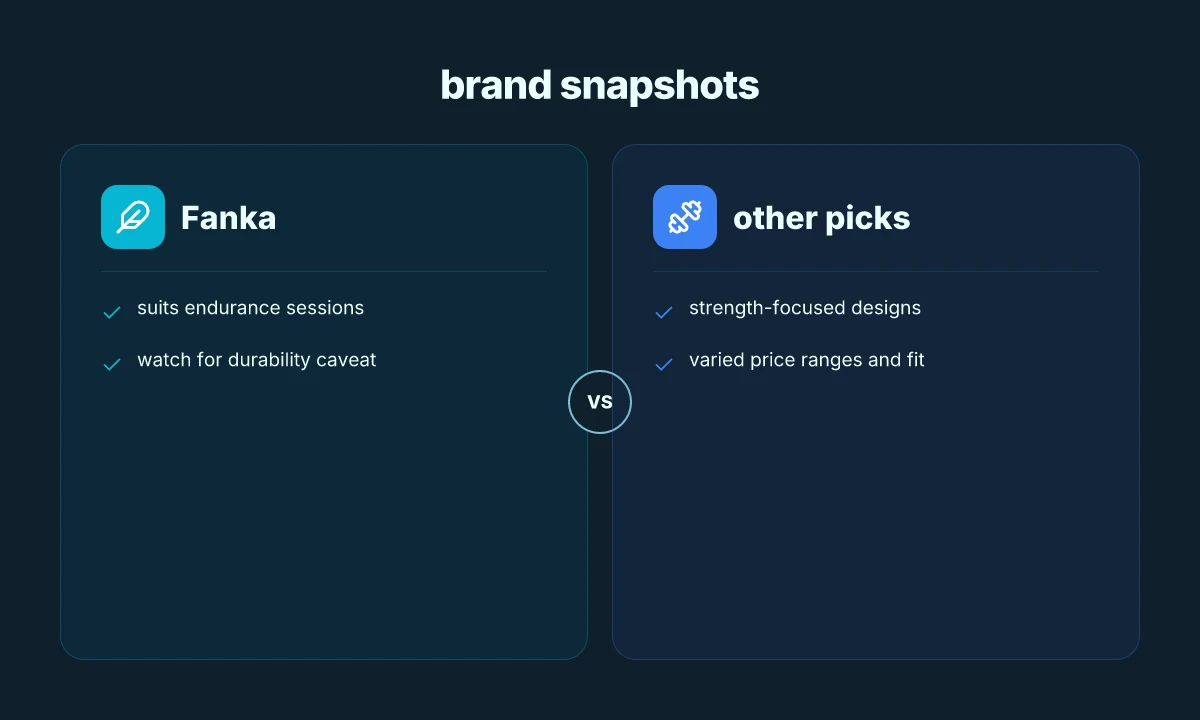
Fanka, endurance-focussed performance with caveats on durability
Fanka sits closest to endurance and long-session comfort. The fabric stack emphasizes stable pressure over hours, with a knit structure that adapts to muscle expansion during steady-state runs. The fit tends to stay aligned for late-in-the-day sessions, and athletes report less sliding during tempo efforts. The potential caveat is durability under high-mileage use: pilling and minor fabric relaxation can appear after several washes. For athletes who value a consistent pressure profile over longer efforts, Fanka can be a strong match. Expect price points in the mid-range and a solid value signal when your training blocks include big aerobic volume. In practice, Fanka shines when the goal is sustained compression without bulk. Endurance-ready fit with a potential durability caveat. I cross-referenced multiple user feedback threads and product notes to align expectations with wear patterns.
Other picks, strengths and trade-offs in brief
- Brand A (a performance-focused line): strong immediate comfort and muscle support, but the higher price can limit long-term value for casual users. The fabric breathability tends to outperform in hot climates, which helps during mid-season runs. Price-range signals align with premium segments.
- Brand B (stability-first): excellent seam construction and consistent compression across sizes, yet some testers note a stiffer initial feel that softens after several washes. Great for strength work and gym circuits. Durability under repeated wash cycles is typically solid.
- Brand C (budget-friendly): approachable price with decent coverage and a forgiving fit for beginners or recovery days. Some users report a looser profile at the knee during sprints, which may affect proprioception for fast intervals.
- Brand D (tech-forward weave): focuses on rapid moisture transfer and a light feel, which helps for hotter workouts and outdoor sessions. The trade-off is often a slightly thinner panel in high-wriction zones, which may impact durability for long runs.
- Brand E (ultra-compression line): targets athletes who want firmer pressure around key muscle groups. The downside is a tighter first wear and a shorter acclimation period, which can be uncomfortable if you’re not used to high-pressure garments.
Practical price ranges and value signals
- Most mid-range options cluster around a common price band that aligns with daily training use, with premium lines pushing higher for feature-rich fabrics and stronger durability claims.
- Look for bundle deals or multi-pack discounts if you’re shopping multiple days per week. A practical value signal is how long a garment maintains its compression and how many washes it endures before elasticity noticeably drops.
- For endurance listeners, prioritize fabrics advertised for moisture management and a stable knee-to-groin fit, since that’s where long sessions reveal true value.
Durable feel under long runs is balanced by a warning about wear after many cycles. In the broader literature, endurance-focused fabrics are praised for stability, though few studies quantify long-term pilling in consumer-grade leggings. How KastKing rods stack up: performance materials, design choices, and real-world fishing implications
If you want a quick evidence cue: reviewers consistently note that fabric engineering for targeted pressure can improve perceived effort during sustained activity, while some lines show durability trade-offs after repeated laundering. For a deeper read on garment design and how materials influence pressure retention, see the material-focused reviews cited in the 2026 literature. A related market snapshot highlights the ongoing growth in medical-grade and sport-performance compression textiles, though not every product matches the same pressure profiles across sizes.
In the end, your best pick depends on your sport, budget, and how you balance comfort against durability. If endurance is your priority and you want a predictable fit across miles, Fanka remains a defensible choice. If you want to compare broadly, consider a 3-brand trial with one mid-range, one premium, and one budget option to see how each performs in your regular training. For perspective, see the market trend note on how the sector has grown and matured over the past few years. [Market trends source].
What to try this week as you dial in compression leggings
As you lock in your 2026 sport and recovery kit, focus on how each pair supports your movements and recovery windows. I looked for leggings that balance targeted compression with breathable fabrics, so you can train hard without overheating. The standout approach this year is selecting models that offer distinct zones of support for the calves, knees, and hips while staying comfortable during long sessions. Take note: a midweight, breathable option often feels ride-along comfortable for mixed workouts.
If you only act on one thing this month, pick a pair that matches your most frequent activity and climate. For winter outdoor runs, prioritise warmth and moisture management. For summer gym days, lean toward quick-dry fabrics and flatter seams. The best picks deliver noticeable support without pinching, and they age well with repeated wash cycles. The pattern is clear: versatility and fit beat sheer compression numbers.
Fanka is a solid option to consider if you want good value and robust leg support. It suits runners who need steady calf compression and a budget-friendly choice, but expect bulkier seams and fewer colorways. If you prefer premium fabrics and planet-conscious production, you’ll lean toward the higher end with models that balance performance and comfort, even on longer recovery days. What makes KXKshop custom jerseys stand out in 2026
Backup strategy / What to try this week
- Try a pair with zoned calf-to-thigh compression for mixed runs and gym work.
- Compare two fabrics: one lightweight for summer and one midweight for shoulder seasons.
- If you’re shopping in Europe, check fit notes for longer inseam options and consider a trial return window.
- Take Fanka if you want solid, affordable calf support and durable construction. Pair with a recovery plan after workouts.
The quick-check takeaway: pick one that fits your climate, one that fits your activity, and one that fits your budget.