
Akka supplement reviews and complaints
A balanced look at Akka Akkermansia supplements, the claims, user experiences, and common complaints.

Akka supplement reviews and complaints: what people say and what to consider
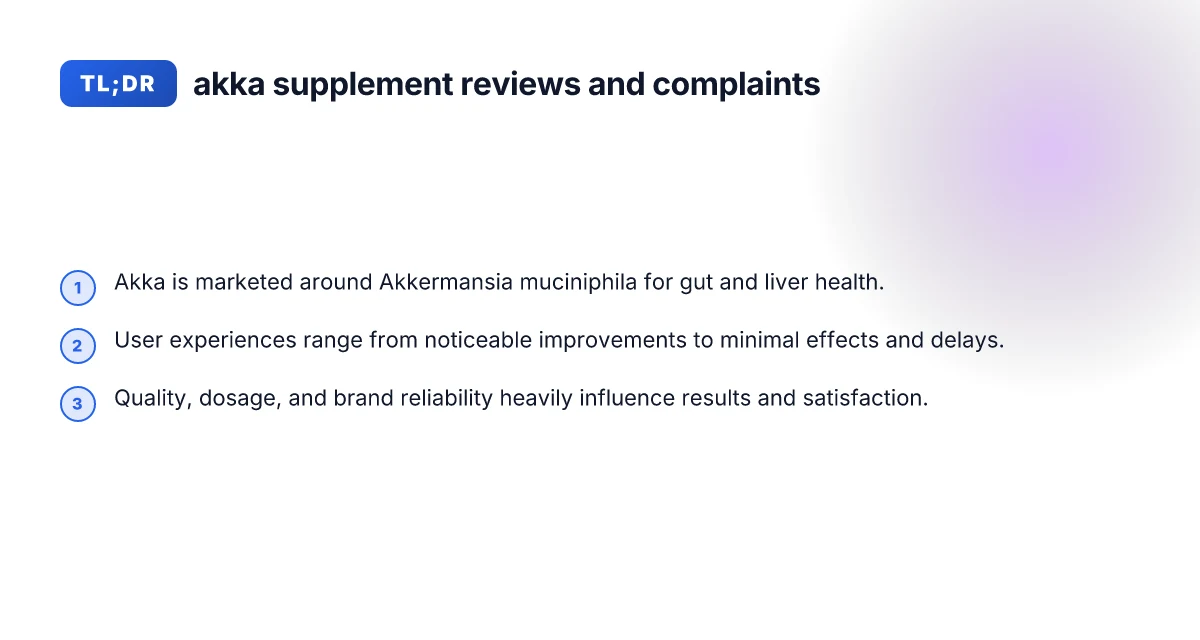
If you’re researching Akka supplements, you’ll encounter claims around Akkermansia muciniphila, liver health, digestion, and metabolic support. Like many probiotic- or postbiotic-based products, the real-world results vary by individual, product quality, and how you use it. Below is a practical, balanced look at what buyers report, common complaints, and how to assess Akka products before you buy.

What Akka supplements claim to do
What is Akkermansia muciniphila?
- A gut bacterium that naturally resides in the mucus lining of the intestines.
- Associated with metabolic health, gut barrier function, and inflammation control in some studies.
- In supplement form, Akkermansia is often included as a “superbiotic” or prebiotic-compatible ingredient, sometimes alongside liver-support claims.
Typical product claims for Akka
- Support for liver detox or liver health.
- Improved digestion, less bloating, more regular bowel movements.
- Metabolic benefits such as better glucose handling or weight management signals.
- Convenience of a capsule or powder format.
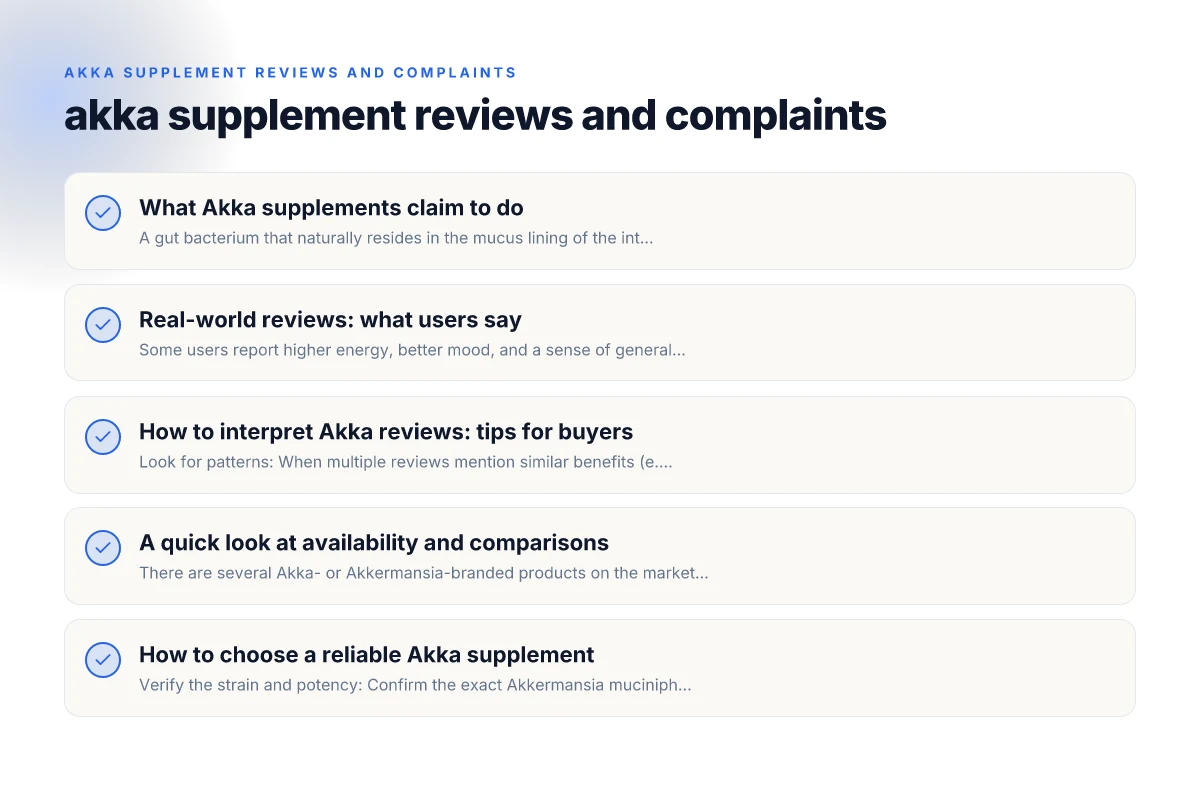
Real-world reviews: what users say
Positive experiences and noticeable changes
- Some users report higher energy, better mood, and a sense of general wellbeing after several days to weeks.
- Others say bloating reduces quickly and digestion feels smoother, with easier bathroom routines.
- A subset of reviews highlights visible improvements in gas, bloating, and bowel movement regularity.
Mixed experiences and longer timelines
- A notable segment reports little to no effect over the first month and waits to see if results emerge with continued use.
- Several customers mention needing a longer trial period (two to three months or more) to gauge true benefit.
- A few reviews express frustration when expectations aren’t met within a short testing window or if the product doesn’t align with prior results from other probiotics.
Common complaints you’ll see in reviews
- Slow or minimal noticeable effect for some users.
- Variability in results between different batches or brands.
- Customer service frustrations or delays in responses, especially when there are questions about refunds or efficacy.
- Occasional digestive discomfort early on (gas or minor bloating) as the gut adjusts.
- Price sensitivity or questions about value relative to claimed benefits.
How to interpret Akka reviews: tips for buyers
- Look for patterns: When multiple reviews mention similar benefits (e.g., less bloating, improved energy), it may indicate a real trend, though individual results still vary.
- Consider the time frame: If most positive notes come after several weeks, a longer trial makes sense before forming a verdict.
- Differentiate product versions: Some brands market Akka-type products with Akkermansia muciniphila or “Akkera-like” formulations. Check the exact strain, potency, and serving size.
- Check the brand’s transparency: Clear ingredient lists, third-party testing, and reasonable return policies tend to be markers of reliability.
- Read quality-focused comments: Complaints about refunds, customer service, or inconsistent dosing point to potential risks beyond efficacy alone.
A quick look at availability and comparisons
There are several Akka- or Akkermansia-branded products on the market. Here’s a concise comparison to help you navigate common choices. Note: prices and exact formulations can change, so verify current details before purchasing.
| Brand/product (examples) | Key claims | Typical dosage form | Notable pros | Common cons | Refund/return notes |
|---|---|---|---|---|---|
| Akka Akkermansia Probiotic (brand example) | Supports liver health, digestion & metabolism | Capsules, 60 caps | Focus on Akkermansia muciniphila; digestible format | Some users report slow results; price varies | Check brand policy for refunds; some offer satisfaction guarantees |
| Akka-like liver detox variants | Marketed for liver detox + gut health | Capsules or blends | Targeted liver-support messaging | Results vary; watch for bold claims | Return windows may be limited; verify terms |
| Generic Akkermansia supplements | General gut health support | Capsules | Broad availability; often tested strains | Quality can vary between brands | Review terms; ensure third-party testing |
How to choose a reliable Akka supplement
- Verify the strain and potency: Confirm the exact Akkermansia muciniphila strain, viable count per serving (CFU or equivalent), and recommended daily dose.
- Look for third-party testing: Independent lab verification for purity and potency adds credibility.
- Read the label closely: Avoid ambiguous ingredients. Ensure there are no unnecessary fillers or allergens that affect tolerance.
- Assess the brand’s credibility: Look for transparent company information, customer service responsiveness, and clear refund policies.
- Consider your goals: If your aim is gut barrier support or digestion, align expectations with what studies and user reviews commonly report.
- Start with a plan: A typical cadence is a 6–12 week trial to gauge whether you notice meaningful changes in digestion, energy, or other symptoms.
Common questions about Akka supplement reviews and complaints
- Do Akka supplements work for liver health? Some users report improvements in digestion and energy, and some brands emphasize liver-oriented benefits. Scientific evidence on Akkermansia muciniphila’s direct liver detox effect is still emerging, so expectations should be measured.
- Are there safety concerns? Akkermansia muciniphila is generally considered safe in supplement form, but individual tolerability varies. Start with the recommended dose and monitor for digestive changes.
- Why do reviews vary so much? Individual gut microbiomes, baseline health, diet, and product formulation all influence outcomes. In probiotics and postbiotics, the response is highly personalized.
- How long should I try Akka before deciding? A cautious approach is to test for at least 6–12 weeks, while keeping dietary habits consistent to better attribute changes to the supplement.
Final takeaways and recommendations
- If you’re curious about Akka, approach it as a supportive gut-health product rather than a miracle cure. Expect variable results and give it a fair trial window.
- Vet brands carefully: Favor products with clear labeling, third-party testing, transparent dosing, and solid customer service policies.
- Manage expectations: Some users experience quick benefits, while others see gradual or no noticeable changes. This is typical in gut-health supplements.
- Keep a simple journal: Track digestive symptoms, energy, mood, and weight changes over 6–12 weeks to gauge impact objectively.
- Consider broader lifestyle factors: Diet quality, fiber intake, hydration, sleep, and physical activity all influence gut health and the effectiveness of supplements.
Recommendation: If you decide to try Akka, start with a reputable brand that publishes third-party testing results, offers a straightforward dosage, and has clear refund terms. Monitor your symptoms over a 6–12 week period, and be prepared for a range of responses. If you experience persistent adverse effects or no improvement after a full trial period, reassess the product choice or consult a healthcare professional for personalized guidance.